
Understanding how long do turtles live helps set realistic expectations for pet owners and deepens appreciation for turtles in the wild. This guide explains turtle lifespan by type and the factors that influence how long turtles can live. Stories of turtles living for decades or even more than a century are not myths. But not all turtles live equally long, and lifespan varies greatly depending on species, habitat, and care.
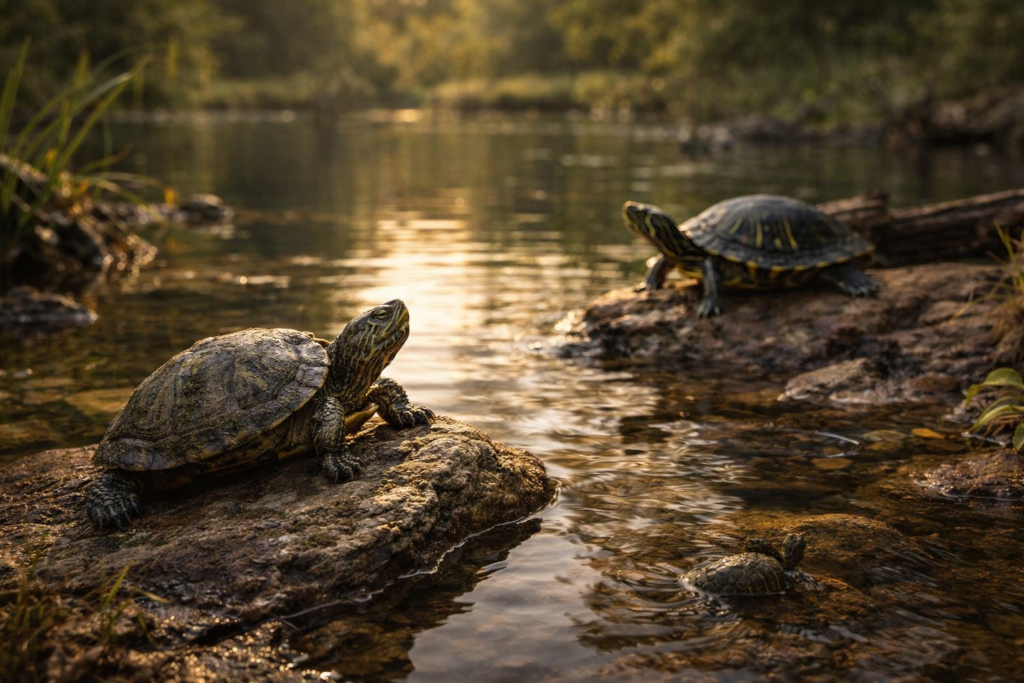
Average Turtle Lifespan at a Glance
On average:
• Many freshwater turtles live 20–40 years
• Land turtles (tortoises) often live 50–100+ years
• Sea turtles commonly live 50–80 years
These numbers are averages. Some individuals live much longer under ideal conditions.
Freshwater Turtle Lifespan
Freshwater turtles include species such as Red-Eared Sliders, Painted Turtles, Snapping Turtles, and Musk Turtles.
In the wild, many freshwater turtles live between 20 and 30 years. With proper care in captivity clean water, correct diet, and UVB lighting pet freshwater turtles can live 30 to 40 years or more.
Red-Eared Sliders commonly live 25–35 years, while snapping turtles can live over 40 years.
Land Turtle (Tortoise) Lifespan
Land turtles, or tortoises, are among the longest-living animals on Earth.
Small tortoises like Russian and Greek tortoises often live 40–60 years. Large tortoises such as Sulcata tortoises can live 70–100 years. Famous examples like the Galápagos tortoise have lived over 150 years.
Because of this extreme longevity, owning a tortoise is a lifetime and sometimes multi-generation commitment.
Sea Turtle Lifespan
Sea turtles have long but challenging lives.
Most sea turtles are believed to live 50–80 years, though exact ages are difficult to measure. Green sea turtles, loggerheads, and leatherbacks all fall within this range.
Sea turtles face many threats early in life, including predators and human activity. Only a small percentage of hatchlings survive to adulthood.
What Affects Turtle Lifespan?
Several factors determine how long a turtle lives:
• Species and genetics
• Diet and nutrition
• Habitat quality
• Exposure to predators
• Human impact and pollution
• Veterinary care (for pets)
Turtles kept in poor conditions often have much shorter lifespans than those properly cared for.
How to Help a Pet Turtle Live Longer
Pet turtles can reach the upper end of their natural lifespan when given:
• Proper tank size
• Clean, filtered water
• Balanced diet
• UVB lighting
• Minimal stress
Avoiding common care mistakes can add many healthy years to a turtle’s life.
Why Turtles Live So Long
Turtles have slow metabolisms, strong immune systems, and protective shells. These traits help reduce injury and disease, contributing to their remarkable longevity.
Turtles are not short-term pets. Many species can live longer than dogs, cats, and even humans.
Understanding turtle lifespan is essential before bringing one home. With responsible care and respect for their needs, turtles can be lifelong companions and symbols of endurance.