
New to turtle ownership?
Before you spend money on a filter, download my free Turtle Care Starter Kit and avoid the 10 mistakes that cause cloudy water, shell problems, and expensive upgrades.
Turtle tanks can get dirty surprisingly quickly because aquatic turtles produce a heavy waste load. A properly sized canister filter can remove solid waste, support biological filtration, and help keep water cleaner between routine maintenance and water changes.. If you’re looking for the best canister filter for turtle tanks, choosing the right one can make the difference between constant cloudy water and a clean, low-maintenance setup. I’ve also written a complete guide where you can learn whether turtles really need a filter and how to set it up properly. Do turtles really need a filter in their tank? I’ve written a complete guide where you can learn about the necessity of a filter in a turtle tank.
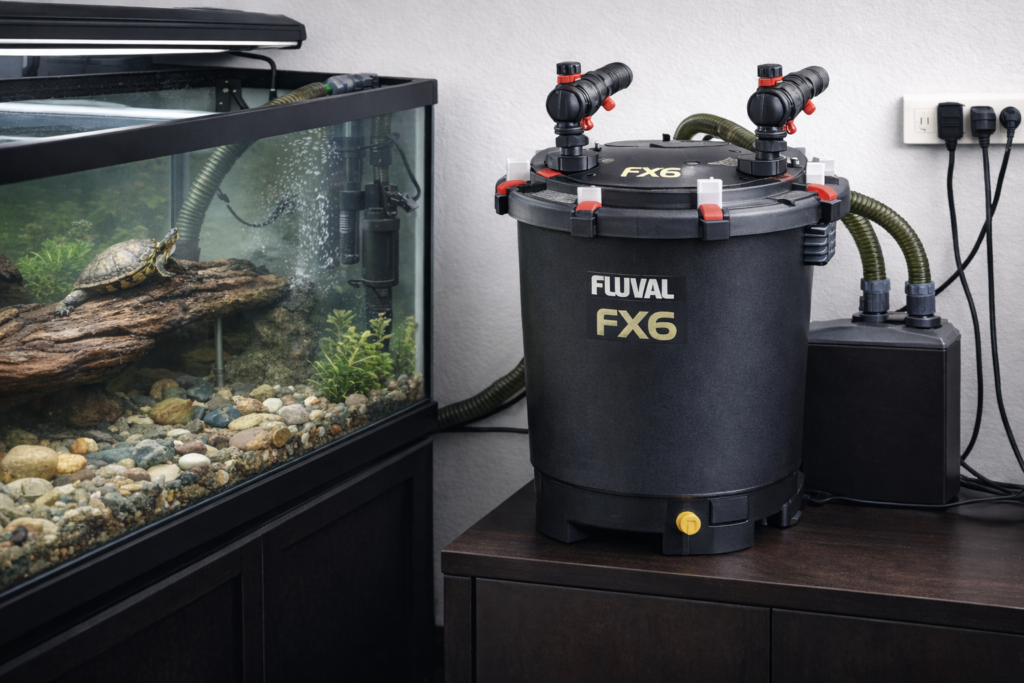
Looking for the best canister filter for your turtle tank? The Fluval FX6 is a top choice for large tanks due to its powerful filtration and durability.
Helpful Turtle Filtration Guides
If you’re setting up or upgrading a turtle tank, these related guides may also help:
- How to Keep Turtle Tank Water Crystal Clear
- Fluval FX6 Full Review
- Best Turtle Tank Filters for 40 Gallon Tanks
- Best Filters for Large Turtle Tanks (75–125 Gallons)
- Best Filter for Snapping Turtle (2026 Guide) – Expert Picks for Heavy Waste Tanks
- How Often Should You Clean a Turtle Filter?
- Best Filter Media for Turtle Tanks
- Turtle Tank Setup Guide for Beginners
- Why Turtle Filters Need to Be Oversized
- Do Baby Turtles need a Filter in their Tank?
This article may contain affiliate links. As an Amazon Associate, I earn from qualifying purchases at no extra cost to you.
Many turtle owners end up wasting money by buying regular aquarium filters that simply can’t handle turtle waste. The result is cloudy water, strong odors, stressed turtles, and constant cleaning followed by buying a second filter anyway.
A properly sized canister filter solves this problem in one go. It removes solid waste efficiently, stabilizes ammonia levels, and dramatically reduces how often you need to clean the tank.
In this guide, you’ll find a side-by-side comparison of the best turtle canister filters in 2026, broken down by tank size, budget, and performance so you can buy the right filter once and avoid costly mistakes.
To understand further, Check out our detailed guide on Turtle Tank Filtration.
What Actually Worked for My Turtle Tank Filtration
When I first started setting up turtle tanks, I underestimated how much waste turtles actually produce. I tried using smaller filters and even relied on frequent water changes, but the water would still turn cloudy within days and the smell became hard to manage.
After testing different setups, I realized that most standard aquarium filters are simply not strong enough for turtles. The real difference came when I switched to a proper canister filter that was rated much higher than my tank size.
Once I made that change, the improvement was immediate. The water stayed clear for much longer, maintenance became easier, and I was no longer constantly cleaning the tank. It also made a noticeable difference in my turtle’s activity and overall environment.
From my experience, investing in the right canister filter from the beginning saves a lot of time, effort, and frustration.
My Top Pick for Most Turtle Owners
If I had to choose one filter for most turtle tanks, I would go with a high-capacity canister filter that is rated for at least double the tank size. From my experience, this type of filter consistently keeps water cleaner and reduces maintenance significantly.
How I Chose the Best Canister Filters for Turtle Tanks
Not all filters work well for turtle tanks, so I did not just pick these randomly. I focused on a few key factors that actually matter in real setups.
First, filtration strength. Turtles produce heavy waste, so I prioritized filters that are rated for tanks much larger than their actual use.
Second, media capacity. A good canister filter should support strong biological filtration to keep water stable over time.
Third, ease of maintenance. Since turtle tanks require regular upkeep, I looked for filters that are easy to clean and maintain without too much effort.
These recommendations are based on practical use, real performance, and what actually works in maintaining clean turtle tanks.
If you want a reliable filter that keeps turtle tank water clean without constant maintenance, I’ve listed the best options below based on real use and performance.
Use the Turtle Tank Size Calculator to find the ideal size of your tank
You can find the ideal size for your turtles using this Turtle Tank size Calculator because the size of your tank really matters for the wellness of your turtles.
Quick Comparison of Recommended Filters
Best For Large Tanks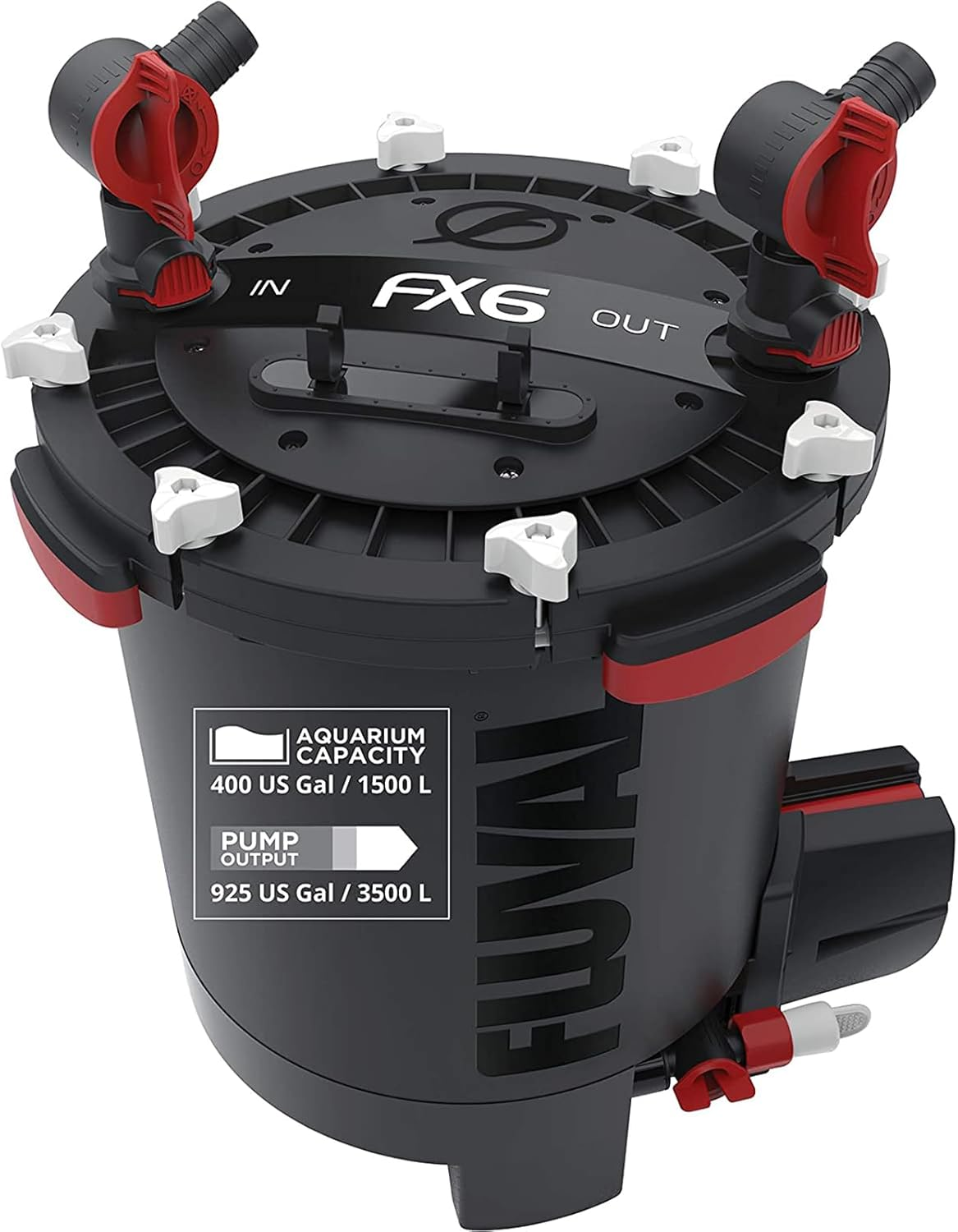 Fluval FX6 |
Best Mid-Size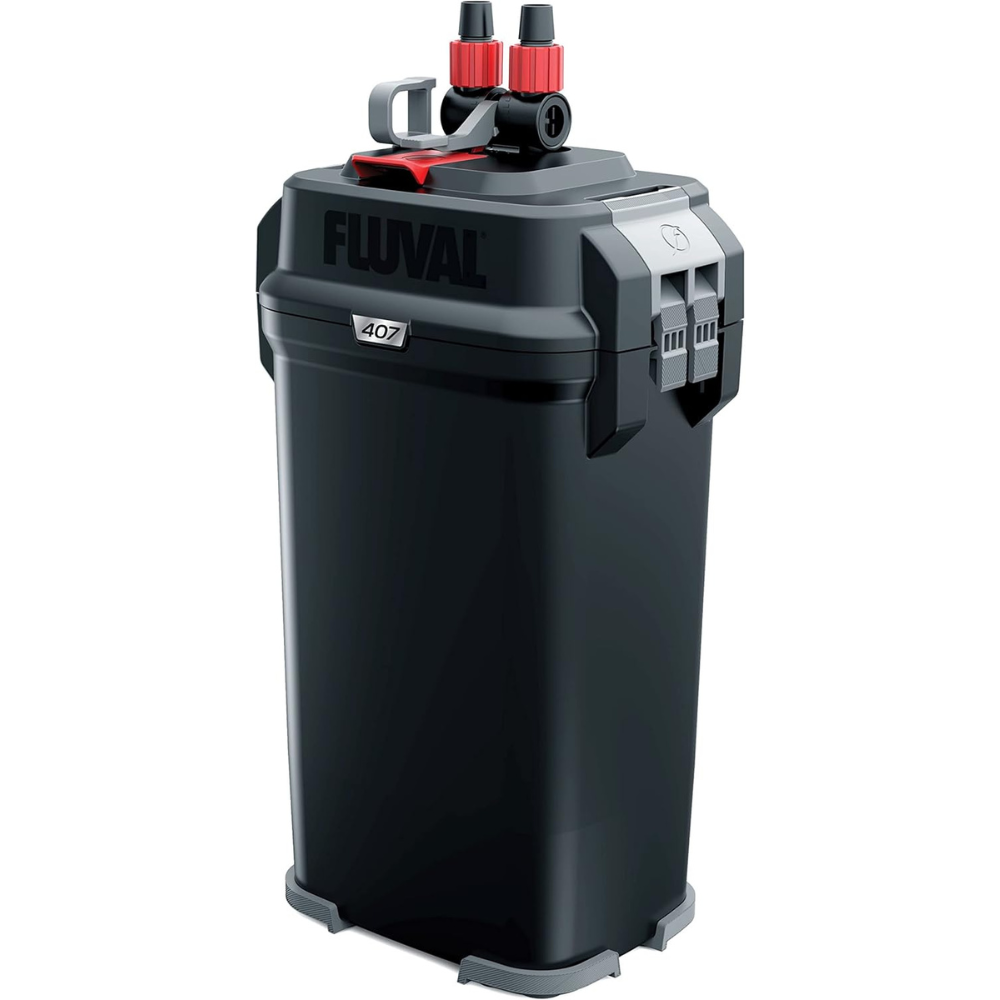 Fluval 407 |
Most Durable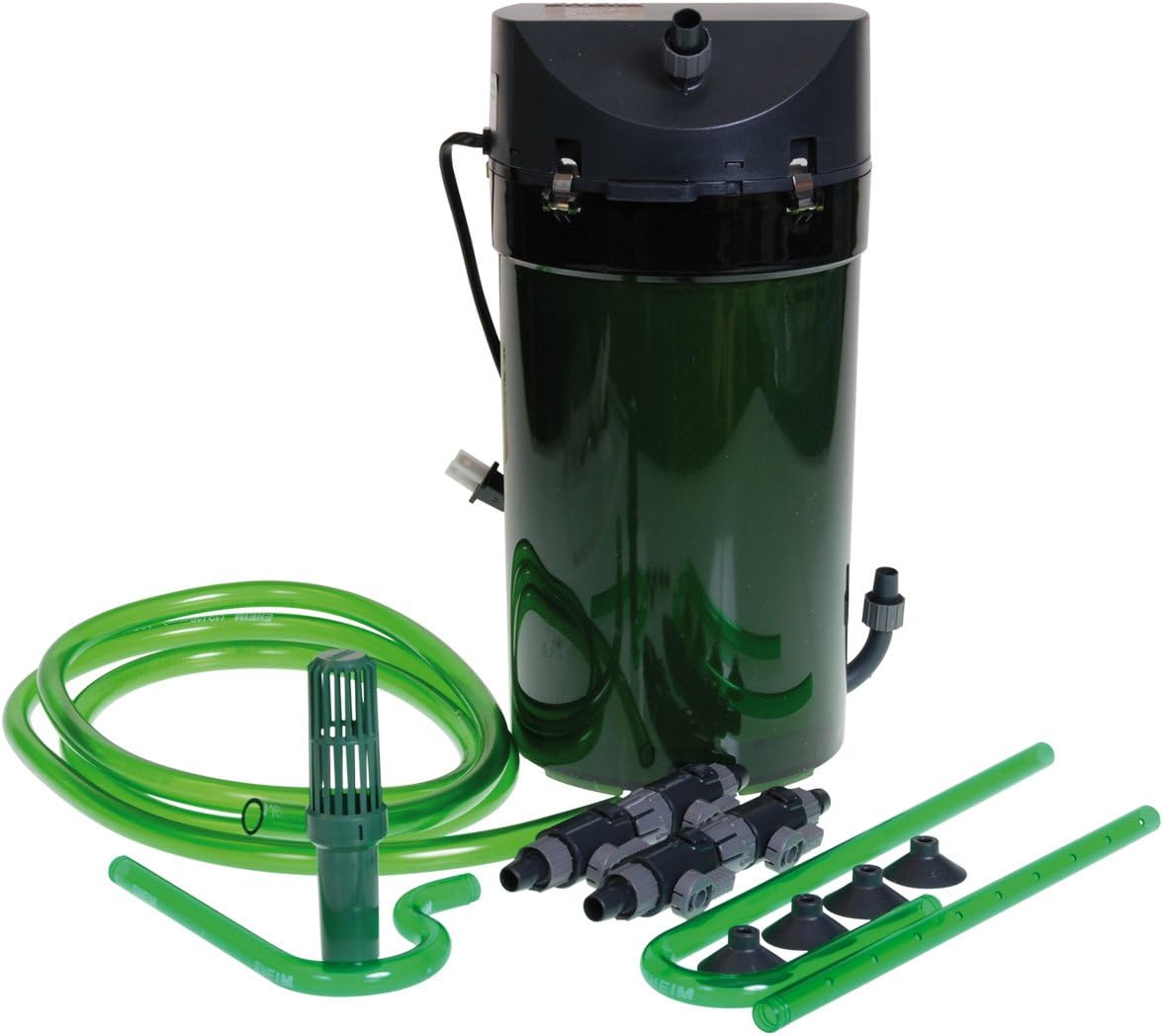 Eheim Classic 2215 |
Best Budget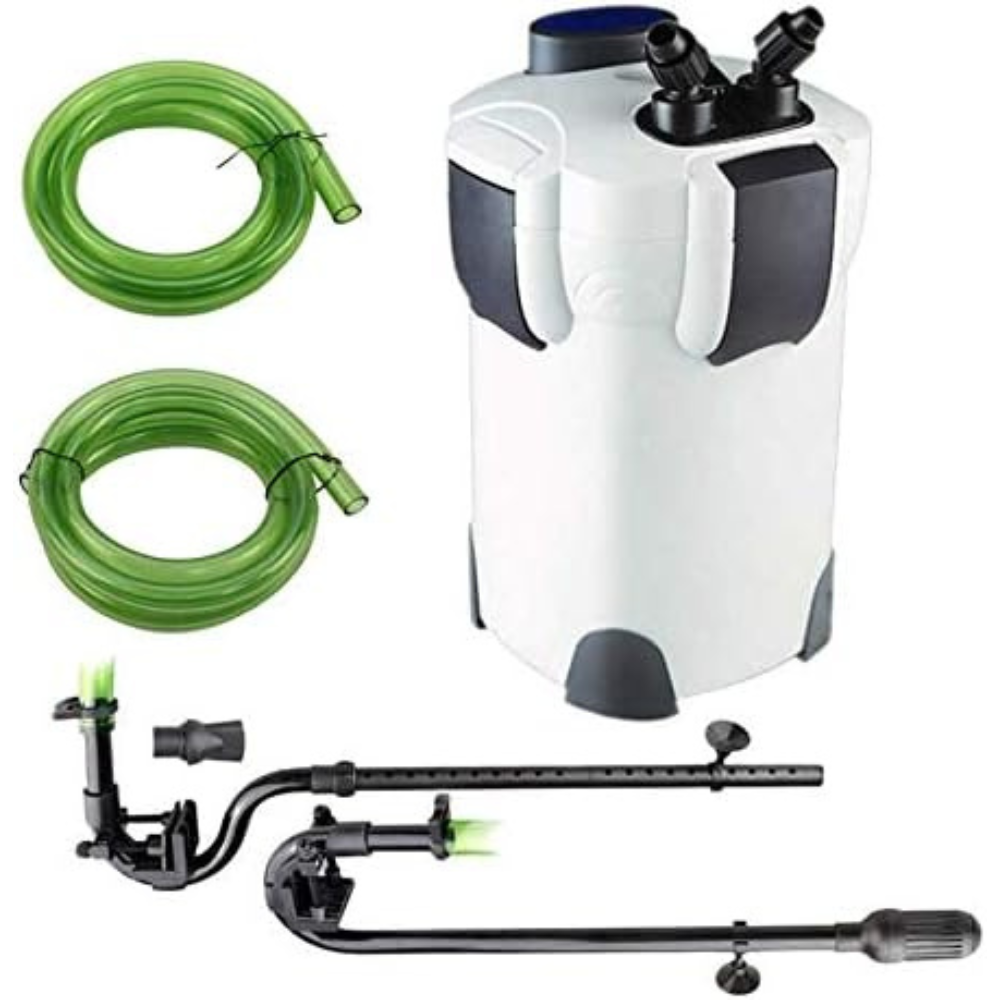 SunSun HW-303B |
Beginner Friendly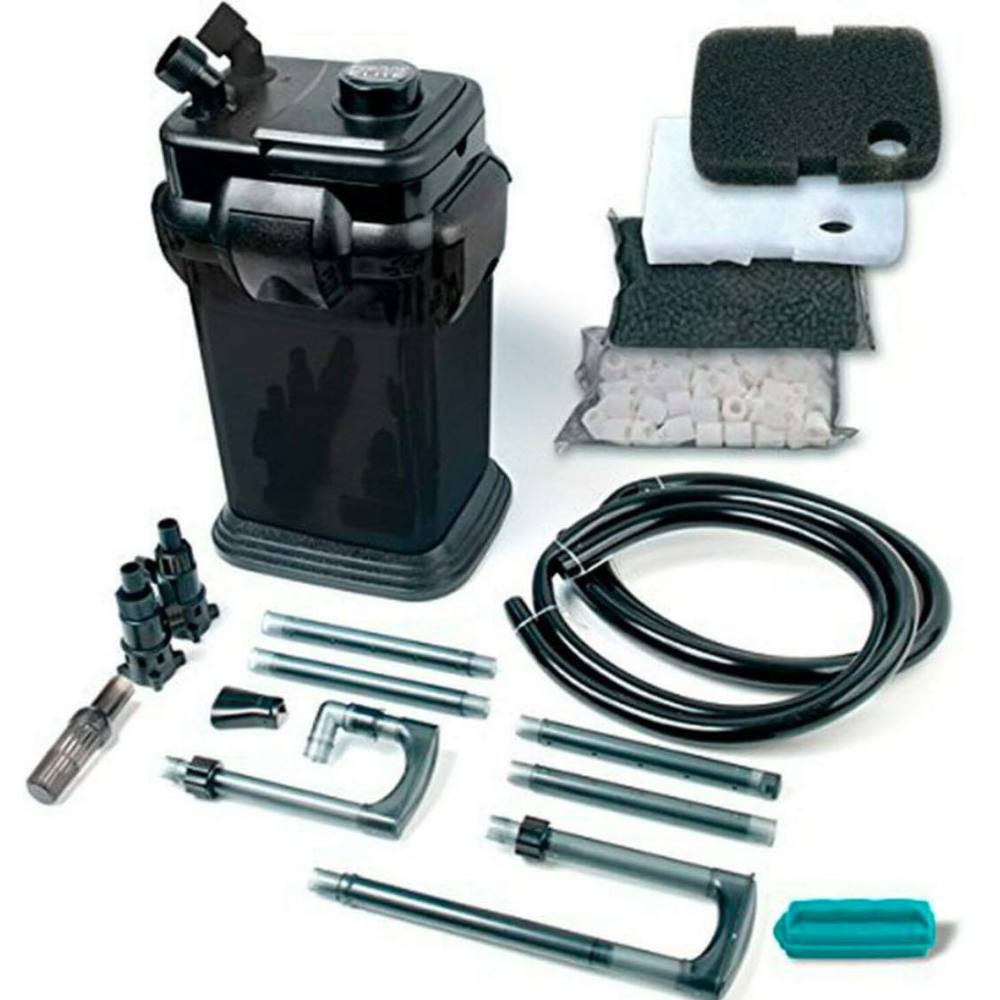 Penn Plax Cascade 1000 |
|---|---|---|---|---|
| Ideal for 125–400 gallon turtle tanks | Perfect for tanks up to 100 gallons | Legendary German durability | Affordable high-flow canister filter | Easy setup for first-time turtle keepers |
| Massive media capacity for heavy turtle waste | Quiet and energy efficient | Excellent biological filtration | Built-in UV sterilizer included | Decent flow for medium turtle tanks |
| Flow rate around 925 GPH | Easy maintenance design | Extremely low maintenance | Great value for beginner turtle owners | Budget-friendly canister option |
| Self-starting smart pump | Excellent biological filtration | Best for long-term setups | Suitable for tanks up to 75–100 gallons | Quiet operation |
|
Best for large RES and multiple turtles | Great balance of power and reliability |
Ideal for tanks up to 65–90 gallons | Strong performance for the price | Works well for tanks up to 100 gallons |
Which Canister Filter Should You Choose?
Not sure which canister filter makes the most sense for your turtle tank? Use the guide below to narrow down your options:
40–50 gallon tank → Fluval 407
A strong all-around choice for a single turtle in a medium-sized setup.
75 gallon tank → Fluval 407 or Fluval FX6
The better choice depends on your turtle’s size, waste load, feeding habits, and desired filtration capacity.
100+ gallon tank → Fluval FX6
A strong choice for larger tanks where greater filtration and media capacity are important.
Multiple turtles → Fluval FX6
The larger filtration capacity makes it a better fit for setups with a heavier overall waste load.
Budget-conscious → SunSun HW-303B
A lower-cost canister option for keepers who want higher filtration capacity without moving into premium pricing.
Prioritize simplicity and long-term reliability → Eheim Classic 2215
A straightforward canister design for keepers who value simplicity and a long-established filtration platform.
How to Choose the Right Canister Filter for a Turtle Tank
The Golden Rule of Turtle Filtration
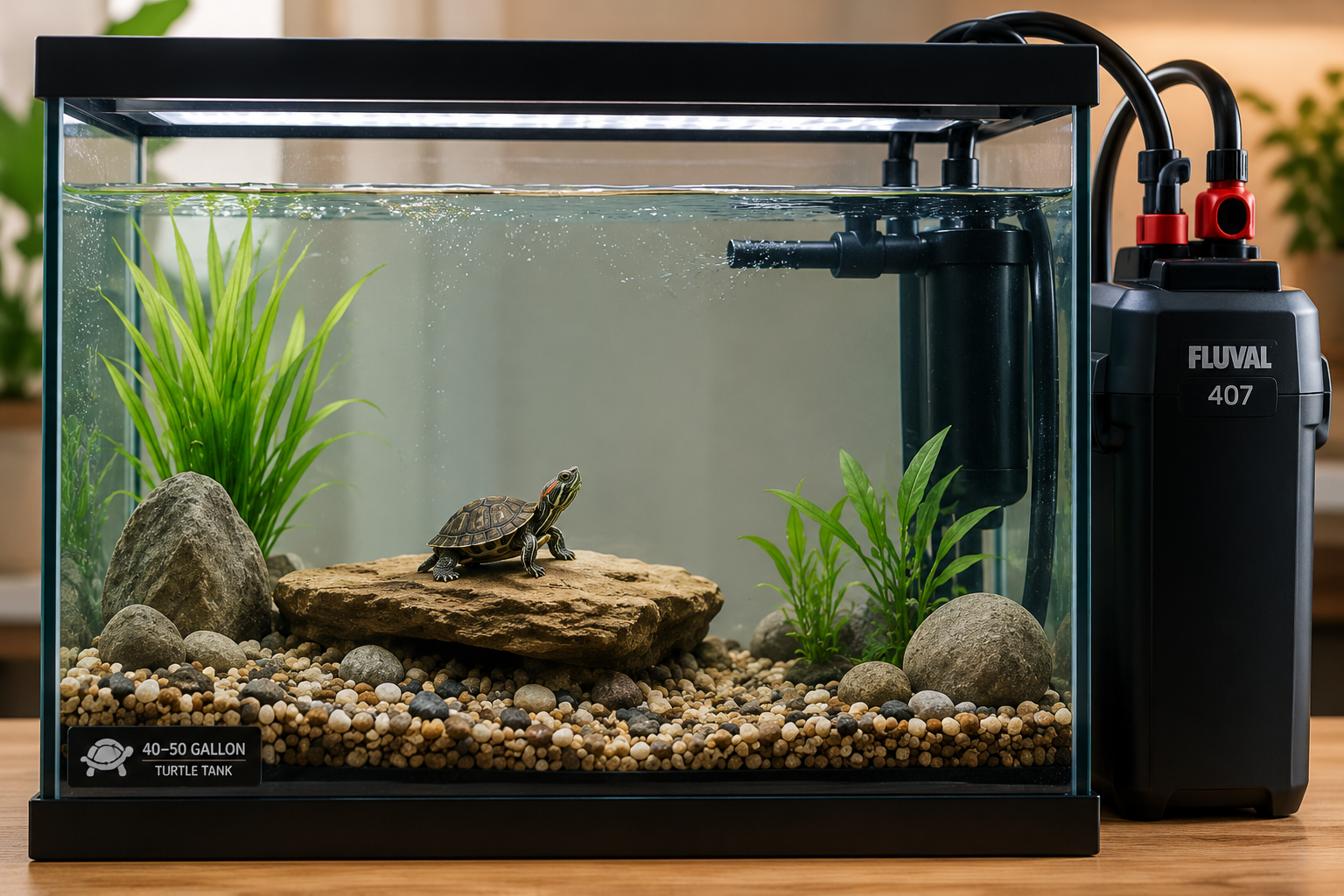
40–50 Gallon Turtle Tank
Best Match:
FLUVAL 407
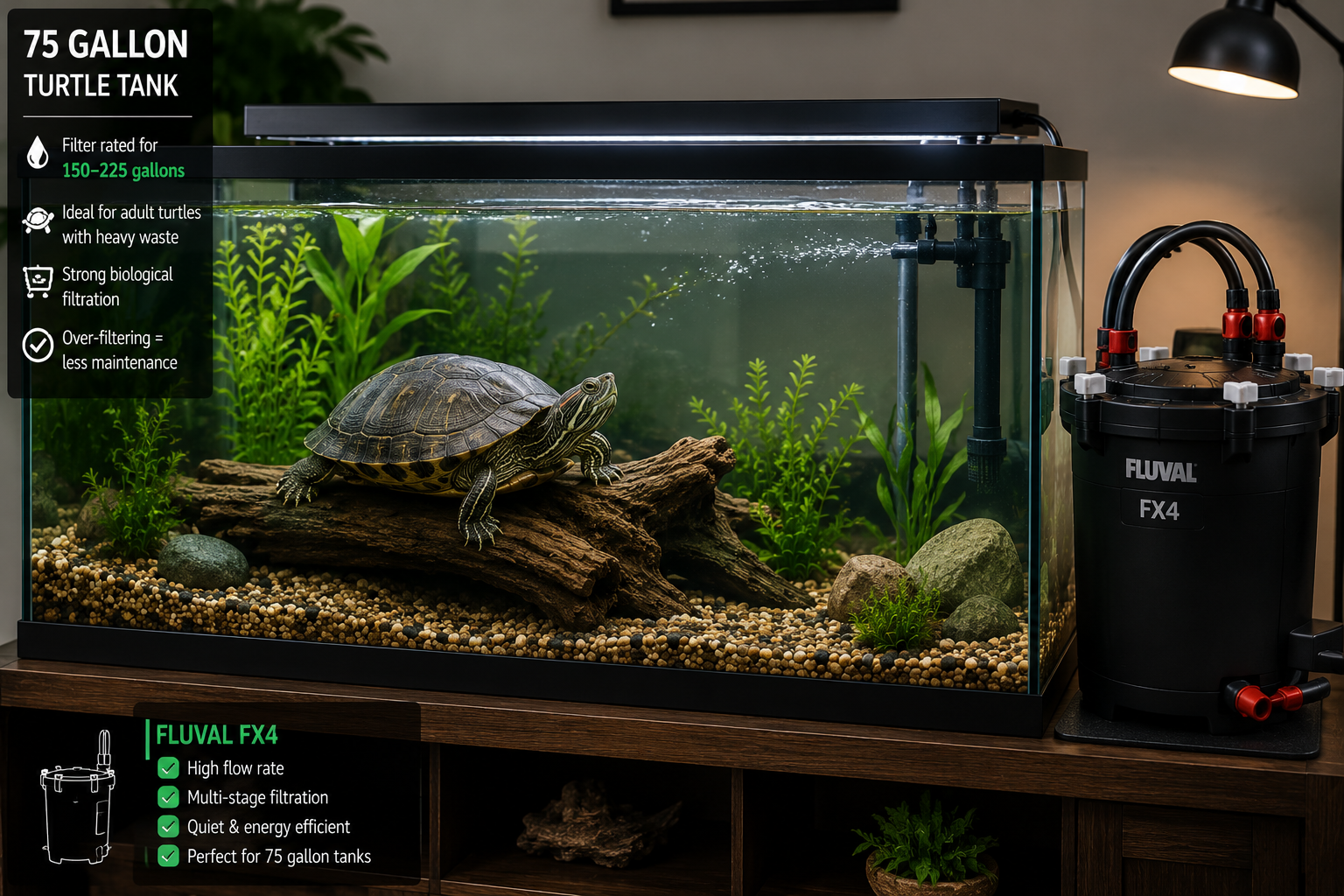
75 Gallon Turtle Tank
Best Match:
FLUVAL FX4/ FX6
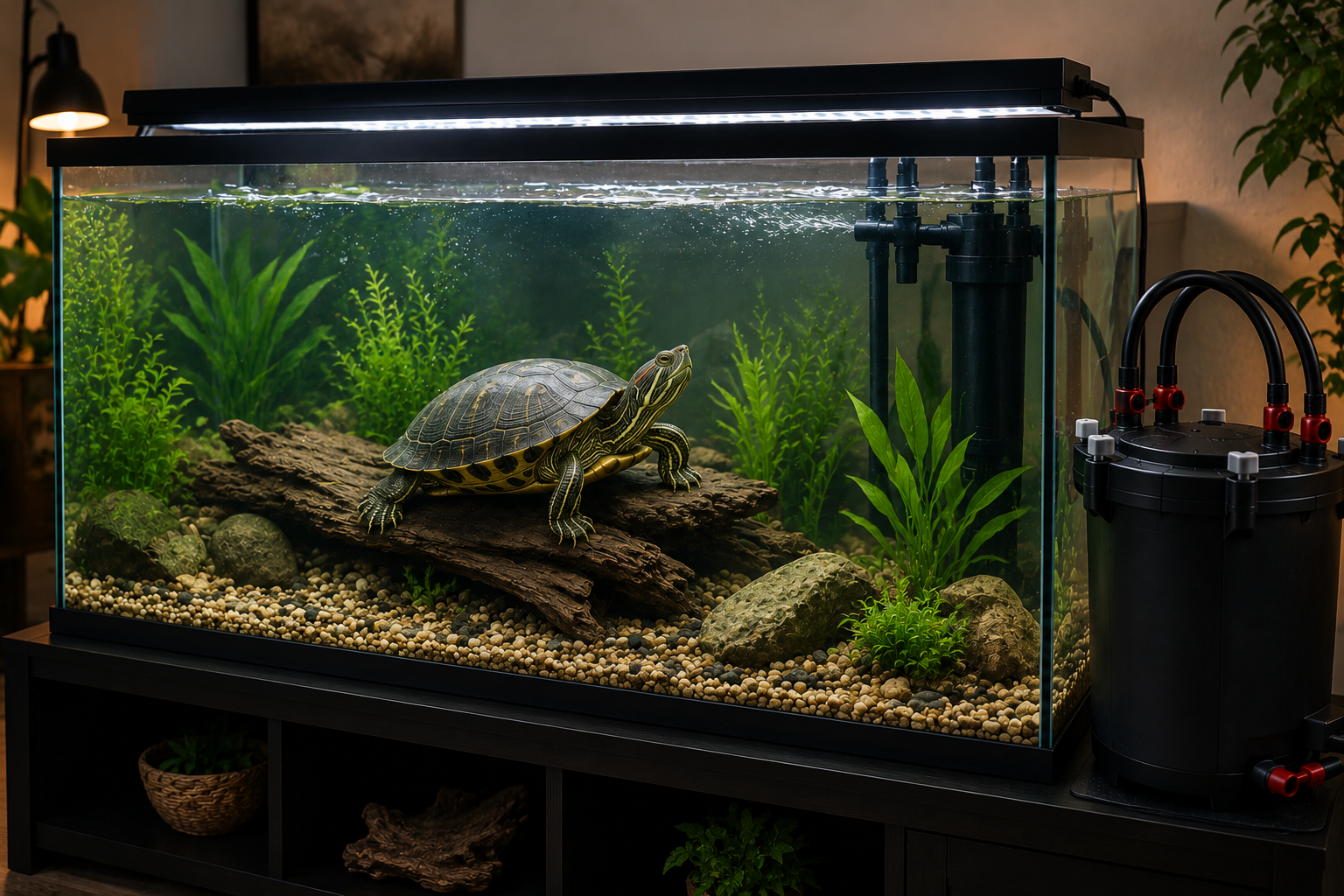
125+ Gallon Turtle Tank
Best Match:
FLUVAL FX6
Turtles produce significantly more waste than fish, which means standard aquarium filters often become overwhelmed very quickly. That’s why experienced turtle keepers usually choose filters rated for 2–3 times their actual tank size to maintain cleaner water, reduce odors, and minimize maintenance. An oversized canister filter also provides stronger biological filtration, helping create a healthier long-term environment for your turtle.
Best Canister Filter for turtle tank: Detailed Reviews
1. Fluval 407 — Best Overall for Most Turtle Tanks
If you want the smart, balanced option, the Fluval 407 is the safest choice for most turtle tanks.
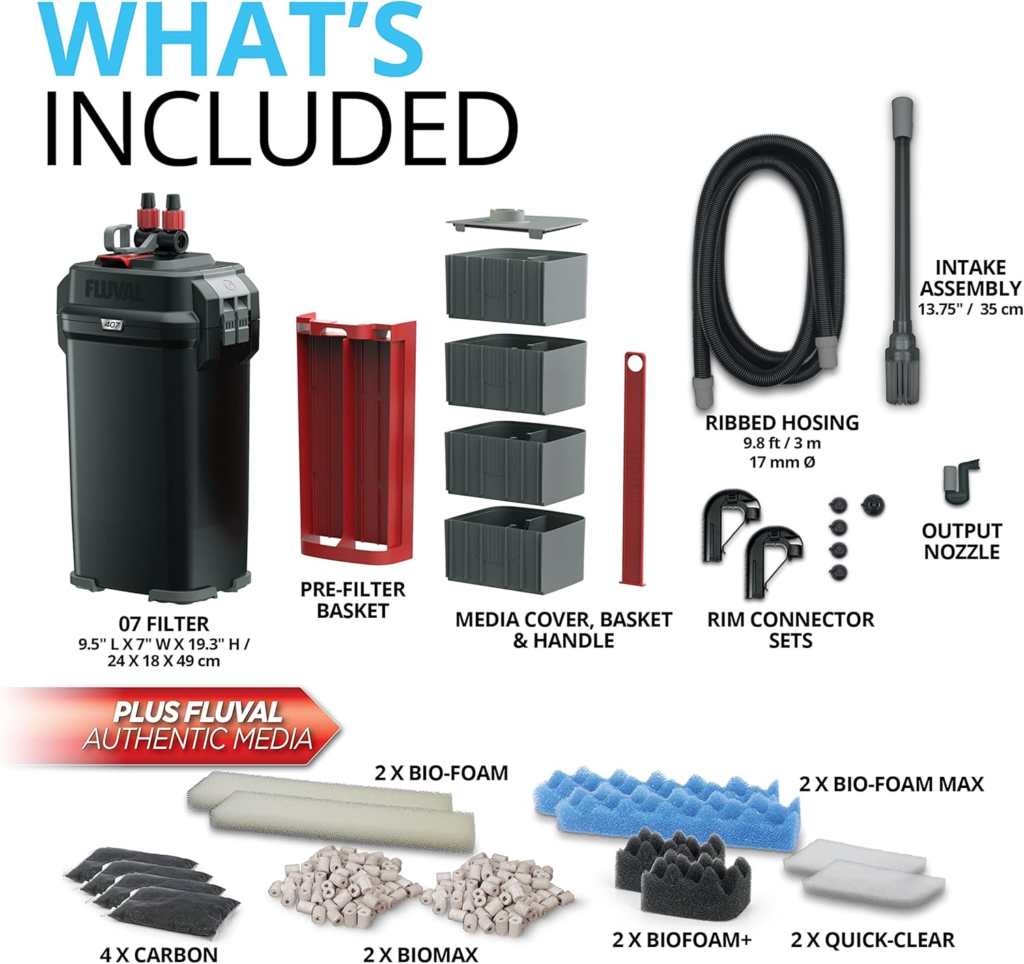
What’s Included in the Fluval 407?
Why the Fluval 407 Converts So Well
The Fluval 407: The Sweet Spot for Most Turtle Tanks
For most turtle keepers with small-to-medium setups, the Fluval 407 hits the sweet spot between performance, maintenance, noise level, and price. It’s powerful enough to handle the messy nature of turtle tanks without being overly aggressive or oversized for typical 40–75 gallon setups.
While it doesn’t have the extreme filtration power of the FX4 or FX6, the Fluval 407 is often the smarter choice for owners who want reliable long-term filtration without spending premium FX-series money. If you want cleaner water, quieter operation, and a filter that’s beginner-friendly but still powerful, the 407 is one of the safest all-around choices available.
2. Fluval FX6 — Best for Large & Heavy-Waste Turtle Tanks
The Fluval FX6 is the filter most large-tank turtle owners end up buying anyway.
If you have a big tank or multiple turtles and want something reliable without constant maintenance, this is a solid option.
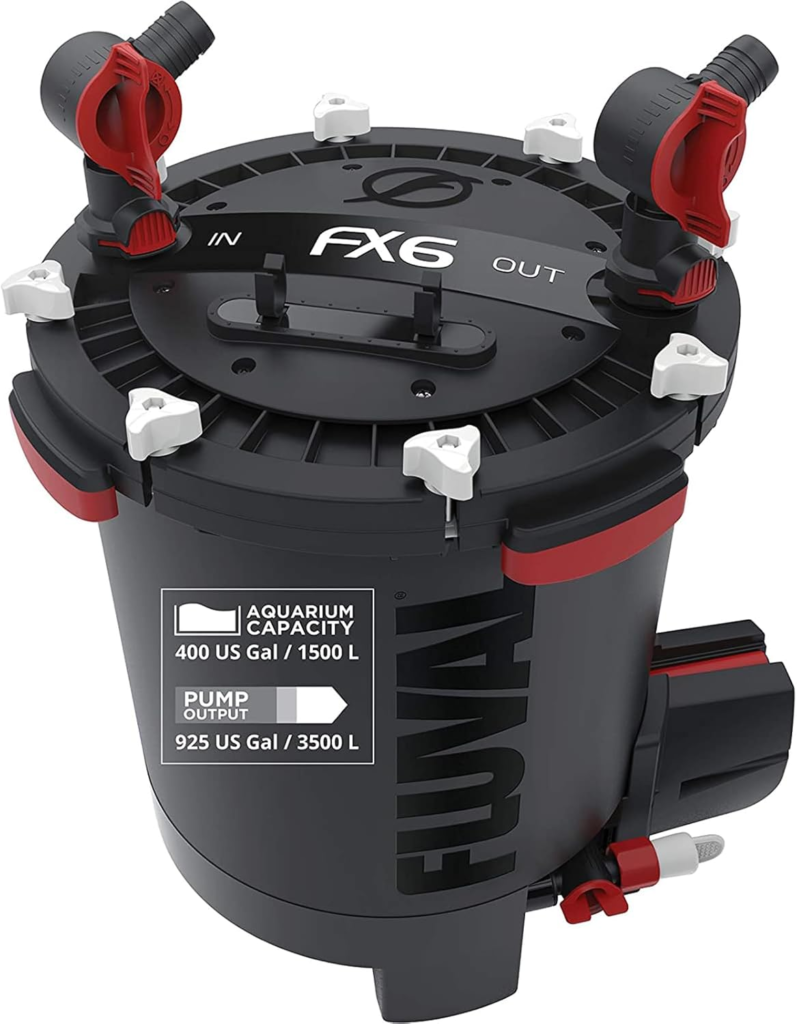
Why the Fluval FX6 Is Worth the Price
The FX6 makes the most sense when you have a large tank, multiple turtles, or a particularly heavy waste load. Its large media capacity and strong circulation give you more filtration headroom than smaller canisters, although it is unnecessary for many smaller setups.
Is the Fluval FX6 Worth It?
- Large filtration capacity: The FX6 has a 5.28-gallon canister volume and 1.5-gallon biological volume, giving it substantially more room for filter media than many smaller canisters.
- Strong circulation: Fluval lists a 925 GPH pump output and 563 GPH filter circulation, although real-world flow varies with setup conditions.
- Designed for heavy-duty setups: Its size and media capacity make it particularly interesting for large turtle tanks and setups with a heavier waste load.
- Maintenance-friendly design: The removable media baskets and self-priming design make routine filter maintenance easier than some older canister designs.
Prices change often — checking now avoids overpaying later.
Why Most Turtle Tank Filters Fail
Most turtle tank filters fail because they are designed for fish, not turtles. Turtles produce significantly more waste and often break apart their food, which quickly overloads weak filtration systems.
Using an underpowered filter leads to cloudy water, bad odor, and frequent cleaning. This is why choosing a filter rated for at least two to three times your tank size is essential.
What is the best canister filter for a turtle tank?
The best canister filter for a turtle tank is one that is rated for at least two to three times the tank size and has strong mechanical and biological filtration. This helps handle the heavy waste produced by turtles.
Often cheaper than upgrading later.
3. Eheim Classic 2215 — Best for Simplicity & Long-Term Reliability
The Eheim Classic 2215 is built for people who value longevity over features. Many owners run these filters for years without replacement.
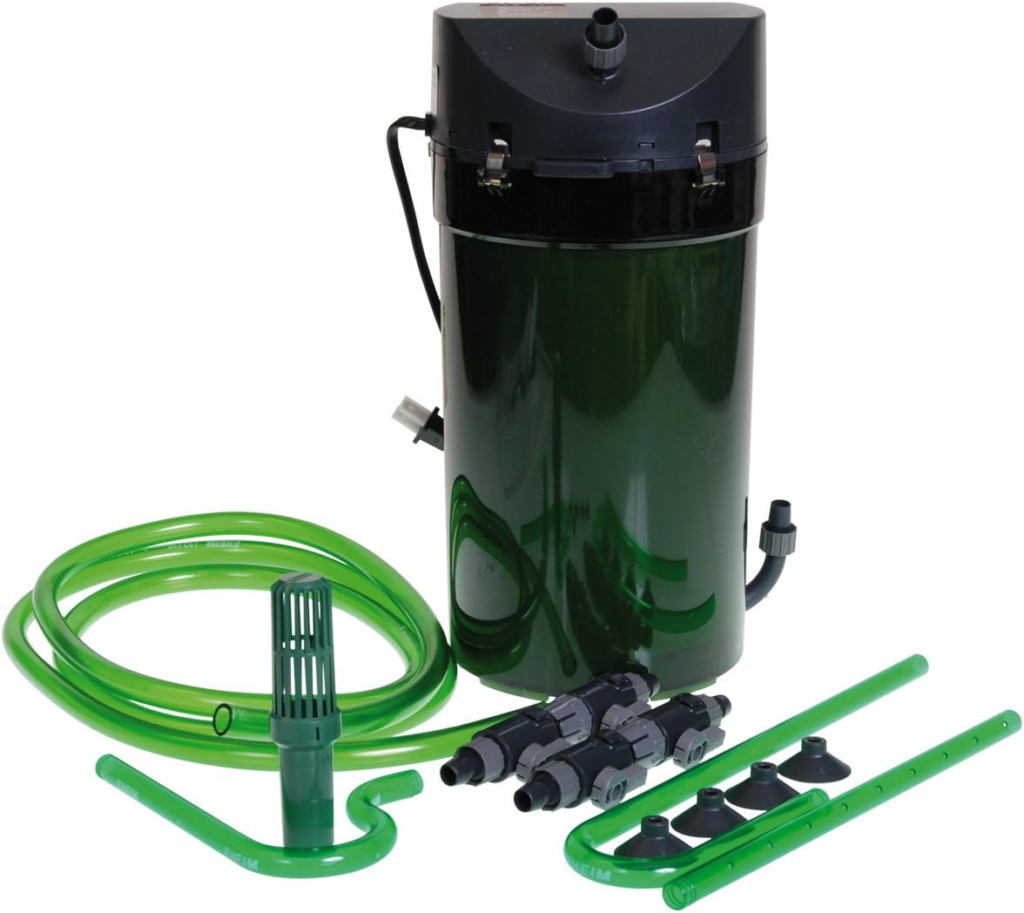
- Runs for years with minimal maintenance
- Simple design = fewer parts to fail
- Perfect for low-maintenance setups
Why Choose the Eheim 2215
Why Turtle Keepers Still Trust the Eheim Classic 2215
The Eheim Classic 2215 may not have the flashy features or extreme flow rates of newer canister filters, but it has earned a reputation for one thing above all else: reliability. For turtle keepers with small-to-medium tanks who value quiet operation, long-term durability, and stable biological filtration, the 2215 remains one of the most trusted filters in the hobby.
That said, it’s best suited for lighter turtle setups or owners who prioritize reliability over raw filtration power. If you have large adult turtles or heavily stocked tanks, a stronger option like the FX4 or FX6 will usually be the better choice.
If you are still unsure, I recommend going with a higher-rated canister filter from the options above. It makes a huge difference in keeping water clean and reducing maintenance.
4. SunSun HW-303B — Best Budget Canister
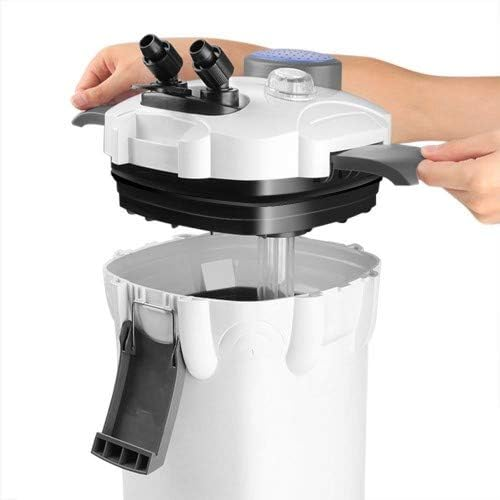
The SunSun HW-303B offers strong filtration plus a UV sterilizer at a price that’s hard to beat.
- ✅ Easy to open and maintain
- ✅ Beginner-friendly design
- ✅ Quick access to filter media
Why It’s a Value Pick
Why the SunSun HW-303B Is One of the Best Budget Turtle Filters?
The SunSun HW-303B is one of the best budget-friendly canister filters for turtle owners who want strong filtration without spending premium Fluval money. It delivers impressive flow, decent media capacity, and even includes a built-in UV sterilizer, making it a very attractive option for beginners or medium-sized turtle tanks.
That said, the lower price does come with compromises in build quality, noise level, and long-term reliability. While it may not match the durability of an FX6 or Eheim Classic, the HW-303B offers excellent value for turtle keepers looking for affordable filtration that still gets the job done.
5. Penn-Plax Cascade 1000 — Best Beginner Budget Pick
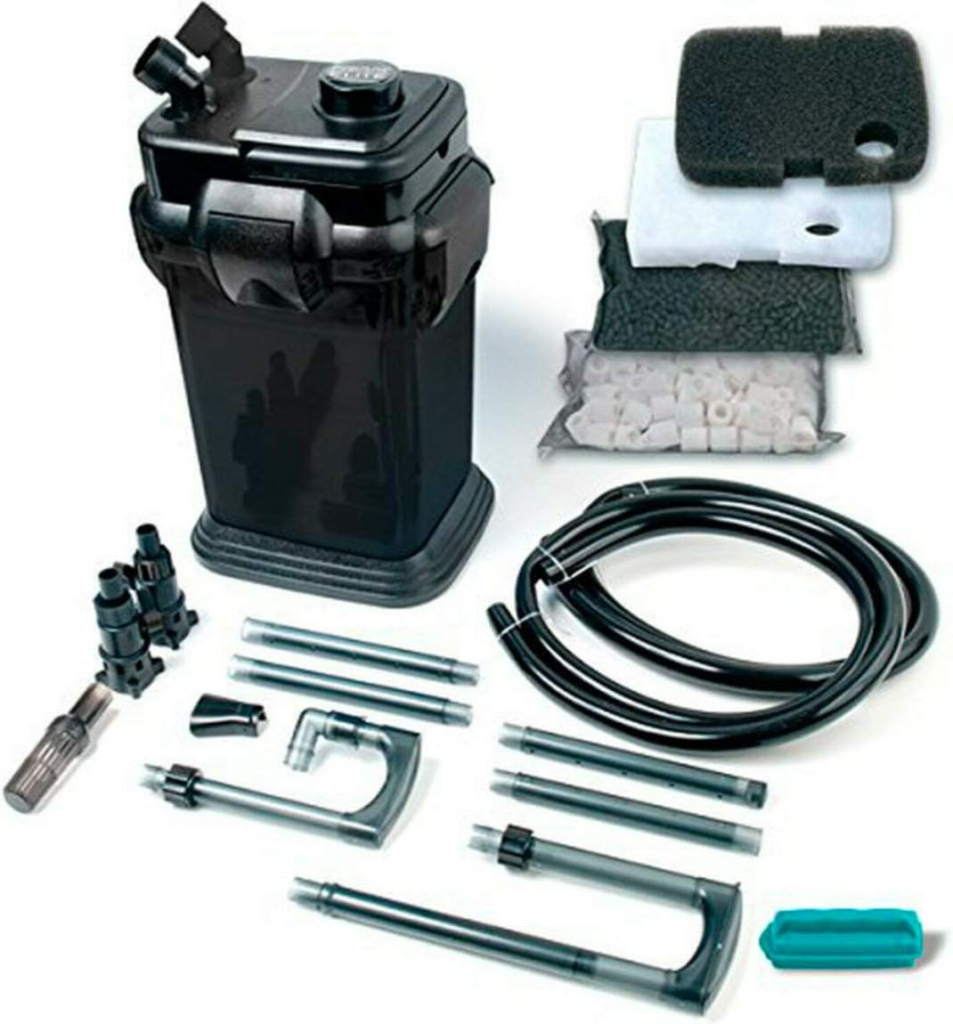
If you’re starting out and want a low-risk entry option, the Cascade 1000 gets the job done for smaller turtle tanks.
- ✅ Perfect for first-time turtle owners
- ✅ Easy to set up and maintain
- ✅ Affordable without sacrificing performance
💡 Just getting started? This is one of the safest and easiest filters to choose.
Why the Penn Plax Cascade 1000 Is Great for Beginner Turtle Tanks?
The Penn Plax Cascade 1000 is a solid entry-level canister filter for turtle keepers who want reliable filtration without spending premium FX-series money. It’s easy to set up, relatively quiet, and offers enough filtration power for smaller or moderately stocked turtle tanks.
While it doesn’t match the durability or raw performance of high-end filters like the Fluval FX6, it remains a great option for beginners, juvenile turtle setups, or owners looking for a more budget-friendly canister filter that still performs well.
- ✅ 3-stage filtration system
- ✅ Removes waste, odor, and toxins
- ✅ Keeps water clear for longer
Good maintenance protects your investment and your turtle’s health.
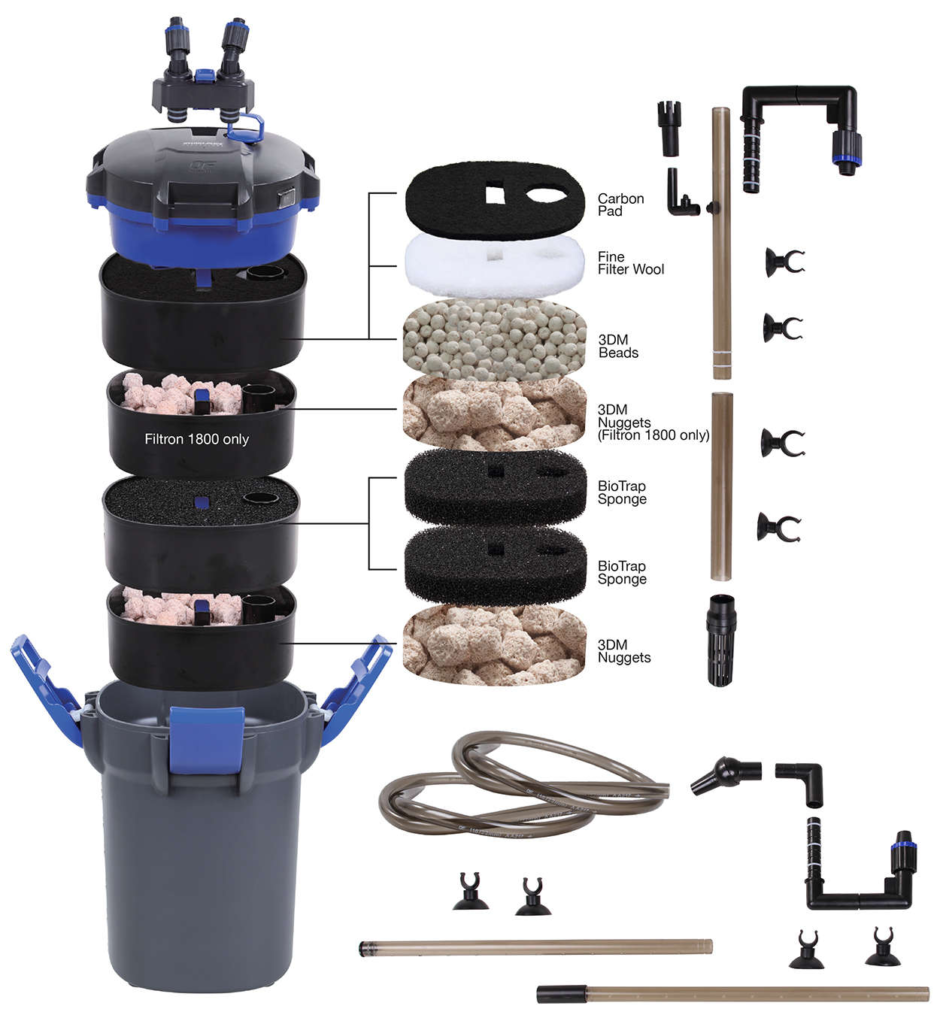
The Cascade 1000 uses a multi-stage filtration system with mechanical, chemical, and biological media.
My Top Pick for Large Turtle Tanks
After comparing performance, maintenance, durability, and real-world turtle tank use, the Fluval FX6 stands out as the best canister filter for turtle owners who want powerful filtration and cleaner water with less hassle. It’s expensive, but it’s one of those upgrades you rarely regret.
Common Mistakes Turtle Owners Make
One of the biggest mistakes new turtle owners make is choosing a filter rated exactly for their tank size. Unlike fish, turtles produce a huge amount of waste, which can quickly overwhelm underpowered filters and lead to cloudy water, bad odors, algae growth, and unhealthy water conditions.
Another common mistake is focusing only on water flow instead of filtration capacity. A good turtle filter needs strong biological and mechanical filtration, not just fast-moving water. That’s why experienced turtle keepers usually choose canister filters rated for 2–3 times their actual tank size to maintain cleaner, healthier tanks with less maintenance.
If you want the easiest way to keep your turtle tank clean, go with a canister filter that is rated higher than your tank size. From my experience, this one decision solves most water quality problems and makes turtle care much easier in the long run.
Frequently Asked Questions
Yes. Turtles produce significantly more waste than fish, including solid waste and ammonia. Canister filters provide stronger mechanical and biological filtration than hang-on-back or internal filters, making them the most reliable option for maintaining clean and healthy turtle tank water.
As a general rule, choose a canister filter rated for 2–3 times your actual tank size.
For example, a 50-gallon turtle tank should use a filter rated for at least 100–150 gallons. Over-filtration helps control ammonia, reduce odors, and lower maintenance frequency.
Fish filters are not recommended for turtle tanks. They are designed for lighter bioloads and often fail to handle turtle waste effectively. Many turtle owners end up replacing fish filters quickly, which costs more in the long run than buying a proper canister filter upfront.
No, over-filtering is generally beneficial for turtles. The only concern is excessive water current. If the flow feels too strong, you can use spray bars, flow diffusers, or baffles to soften the output while keeping high filtration capacity.
Mechanical filter media should be rinsed every 2–4 weeks, depending on waste levels. Biological media should only be gently rinsed when necessary and should never be replaced all at once. A full canister cleaning is typically needed every 2–3 months.
A UV sterilizer is optional but helpful for controlling green water and free-floating algae. It does not replace mechanical or biological filtration, but it can improve water clarity in algae-prone turtle tanks.
Persistent odor usually means the filter is under-sized, clogged, or overdue for maintenance. Using a canister filter rated appropriately for your tank size and cleaning it regularly typically eliminates strong smells.
Most modern canister filters are very quiet when properly installed. Noise usually comes from trapped air, dirty impellers, or loose fittings. Premium models like Fluval and Eheim are known for near-silent operation.
Red-eared sliders are heavy waste producers. For medium tanks, the Fluval 407 is an excellent choice. For large or multi-slider tanks, the Fluval FX6 is one of the best long-term solutions available.
A high-quality canister filter can last 5–10 years or more with proper maintenance. Durable brands like Fluval and Eheim are known for long service life, making them cost-effective over time.