Turtle tanks getting dirty fast is one of the most common frustrations turtle owners face. You clean the tank, the water looks fine for a day or two and then it’s cloudy, smelly, or full of debris again.
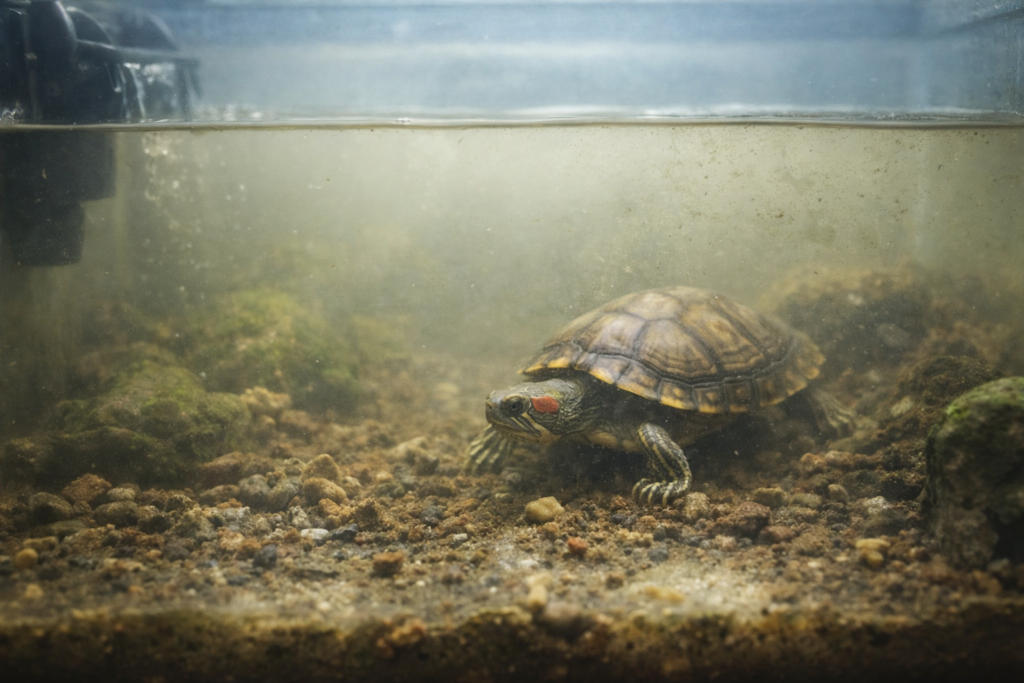
In most cases, water like this is not a cleaning issue but a filtration problem. If your tank looks like this within a few days, your filter is likely underpowered for turtle waste.
If this keeps happening, the issue usually isn’t your cleaning routine. It’s almost always a filtration or setup problem.
Let’s break down exactly why turtle tanks get dirty so quickly and what actually fixes it.
For a full breakdown, check this guide on Turtle Tank Filtration.
1. Turtles Produce Far More Waste Than Fish
One of the biggest mistakes new turtle owners make is treating turtle tanks like fish tanks.
Turtles:
- Eat messy foods
- Produce large solid waste
- Stir up debris constantly
Compared to fish, turtles generate significantly more waste, which overwhelms standard aquarium setups very quickly.
This means turtle tanks require much stronger filtration to stay clean.
2. Underpowered Filters Can’t Handle Turtle Waste
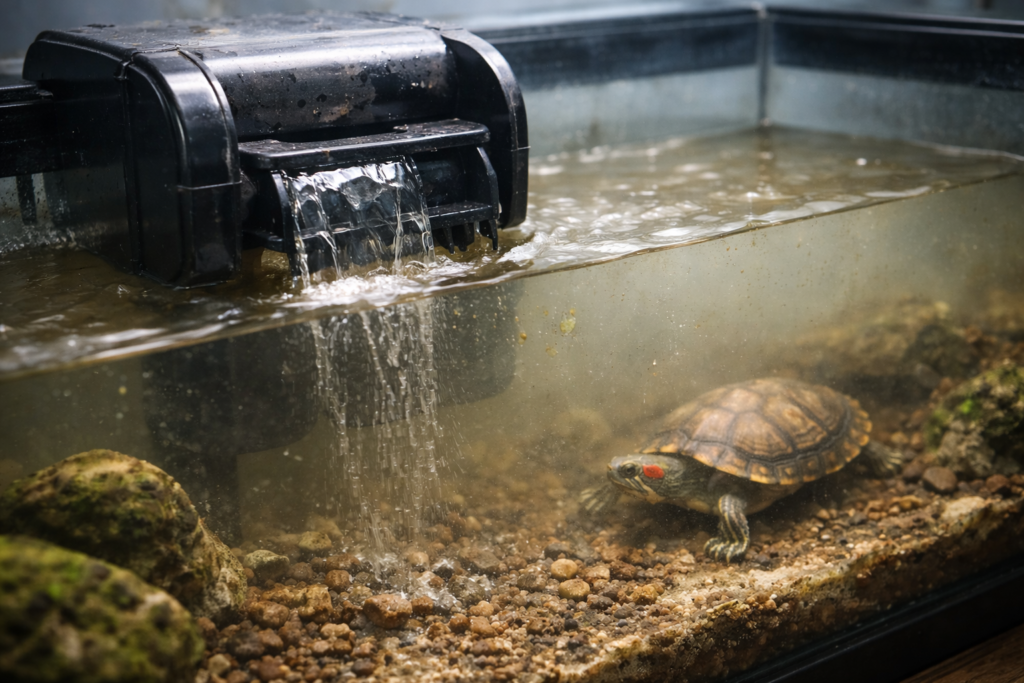
If your filter output looks weak or slow, it is not moving enough water to remove waste. Turtles require strong flow to keep water clean.
Many turtle tanks use:
- Small internal filters
- Hang-on-back filters rated for fish
These filters are often not designed for heavy waste loads. Even if they technically “work,” they clog fast and fail to keep up.
If your filter is rated for the same size as your tank, it’s almost certainly underpowered for a turtle.
3. Turtle Tanks Need 2–3× Filtration Power
A common rule for turtle tanks is:
The filter should be rated for 2–3 times the tank size.
So for example:
- 40-gallon tank → 80–120-gallon rated filter
- 75-gallon tank → 150–225-gallon rated filter
This extra capacity allows the filter to process waste before it breaks down and clouds the water.
4. Inadequate Filter Media Setup
Even with a decent filter, poor filter media setup can cause water to get dirty fast.
Common problems include:
- Too little mechanical media (waste passes through)
- Not enough biological media (ammonia builds up)
- Over-reliance on chemical media like carbon
Filter media works best when paired with a filter that can actually move enough water through it.
5. Feeding Habits Make a Big Difference
Overfeeding turtles is another major reason tanks get dirty quickly.
Issues include:
- Uneaten food sinking and rotting
- Excess protein waste
- Food particles clogging filters
Feeding smaller portions and removing leftovers helps—but it won’t fix the problem alone if filtration is weak.
6. Turtles Constantly Stir Up Debris
Unlike fish, turtles:
- Walk on the tank bottom
- Dig and move decorations
- Kick waste back into the water
This means debris that settles will often be reintroduced into the water column, making tanks look dirty even after cleaning.
Strong water circulation is key to capturing this debris before it spreads.
7. Why Canister Filters Solve Most Turtle Tank Problems
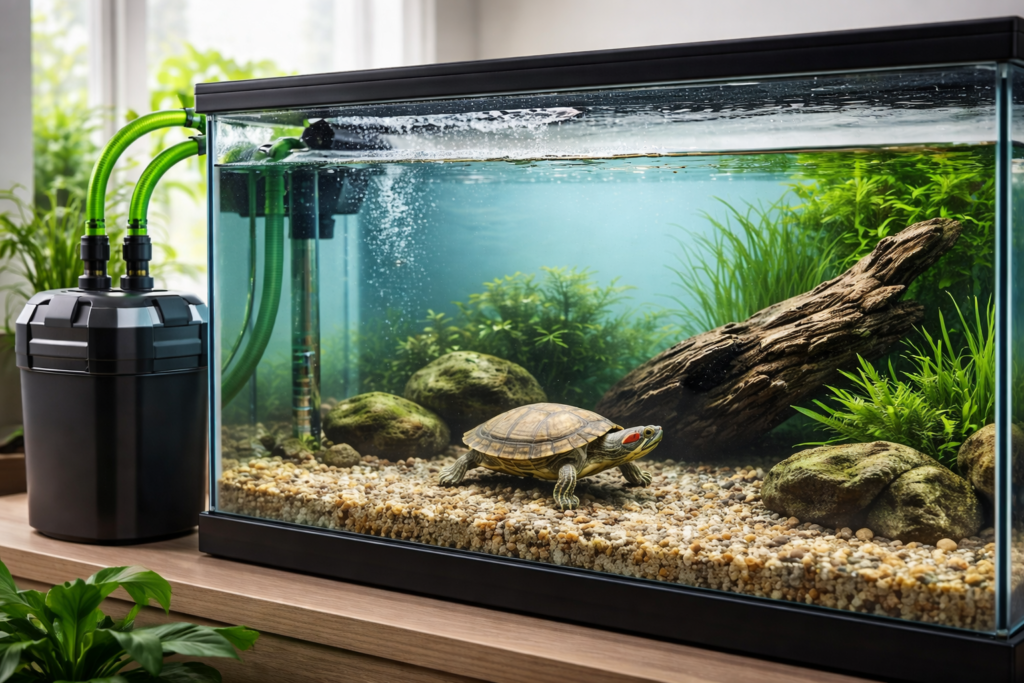
Canister filters work better for turtles because they hold more biological media, which breaks down waste more efficiently over time.
Canister filters are often recommended for turtle tanks because they:
- Hold more filter media
- Provide stronger water flow
- Handle solid waste better
- Require less frequent cleaning
They’re designed to process large volumes of water consistently, which is exactly what turtle tanks need.
👉 How to Keep Your Turtle Tank Clean Long Term
If your turtle tank keeps getting dirty within days, upgrading filtration is usually the turning point.
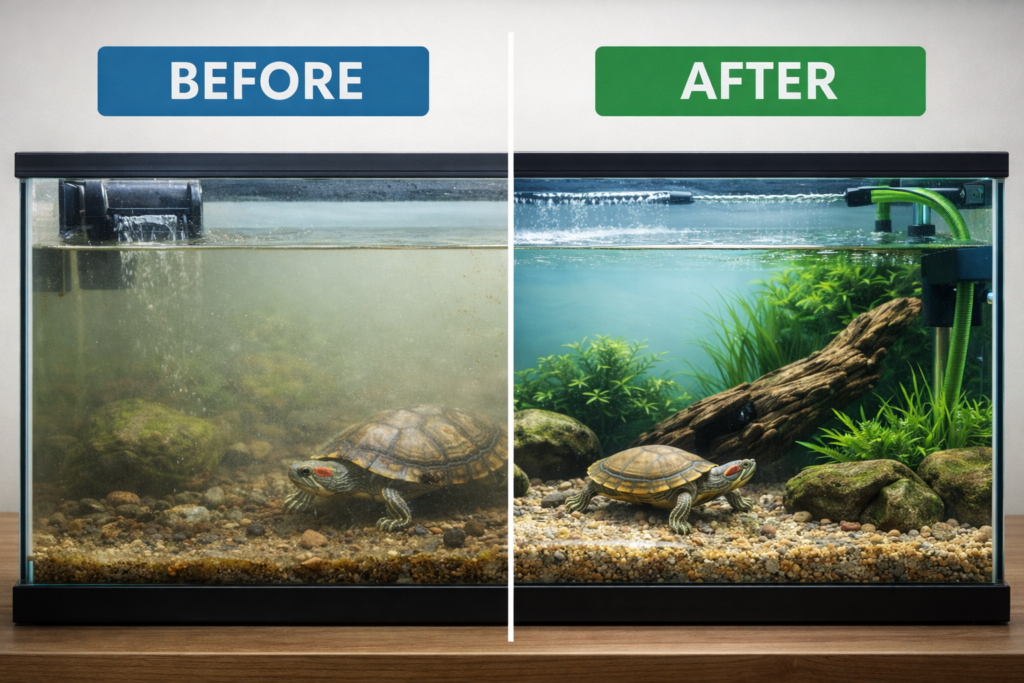
Most turtle owners try to fix dirty water by cleaning more often, but the real solution is upgrading filtration, not increasing maintenance. Choosing a filter rated well above your tank size can dramatically reduce cloudiness, odor, and maintenance time.
Final Thoughts
Turtle tanks get dirty fast because turtles are messy animals that require far stronger filtration than fish. Cleaning more often only treats the symptom not the cause.
For long-term results, focus on:
- Proper filter strength
- Correct filter media setup
- Realistic expectations for turtle waste
When filtration is right, clean water becomes easy, not constant work.
Frequently Asked Questions:
Turtle tanks get dirty quickly because turtles produce much more waste than fish. They eat messy foods, create large solid waste, and constantly stir debris from the tank bottom, which overwhelms weak or underpowered filters.
Cloudy turtle tank water is common, but it’s not normal long term. Cloudiness usually means the filter isn’t strong enough, the biological filtration is insufficient, or waste is breaking down faster than the system can handle.
A turtle tank filter should be rated for at least 2–3 times the tank size. For example, a 50-gallon turtle tank should use a filter rated for 100–150 gallons to handle turtle waste properly.
Frequent cleaning helps temporarily, but it doesn’t fix the root cause. If the filter is underpowered, the tank will continue getting dirty quickly no matter how often it’s cleaned.
Yes. Canister filters help keep turtle tanks cleaner because they provide stronger water flow, hold more filter media, and process waste more efficiently than smaller filters designed for fish tanks.