
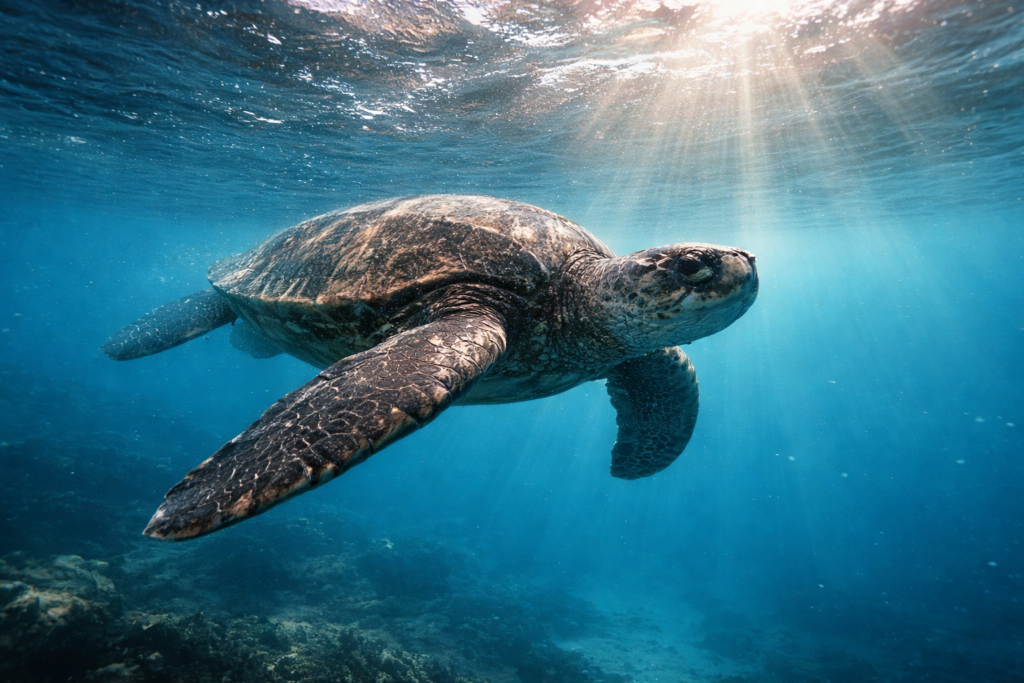
Discover the biggest turtle species ever recorded, from ancient prehistoric giants to today’s massive sea turtles, explained in a story-driven way.
If you’ve ever stood next to a fully grown turtle, you already know how surprising their size can be. What starts as a small hatchling can grow into something that feels almost prehistoric.
But even the largest turtles we see today are small compared to the true giants that once ruled the oceans.
This is the story of the biggest turtle species ever recorded from ancient monsters of the past to the living giants still swimming our seas.
When Turtles Were Truly Giant
Millions of years ago, turtles reached sizes that are hard to imagine today. During the Late Cretaceous period, an enormous sea turtle called Archelon dominated the oceans.
Archelon is considered the largest turtle species ever known to science.
It measured over 13 feet from flipper to flipper and weighed more than 2,000 pounds. Its shell alone was wider than the height of most adults. Unlike modern turtles, Archelon had a softer shell supported by a rigid bone structure, allowing it to grow to extreme sizes.
Standing next to Archelon would have felt more like facing a small car than a reptile.
The Largest Living Turtle Today
While Archelon no longer exists, one turtle still holds the crown for size among living species, the Leatherback Sea Turtle.
Leatherbacks regularly reach:
• Lengths over 6 feet
• Weights between 900 and 1,500 pounds
Unlike other turtles, leatherbacks don’t have hard shells. Instead, they have a leathery, rubber-like shell that helps them dive deep and regulate body temperature in cold ocean waters.
Seeing a leatherback surface near a boat is an unforgettable experience. Their massive body moves with surprising grace, reminding us how powerful nature can be.
Other Giant Turtle Species
Several other turtle species are considered giants in their own right.
Green Sea Turtles can grow over 5 feet long and weigh more than 400 pounds. Loggerhead Sea Turtles are slightly smaller but incredibly strong, known for their massive heads and jaws.
On land, giant tortoises such as the Galápagos tortoise can exceed 900 pounds and live for over a century.
Why Do Some Turtles Grow So Large?
Giant size in turtles is influenced by:
• Long lifespans
• Slow metabolism
• Abundant food sources
• Reduced predation
Large size helps turtles avoid predators, travel long distances, and store energy efficiently.
Biggest Freshwater Turtles
Freshwater turtles don’t reach the same sizes as sea turtles, but some come close.
Alligator snapping turtles can weigh over 200 pounds and have shells exceeding 26 inches in length. These turtles are often mistaken for rocks until they move.
Why Size Matters for Conservation
Large turtles grow slowly and reproduce late in life. This makes them especially vulnerable to threats like habitat destruction, fishing nets, and pollution.
Protecting giant turtles is critical because losing them disrupts entire ecosystems.
The biggest turtle species ever recorded remind us that turtles are survivors from a much wilder world. From the prehistoric Archelon to today’s leatherback giants, these animals tell a story of resilience, adaptation, and scale beyond imagination.
Learning about giant turtles helps us appreciate why protecting them matters, not just for turtles, but for the health of our planet.


