
Turtles are among the oldest living reptiles on Earth, with a history stretching back more than 200 million years. Despite their shared ancestry, there are different types of turtles that have evolved into an variety of species, each adapted to very different environments.
Understanding the different types of aquatic turtles is essential for anyone interested in turtle conservation, education, or pet care. From slow-moving land turtles to powerful ocean swimmers, turtles display remarkable diversity in size, diet, behavior, and habitat.
This guide will walk you through the main turtle types, explain how they differ, and help you understand where each fits in the natural world.
How Turtles Are Classified
Turtles are generally classified based on where and how they live. While there are hundreds of species worldwide, most turtles fall into three broad categories:
Freshwater turtles, Land turtles (tortoises), and Sea turtles.
Each category has unique characteristics that influence how the turtle eats, moves, and survives.
Freshwater Turtles
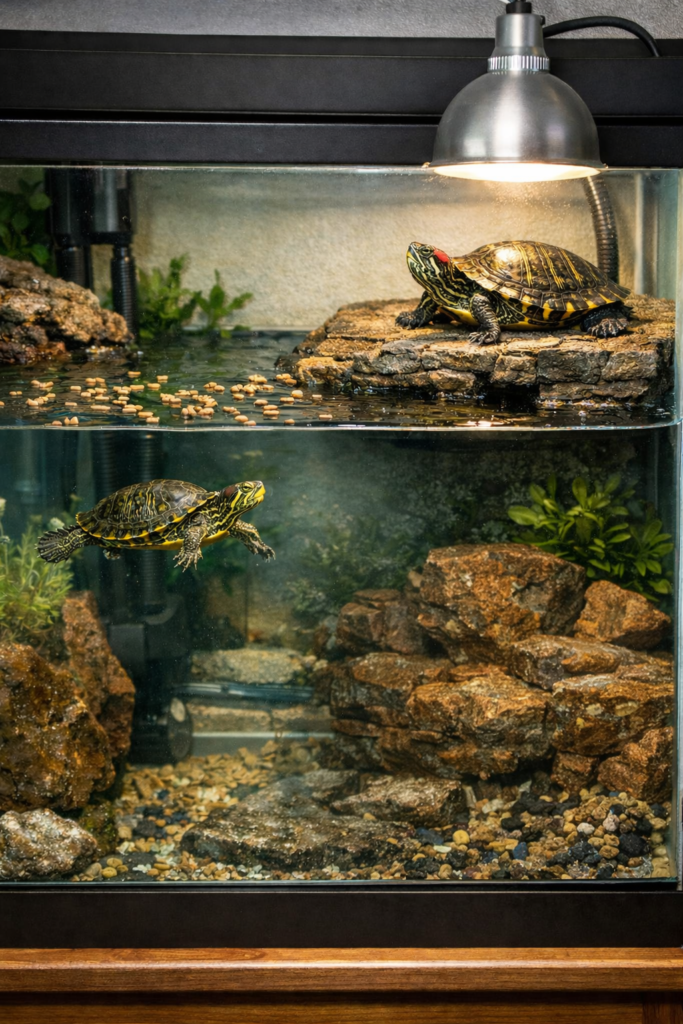
Freshwater turtles are the most commonly encountered turtles, especially as pets. They live in rivers, ponds, lakes, and wetlands.
These turtles spend most of their time in water but need dry areas for basking. Their shells are usually flatter and more streamlined than land turtles, allowing them to swim efficiently.
Common freshwater turtle species include Red-Eared Sliders, Painted Turtles, Snapping Turtles, Musk Turtles, and Softshell Turtles.
Freshwater turtles are generally omnivores. Young turtles eat more protein, while adults consume more plant matter.
Land Turtles (Tortoises)
Land turtles, commonly called tortoises, live exclusively on land. Unlike freshwater turtles, tortoises cannot swim and should never be placed in deep water.
They have dome-shaped shells, thick sturdy legs, and slow movement.
Popular land turtle species include Sulcata Tortoise, Russian Tortoise, Greek Tortoise, and Desert Tortoise.
Sea Turtles
Sea turtles are highly specialized marine reptiles. They spend nearly their entire lives in the ocean, only coming ashore to nest.
They have flippers instead of feet, lightweight shells, and powerful swimming ability.
The main types of sea turtles include Green Sea Turtle, Leatherback Sea Turtle, Loggerhead Sea Turtle, Hawksbill Sea Turtle, and Olive Ridley Sea Turtle.
Softshell Turtles
Softshell turtles have leathery, flexible shells instead of hard shells. They are fast swimmers and rely on speed for defense.
Snapping Turtles
Snapping turtles are powerful freshwater turtles known for their strong jaws and defensive nature.
Box Turtles
Box turtles are known for their hinged shells that close completely, offering excellent protection.
Why Turtle Diversity Matters
Each turtle species plays a unique role in its ecosystem, helping maintain ecological balance.
Turtles show extraordinary diversity in form and behavior. Understanding turtle varieties encourages conservation and responsible care.


