
There’s a common question ‘ How big do turtles get? ‘. Turtles come in an astonishing range of sizes. Some are small enough to fit in the palm of your hand, while others grow so large they outweigh most humans. Understanding how big turtles get is important for education, conservation, and especially for anyone considering a turtle as a pet.
This guide explains turtle size differences by species, how turtles grow, and what factors influence their final size.
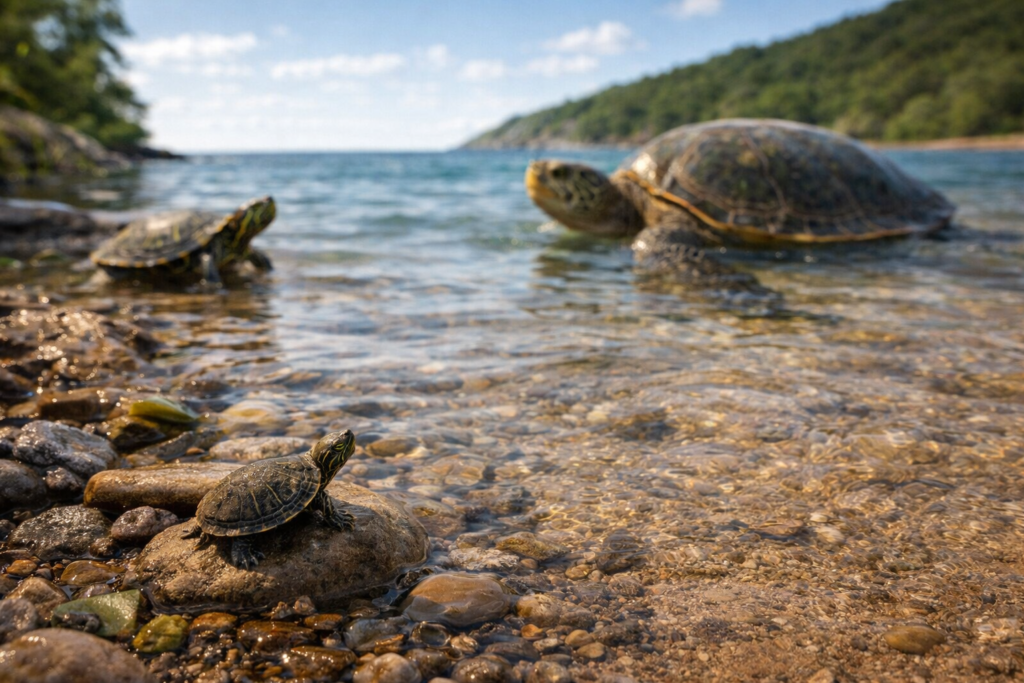
Average Turtle Size Overview
On average:
• Small turtle species grow 4–6 inches
• Medium turtles grow 8–12 inches
• Large turtles grow 14–24 inches
• Giant turtles can exceed 5 feet in length
Size varies widely depending on species and environment.
Small Turtle Species
Some turtles remain relatively small throughout their lives, making them popular among hobbyists.
Examples include:
• Musk turtles
• Spotted turtles
• Bog turtles
These turtles typically reach 4–6 inches in shell length. Despite their size, they still require proper habitats and care.
Medium-Sized Turtles
Many common freshwater turtles fall into this category.
Examples include:
• Red-Eared Sliders
• Painted turtles
• Cooters
These turtles usually grow between 8 and 12 inches. Red-Eared Sliders, one of the most popular pet turtles, often surprise owners with how large they become over time.
Large Freshwater Turtles
Large freshwater turtles can grow well beyond what most people expect.
Examples include:
• Snapping turtles
• Alligator snapping turtles
• Softshell turtles
Snapping turtles can reach shell lengths of over 18 inches and weigh more than 35 pounds.
Sea Turtle Size
Sea turtles include the largest turtle species in the world.
The Leatherback sea turtle is the largest, reaching over 6 feet in length and weighing more than 1,500 pounds. Other large sea turtles include green sea turtles and loggerheads.
What Affects Turtle Size?
Several factors influence turtle growth:
• Species and genetics
• Diet and nutrition
• Habitat space
• Water quality
• Temperature
Poor care or limited space can stunt growth, while proper conditions allow turtles to reach full size.
Why Turtle Size Matters for Pet Owners
Many turtles sold as small juveniles grow much larger than expected. A turtle’s adult size determines:
• Tank size
• Cost of care
• Space requirements
Understanding size expectations prevents abandonment and improper care.
Largest Turtles Ever Recorded
The largest turtle ever known was Archelon, a prehistoric sea turtle that measured over 13 feet long. Among living turtles, the leatherback holds the size record.
Turtles range from tiny freshwater species to massive ocean giants. Knowing how big turtles get helps people make informed decisions and appreciate the incredible diversity of these ancient reptiles.
Whether small or giant, every turtle deserves proper care and respect.


