
Pet turtle care for beginners requires proper knowledge of tank setup, lighting, feeding, and daily maintenance. Unlike common household pets, turtles have very specific environmental needs that must be met from day one. This guide explains everything a beginner needs to know before and after bringing a pet turtle home.
What Is a Pet Turtle and Is It Right for You
A pet turtle is a semi-aquatic or aquatic reptile that requires a controlled environment to survive and thrive in captivity. Unlike mammals, turtles are ectothermic, meaning they rely on external heat sources to regulate their body temperature.
Before choosing a turtle as a pet, consider the following:
- Turtles can live 20–40 years or more
- They require daily observation and weekly maintenance
- Initial setup costs are relatively high
- They are not interactive pets in the traditional sense
Turtles are ideal for people who prefer low-noise pets, enjoy routine care, and are comfortable maintaining a habitat rather than direct handling.
Best Turtle Species for Beginners
Not all turtles are suitable for beginners. Some species grow very large or have complex care requirements.
Beginner-friendly turtle species include:
- Red-eared sliders
- Painted turtles
- Musk turtles
- Map turtles
These species are hardy, widely available, and adapt well to captive environments when cared for properly. Avoid softshell turtles, snapping turtles, and exotic species as a first pet.
Things to Know Before Getting a Pet Turtle
Before buying or adopting a turtle, you should be prepared for:
- Long-term commitment
- Adequate space for a growing turtle
- Electricity costs for lighting and heating
- Regular cleaning and water changes
- Access to turtle-safe food and supplements
It is also important to check local regulations. Some turtle species are restricted or illegal to sell or own in certain regions.
Turtle Tank Setup Explained Simply
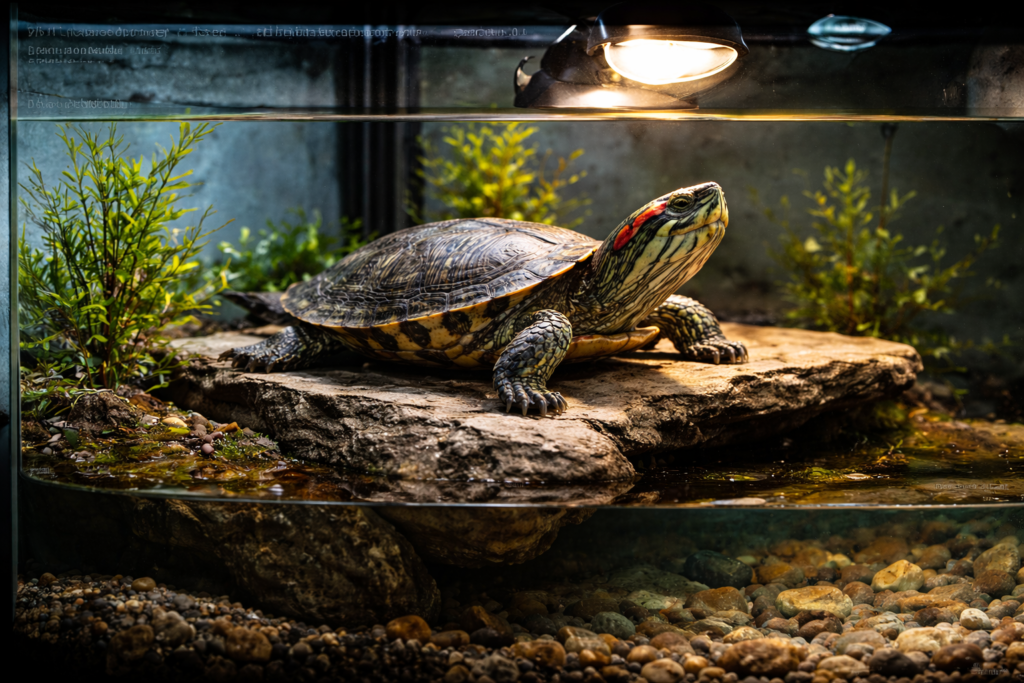
A proper tank setup is the foundation of turtle care.
Tank Size
A general rule:
- 10 gallons of water per inch of turtle shell
For example, a 4-inch turtle requires at least a 40-gallon tank. Bigger tanks are always better.
Tank Essentials
Your turtle tank must include:
- Glass or acrylic aquarium
- Water deep enough for swimming
- Secure basking platform
- Strong filtration system
- Lighting and heating equipment
Avoid small plastic tubs or bowls. They cause stress, poor growth, and health problems.
Water Requirements for Pet Turtles
Clean water is critical to a turtle’s health.
Water Depth
- Water should be at least 1.5–2 times the turtle’s shell length
- Turtles must be able to surface easily for air
Water Quality
- Use a powerful filter rated for at least double your tank size
- Perform 25–30% water changes weekly
- Use dechlorinated or treated tap water
Dirty water leads to shell rot, eye infections, and respiratory issues.
Basking Area and Why It Matters
Turtles need a dry basking area to regulate body temperature and dry their shells.
A proper basking area should:
- Be completely dry
- Allow the turtle to climb easily
- Support the turtle’s full body weight
- Be positioned under heat and UVB light
Without basking, turtles develop weak shells and compromised immune systems.
Lighting and Temperature Basics
Lighting is one of the most misunderstood aspects of turtle care.
UVB light allows turtles to:
- Absorb calcium
- Prevent metabolic bone disease
- Maintain shell strength
UVB bulbs must be replaced every 6–12 months, even if they still produce visible light.
Heat Lamp
- Basking area temperature: 90–95°F (32–35°C)
- Water temperature: 75–80°F (24–27°C) for most species
Use thermometers to monitor temperatures accurately.
What Do Pet Turtles Eat
Pet turtles are omnivores, especially when young.
Staple Diet
- Commercial turtle pellets (high quality)
- Leafy greens (romaine, dandelion greens)
- Aquatic plants
Protein Sources
- Insects (mealworms, crickets)
- Earthworms
- Occasional cooked fish or shrimp
Avoid feeding only protein. An imbalanced diet causes rapid growth and shell deformities.
How Often Should You Feed a Turtle
Feeding frequency depends on age.
- Juvenile turtles: Once daily
- Adult turtles: Every other day
Only feed what your turtle can eat in 5–10 minutes. Overfeeding leads to obesity and poor water quality.
Common Beginner Mistakes to Avoid
New turtle owners often make the same mistakes:
- Using tanks that are too small
- Skipping UVB lighting
- Overfeeding protein
- Infrequent water changes
- Handling turtles excessively
Turtles should be observed, not handled regularly. Excessive handling causes stress.
How to Tell If Your Turtle Is Healthy
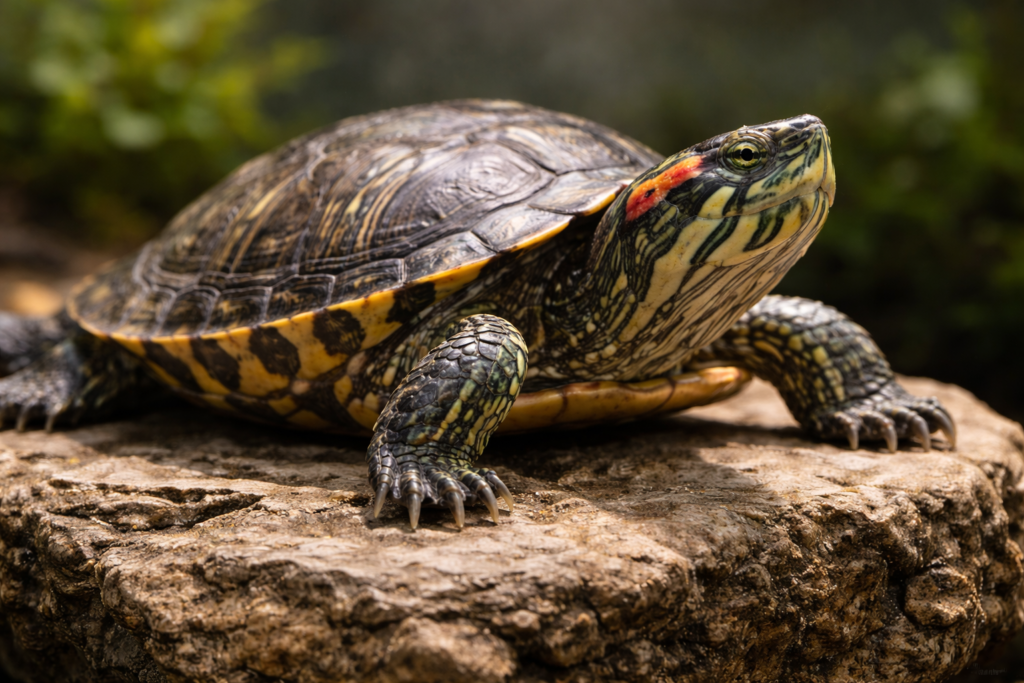
Signs of a healthy turtle:
- Clear, bright eyes
- Smooth, firm shell
- Active swimming and basking
- Strong appetite
Warning signs include:
- Swollen or closed eyes
- Soft or foul-smelling shell
- Lethargy
- Wheezing or open-mouth breathing
Consult a reptile veterinarian if symptoms persist.
Daily, Weekly, and Monthly Care Routine
Daily
- Check water and basking temperatures
- Observe behavior and appetite
If you want to learn about turtle behavior, you can read our complete guide to turtle behavior.
Weekly
- Partial water change
- Clean visible waste
- Inspect shell and skin
Monthly
- Deep-clean tank equipment
- Check bulb effectiveness
- Review diet balance
Consistency prevents most health problems.
Pet turtles are fascinating, long-living animals that require proper setup and consistent care. When their environmental needs are met, turtles remain healthy, active, and stress-free. Beginners who invest time in learning and preparation are far more likely to succeed as turtle owners.
Frequently Asked Questions About Pet Turtle Care for Beginners
Turtles can recognize routine and food providers, but they do not bond like mammals.
No. A basking area is essential for survival.
They are low-interaction but not low-maintenance.
Only with adequate space and monitoring. Aggression is common.


