
Pet turtles may look calm and low maintenance, but they are actually very sensitive animals. Small mistakes in diet, lighting, water quality, or temperature can quickly lead to health problems. Many turtle owners only realise something is wrong when their turtle stops eating or becomes inactive.
The good news is that most pet turtle health problems are preventable. Once you understand the common issues and know what signs to look for, keeping your turtle healthy becomes much easier.
In this guide, we will walk through the most common pet turtle health problems, how to recognise them early, and what you can do to prevent them.
How to tell if your pet turtle is sick
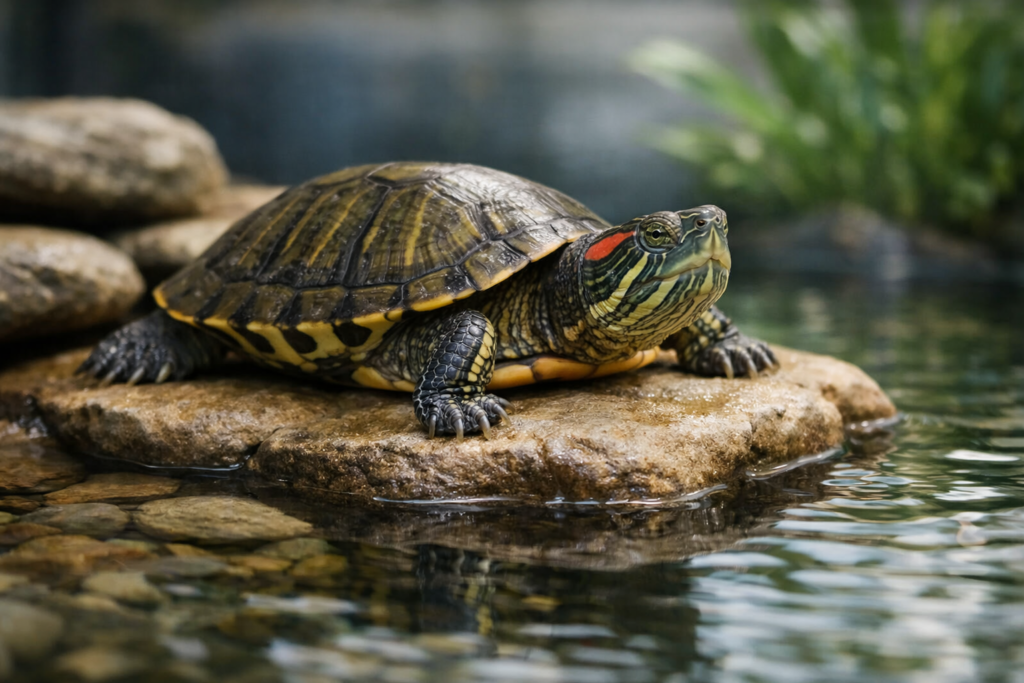
Healthy turtles are alert, curious, and have a strong appetite. They bask regularly, swim normally, and have clear eyes and a firm shell.
Your turtle may be unwell if you notice loss of appetite, lethargy, swollen or cloudy eyes, mucus around the nose or mouth, uneven swimming, or soft or foul smelling areas on the shell.
Common shell problems in pet turtles
Shell problems are among the most common health issues in pet turtles and are often linked to poor water quality or nutritional deficiencies.
Shell rot
Shell rot is caused by bacterial or fungal infections, usually due to dirty water or untreated shell injuries. Symptoms include white or grey patches, soft areas, pits, and an unpleasant smell.
Soft shell disease
Soft shell disease occurs when turtles lack calcium or vitamin D3. Without proper UVB lighting, turtles cannot absorb calcium properly. A healthy shell should feel hard, not flexible.
Respiratory infections in turtles
Respiratory infections often develop when turtles are kept in cold or damp conditions. Signs include wheezing, open mouth breathing, nasal discharge, and swimming at an angle.
Vitamin and nutritional deficiencies
An unbalanced diet can cause serious health issues. Vitamin A deficiency is common and may lead to swollen eyes, skin problems, and loss of appetite. A varied diet is essential for long term health.
Parasites and internal infections
Internal parasites may cause weight loss, weakness, diarrhea, or behavior changes. These issues often come from contaminated water or unsafe food sources.
How to prevent pet turtle health problems
Provide a balanced diet with quality pellets, leafy greens, vegetables, and suitable protein.
Maintain clean water with proper filtration and regular changes.
Use correct UVB lighting and stable temperatures.
Avoid overcrowding and unnecessary stress.
When to take your turtle to a vet
If your turtle stops eating, shows breathing difficulties, has severe shell damage, or does not improve after care adjustments, consult a reptile or exotic veterinarian.
Final thoughts on keeping your pet turtle healthy
By observing your turtle regularly and maintaining proper care conditions, you can prevent most common pet turtle health problems and ensure a long, healthy life.
Disclaimer
This article is for educational purposes only and does not replace professional veterinary advice.


