Red Eared Slider Care (Complete 2026 Guide for Healthy Turtles)
If you are planning to keep a turtle or already have one, understanding proper red eared slider care is essential. These turtles are often sold as beginner-friendly pets, but the reality is very different. They require a well-structured environment, consistent maintenance, and a clear understanding of their needs.
One of the biggest mistakes new owners make is underestimating how quickly things can go wrong. Poor water quality, lack of UVB lighting, or an imbalanced diet can lead to serious health issues within a short period of time.
The good news is that once you understand the fundamentals of red eared slider care, everything becomes much easier. With the right setup and routine, these turtles become active, responsive, and relatively low-maintenance pets.
This guide will walk you through everything you need to know, from basic setup to advanced care strategies.
Understanding Red Eared Sliders
Red eared sliders are among the most popular aquatic turtles in the world, and for good reason. They are widely available, relatively hardy, and have an engaging personality that makes them appealing to both beginners and experienced reptile keepers. However, their popularity often leads to a major misconception. Many people assume they are low-maintenance pets, when in reality, proper red eared slider care requires a good understanding of their natural behavior, growth patterns, and environmental needs.
One of the easiest ways to identify a red eared slider is by the distinctive red stripe located just behind each eye. This marking is what gives the species its name. Their shells are usually dark green with yellow patterns when they are young, although the color may darken as they age. Over time, especially in older turtles, the shell can become more muted or even slightly brownish, which is completely normal.
Red eared sliders are highly active and strong swimmers. In their natural habitat, which includes ponds, lakes, slow-moving rivers, and wetlands, they spend a large portion of their time in the water. They are constantly moving, exploring, and foraging for food. This natural behavior is something you will notice immediately if your tank setup is correct. A healthy turtle will rarely stay still for long and will often swim up to investigate its surroundings or even recognize feeding times.
At the same time, they are semi aquatic animals, which means they rely equally on both water and land areas. While they are excellent swimmers, they also require a dry basking spot where they can completely leave the water. In the wild, they are often seen climbing onto logs, rocks, or riverbanks to bask under the sun. This behavior is not optional. It is essential for their health. Basking helps them regulate their body temperature, dry their shell, and absorb ultraviolet light, which is crucial for calcium metabolism.
Another important aspect of understanding red eared sliders is their daily activity cycle. They are generally diurnal, meaning they are most active during the day. You will typically see them swimming and basking during daylight hours, while they become less active at night. This is why maintaining a proper light cycle in captivity is important, as it helps mimic their natural environment and keeps their biological rhythm stable.
One of the most overlooked aspects of red eared slider care is their lifespan. These turtles are not short-term pets. With proper care, they can live anywhere from twenty to thirty years, and in some cases even longer. This makes them a long-term commitment similar to owning a dog or cat. Before getting one, it is important to consider whether you are prepared to maintain their setup and care routine for many years. Many turtles are unfortunately abandoned or rehomed because owners were not aware of this long lifespan.
Growth is another factor that surprises many first-time owners. Red eared sliders grow much larger than the tiny hatchlings often seen in pet stores. Adult females can reach up to ten to twelve inches in shell length, while males are typically smaller, averaging around eight to ten inches. This size difference is important because it directly affects tank requirements. A small container that works for a baby turtle will quickly become inadequate as the turtle grows.
Their growth rate is influenced by several factors including diet, water quality, temperature, and overall care. Turtles that are fed a balanced diet and kept in optimal conditions tend to grow steadily and develop stronger shells. On the other hand, poor care can lead to stunted growth or health issues.
It is also important to understand their behavior in captivity. Red eared sliders can become quite responsive to their environment. Many owners notice that their turtles become more active when they approach the tank, especially during feeding times. While turtles are not social in the same way as mammals, they can still show recognition and patterns of behavior that make them interesting to observe.
However, they are not animals that enjoy frequent handling. Excessive handling can cause stress and should be kept to a minimum. They are best appreciated within their environment, where they can behave naturally.
Another key point is their adaptability. Red eared sliders are known for being hardy, which is one of the reasons they are so widespread. They can tolerate a range of conditions, but this does not mean they should be kept in suboptimal environments. Just because they can survive in poor conditions does not mean they will thrive. Proper care ensures that they remain active, healthy, and free from preventable diseases.
Understanding their natural instincts also helps in creating a better setup. For example, they enjoy having areas to climb, rest, and explore. Adding elements like driftwood or rocks can make the environment more enriching. This not only improves their quality of life but also encourages natural behaviors such as basking and exploring.
In summary, red eared sliders are fascinating and rewarding pets, but they come with specific care requirements that should not be overlooked. They are active, long-living, and grow much larger than most people expect. They require both aquatic and dry environments, a proper day and night cycle, and a setup that supports their natural behavior.
Once you understand these fundamentals, everything else in red eared slider care becomes much easier. You are no longer guessing or reacting to problems. Instead, you are creating an environment where your turtle can thrive naturally.
Tank Size and Setup
The tank is the foundation of proper red eared slider care. If the setup is wrong, everything else becomes harder to manage.
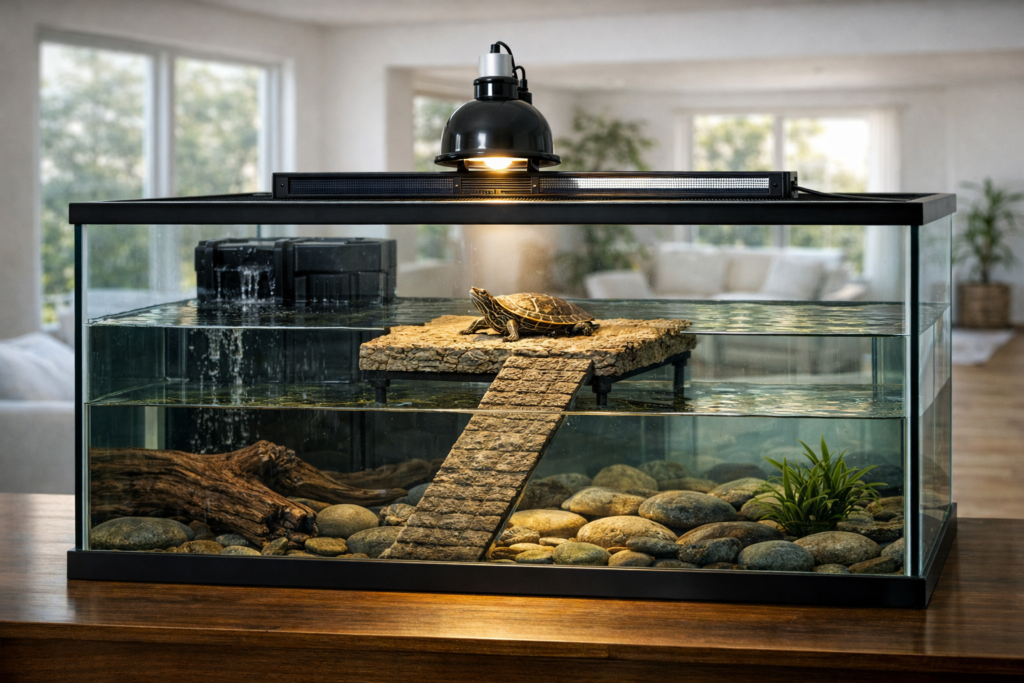
A common rule is to provide at least ten gallons of water per inch of shell length. This means an adult turtle will require a tank of at least seventy five gallons, and ideally one hundred gallons or more.
The tank should include enough swimming space, a stable basking platform, and a strong filtration system.
Water depth is also important. Red eared sliders are strong swimmers, so deeper water is generally better. It allows them to exercise and behave naturally.
The basking area should be completely dry and easily accessible. It should be positioned in a way that allows the turtle to climb onto it without difficulty.
Filtration and Water Quality
Water Quality and Filtration
Water quality is the single most important factor in proper red eared slider care. If there is one area you cannot afford to get wrong, it is this. Almost every common health issue in turtles can be traced back to poor water conditions, whether it is shell problems, infections, or stress-related behavior. Hence, turtle tank filter plays a vital role.
Unlike fish, turtles produce a significantly heavier bioload. They eat messy, tear apart their food, and release a large amount of solid and dissolved waste into the water. This waste quickly breaks down into ammonia, which is highly toxic even in small amounts. In a closed aquarium system, ammonia does not disappear on its own. It needs to be processed through a proper turtle tank filtration system and beneficial bacteria.
This is where understanding turtle tank filtration becomes critical.
A canister filter is widely considered the best option for turtle tanks because it provides three layers of filtration. Mechanical filtration removes visible debris such as leftover food and waste. Biological filtration supports beneficial bacteria that convert ammonia into less harmful substances. Chemical filtration, if used, can help remove odors and discoloration. To learn how to properly set up a canister filter for your turtle tank, please check this detailed guide.
The reason canister filters perform so well is because of their large media capacity. More media means more space for beneficial bacteria to grow, which directly improves water stability. This is especially important in turtle tanks where waste production is high.
When choosing a filter, one of the most important rules to follow is overfiltration. A filter rated exactly for your tank size is usually not enough for turtles. Read our turtle tank size guide for beginners to learn more about this factor. Instead, you should aim for a filter that is rated for at least two to three times your tank size. For example, if you have a 75 gallon tank, using a filter rated for one hundred fifty to two hundred gallons will give you much better results. This ensures stronger flow, better waste handling, and longer intervals between maintenance.
If you want a deeper breakdown of how to choose the right setup, you can refer to a complete guide on best canister filters for turtle tanks, where different models and performance levels are compared based on tank size and usage.
Another important concept to understand is filter media. Not all filter setups are the same, and the type of media inside your canister filter plays a major role in how effective it is. Mechanical media such as sponges and pads trap physical debris and need regular cleaning. Biological media such as ceramic rings or bio balls are where beneficial bacteria live and should be handled carefully. If you want to optimize your system further, learning about the best filter media for turtle tanks can significantly improve long-term performance.
Even with a strong filtration system, water changes are still necessary. A filter does not remove everything. Over time, dissolved waste, nitrates, and other compounds build up in the water. Performing regular partial water changes helps dilute these substances and keeps the environment stable.
A good routine is to change about twenty five percent of the water every week. In heavily stocked tanks or smaller setups, you may need to do this more frequently. The key is consistency rather than large, irregular changes.
It is also important to use dechlorinated water when refilling the tank. Chlorine and chloramines present in tap water can harm both your turtle and the beneficial bacteria in your filter.
Another factor that often gets overlooked is water clarity versus water quality. Clear water does not always mean clean water. You can have water that looks clear but still contains harmful levels of ammonia or nitrates. This is why having a proper filtration system and regular maintenance routine is essential, rather than relying on appearance alone.
Monitoring your tank regularly will help you understand how your system is performing. Signs of poor water quality include cloudy water, strong odor, reduced filter flow, and visible waste buildup. These are indicators that your filtration or maintenance routine needs adjustment.
If you are unsure about maintenance frequency, it helps to follow a structured approach. For example, understanding how often to clean a turtle canister filter can prevent both overcleaning and neglect. Cleaning too often can disrupt beneficial bacteria, while cleaning too late can reduce filter efficiency.
In the long run, investing in a strong filtration system and maintaining proper water quality will save you time, effort, and money. It reduces the need for constant cleaning, prevents health issues, and creates a more stable environment for your turtle. On the other note, baby turtles have separate filtration requirements, read our complete beginner guide to baby turtle tank filters.
Once your filtration system is properly set up and balanced, you will notice a major difference. The water stays clearer for longer, the tank smells better, and your turtle becomes more active and healthy. This is when your setup truly starts working the way it should.
Temperature and Heating
Maintaining the correct temperature is a critical part of red eared slider care, and it directly affects your turtle’s digestion, metabolism, immune system, and overall activity levels. Unlike mammals, turtles are cold-blooded animals, which means they rely entirely on their environment to regulate their body temperature.
If the temperature in your tank is not properly maintained, your turtle will not function as it should. You may notice reduced appetite, lethargy, weak immune response, or even long-term health issues. This is why temperature control is not just a comfort factor, it is essential for survival and proper development.
The water temperature should generally be kept between twenty four to twenty eight degrees Celsius. This range supports healthy digestion and keeps your turtle active. If the water is too cold, your turtle may stop eating or become sluggish. Over time, prolonged exposure to low temperatures can lead to respiratory infections and weakened immunity.
In addition to water temperature, the basking area plays an equally important role. The basking spot should be warmer, typically between thirty to thirty two degrees Celsius. This temperature difference between water and basking area creates a natural thermal gradient, allowing your turtle to move between zones and regulate its body temperature as needed.
Basking is not just about warmth. It also helps turtles dry their shell completely, which reduces the risk of fungal infections and shell rot. When combined with proper UVB lighting, basking becomes one of the most important daily activities for maintaining shell health and calcium absorption.
To achieve this setup, you will need two main heat sources. An aquarium heater is used to maintain stable water temperature, while a heat lamp is used to warm the basking area. Both need to be reliable and properly positioned.
A submersible aquarium heater is the most common choice for maintaining water temperature. It should be placed in an area with good water flow so that heat is distributed evenly throughout the tank. Choosing the right heater depends on your tank size, and it is always better to go with a slightly higher wattage than the minimum requirement to ensure stability.
Using a thermometer is just as important as using a heater. Without accurate measurement, you are essentially guessing. It is recommended to use at least one thermometer for the water and another for the basking area so you can monitor both zones effectively.
The basking area temperature is controlled using a heat lamp placed above the basking platform. The distance between the lamp and the platform determines how warm the surface becomes. Adjusting the height or wattage of the bulb allows you to fine-tune the temperature.
If you want a more optimized setup, combining your heating system with proper lighting is essential. A complete basking setup usually includes both a heat lamp and a UVB light positioned over the same area. This ensures that your turtle receives both warmth and ultraviolet exposure while basking. For a more detailed breakdown, you can refer to a dedicated guide on turtle basking and UVB lighting setup, which explains positioning, timing, and bulb selection.
Another important factor to consider is temperature stability. Sudden fluctuations in temperature can stress your turtle and weaken its immune system. This is why maintaining a consistent range is more important than achieving an exact number.
During colder months, especially in air-conditioned environments, water temperature can drop quickly if not properly regulated. This makes having a reliable heater even more important. On the other hand, in warmer climates, you may need to ensure that the tank does not overheat, especially if it is exposed to direct sunlight.
It is also worth noting that hatchlings and younger turtles may require slightly warmer water compared to adults. Warmer temperatures help support faster metabolism and growth during early stages.
Understanding the relationship between temperature and other aspects of care is also important. For example, digestion is directly linked to temperature. If your turtle is not eating properly, one of the first things to check is whether the water temperature is within the correct range.
Similarly, temperature plays a role in filtration efficiency. Beneficial bacteria inside your filter perform best within stable temperature ranges. If the water is too cold, the biological filtration process can slow down, which may affect overall water quality.
If you are unsure about how temperature interacts with your filtration system, it can be helpful to explore a more detailed guide on turtle tank filtration, where water parameters and system stability are explained in depth.
In summary, maintaining proper temperature is about creating a stable and balanced environment. The water should be warm enough to support activity and digestion, while the basking area should provide a hotter zone for thermoregulation and drying.
Once you have a reliable heater, a proper basking lamp, and accurate thermometers in place, temperature management becomes straightforward. Your turtle will naturally move between water and basking areas, regulating its body as needed.
When this system is working correctly, you will notice clear signs of a healthy turtle. It will be active, feeding regularly, and basking consistently. These are strong indicators that your temperature setup is supporting its overall well-being.
UVB Lighting and Basking
UVB lighting is one of the most critical yet often misunderstood parts of red eared slider care. Many turtle owners focus heavily on filtration and diet, but without proper UVB exposure, even the best setup will eventually lead to health problems.
Red eared sliders rely on ultraviolet B radiation to process calcium in their bodies. Without it, they cannot properly absorb calcium from their diet, no matter how nutritious the food is. Over time, this leads to a condition known as metabolic bone disease, where the shell becomes soft, deformed, or uneven. In severe cases, it can affect bone structure and overall mobility.
This is why UVB lighting is not optional. It is essential.
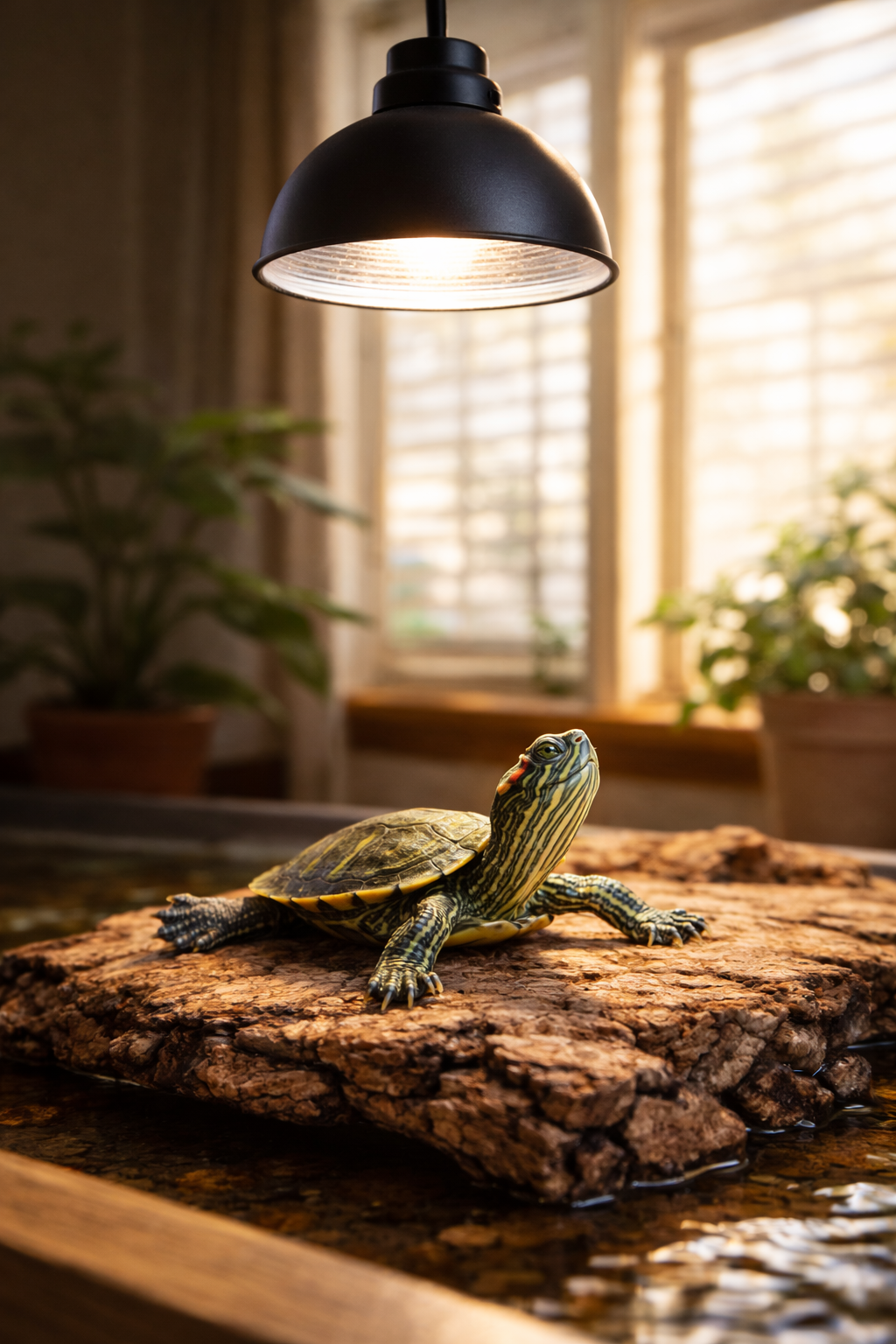
In a natural environment, turtles get UVB directly from sunlight while basking on rocks or logs. In captivity, you need to replicate this as closely as possible. This is done by placing a UVB bulb directly above the basking area so that your turtle receives exposure every time it comes out of the water.
The positioning of the UVB light is extremely important. It should be placed at the correct distance from the basking platform, usually within the recommended range provided by the manufacturer. If the bulb is too far away, the UVB intensity becomes too weak to be effective. If it is too close, it can cause discomfort or overheating when combined with a heat lamp.
A proper basking setup always includes both a UVB light and a heat lamp positioned over the same area. This encourages your turtle to bask naturally, as it receives both warmth and UVB exposure at the same time. If these two elements are separated, turtles may choose one over the other, which can lead to incomplete basking behavior.
The lighting schedule is another important factor. UVB lights should be on for around ten to twelve hours each day to mimic natural daylight cycles. Using a timer can make this process much easier and ensures consistency. A stable day and night cycle helps regulate your turtle’s biological rhythm and overall behavior.
One common mistake is assuming that a UVB bulb is still effective just because it is producing visible light. In reality, UVB output decreases over time, even if the bulb appears to be working normally. Most UVB bulbs need to be replaced every five to six months to maintain proper effectiveness.
If you want to optimize your setup further, it is worth exploring a detailed guide on turtle basking and UVB lighting, where bulb types, placement, and intensity levels are explained more thoroughly.
Basking itself is just as important as UVB exposure. It is a natural behavior that plays multiple roles in your turtle’s health. When a red eared slider climbs onto its basking platform, it is doing more than just resting.
Basking allows the turtle to dry its shell completely, which helps prevent fungal infections and shell rot. A constantly wet shell creates the perfect environment for bacteria and fungus to grow, which can lead to serious health issues if not addressed.
It also allows the turtle to regulate its body temperature. Since turtles are cold-blooded, they rely on external heat sources to warm up. After spending time in cooler water, basking under a heat lamp helps raise their body temperature to an optimal level.
You will often notice your turtle stretching its legs and neck while basking. This is completely normal behavior. It increases surface area exposure to both heat and UVB light, making the process more effective.
A properly designed basking platform is essential for encouraging this behavior. It should be stable, dry, and easy to access. If the platform is too small, slippery, or difficult to climb, your turtle may avoid using it altogether.
Another factor to consider is the relationship between basking, temperature, and filtration. For example, if your basking area is not warm enough, your turtle may not bask regularly. This can indirectly affect shell health and overall well-being. Similarly, if water temperature is too high, the turtle may feel less need to bask, which disrupts its natural routine.
This is why UVB lighting, heating, and overall tank setup must work together as a system. If you want to understand how these elements connect, it helps to review a complete guide on red eared slider tank setup, where all components are aligned for optimal performance.
In addition, proper basking behavior supports better digestion and immune function. When turtles are able to warm themselves effectively, their metabolism improves, which helps them process food more efficiently. This ties directly into diet and feeding routines, making UVB and basking an essential part of the overall care system.
If you notice that your turtle is not basking regularly, it is usually a sign that something in the setup is off. It could be incorrect temperature, poor lighting placement, or an uncomfortable basking platform. Identifying and fixing these issues early can prevent long-term problems.
In summary, UVB lighting and basking are not separate elements. They work together to support your turtle’s health at a fundamental level. UVB enables calcium absorption and shell development, while basking allows thermoregulation and shell drying.
When these are properly set up, you will notice a clear difference in your turtle’s behavior. It will bask regularly, remain active, and show strong signs of good health.
Once this part of your setup is dialed in, you have already solved one of the most important aspects of red eared slider care.
Diet and Nutrition
Diet is one of the most important pillars of proper red eared slider care, and it directly impacts growth, shell health, energy levels, and even water quality. A well-fed turtle is not just about feeding more food, but feeding the right balance of nutrients at the right stage of its life.
One of the biggest mistakes new turtle owners make is feeding the same type of food every day without understanding how their turtle’s dietary needs change over time. Red eared sliders are omnivores, but their diet shifts significantly as they grow. Please check our complete guide to learn what are the best food for your red eared slider turtle.
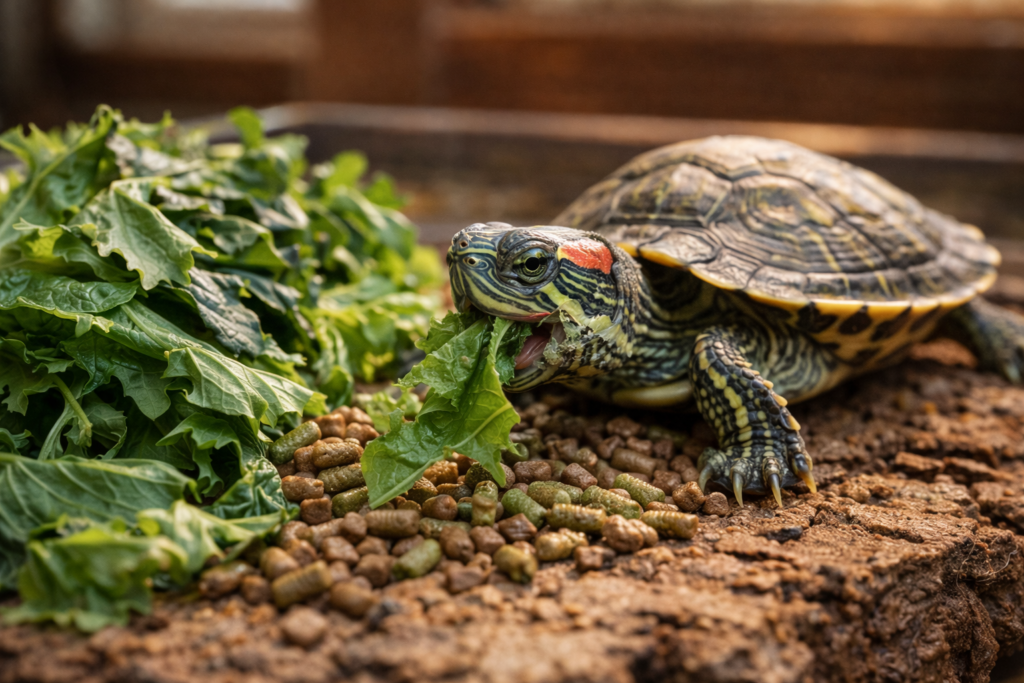
When they are young, red eared sliders require a protein-rich diet to support rapid growth and development. At this stage, their feeding routine should include high-quality turtle pellets as a staple, along with protein sources such as insects, worms, or occasional feeder fish. Protein helps build muscle, supports shell development, and keeps young turtles active.
However, as they mature, their dietary needs begin to change. Adult red eared sliders require a more balanced diet with a stronger focus on plant-based foods. Leafy greens should gradually become a major part of their meals. Options like romaine lettuce, kale, collard greens, and aquatic plants are excellent choices.
This shift is important because too much protein in adult turtles can lead to rapid growth, shell deformities, and long-term health issues. A balanced diet helps maintain steady growth and overall health.
High-quality turtle pellets should always remain a core part of the diet, regardless of age. They are specifically formulated to provide essential nutrients such as calcium, vitamins, and minerals that may not always be present in fresh foods. Choosing the best turtle food can make a significant difference in your turtle’s long-term health, especially when it comes to shell strength and immune support.
If you want a deeper breakdown of what to feed and what to avoid, it is worth exploring a dedicated guide on the best turtle food, where different brands, ingredients, and feeding strategies are explained in detail.
Variety is another key factor in maintaining a healthy diet. Feeding the same food repeatedly can lead to nutritional gaps over time. Rotating between pellets, greens, and occasional protein sources ensures your turtle receives a more complete range of nutrients.
Feeding frequency also plays an important role. A complete feeding guide is available for you to learn on how often you should be feeding your beloved red eared slider. Juvenile turtles should generally be fed once a day since they are still growing and require more energy. Adult turtles, on the other hand, can be fed every other day. Overfeeding adults is one of the most common problems and can lead to obesity and poor water quality.
A simple way to measure portion size is to feed an amount roughly equal to the size of your turtle’s head. This prevents overfeeding while still providing enough nutrition.
Overfeeding does not just affect your turtle. It also impacts your entire tank system. Uneaten food quickly breaks down in the water, increasing ammonia levels and putting extra strain on your filtration system. This is one of the main reasons why many turtle tanks become cloudy or develop a strong odor.
If you are dealing with water quality issues, it is often helpful to review both your feeding habits and your filtration setup together. A detailed guide on turtle tank filtration can help you understand how diet and waste production are connected.
Another important aspect of diet is calcium intake. Turtles require calcium for proper shell growth and bone strength. While pellets usually contain calcium, additional sources such as cuttlebone can be provided in the tank. This allows your turtle to consume calcium as needed.
Hydration is usually not a concern for aquatic turtles since they feed in water, but the quality of that water plays a role in how well they digest food. Proper temperature and clean water support better digestion and nutrient absorption, which ties back into your heating and filtration setup.
It is also important to observe your turtle’s eating behavior. A healthy red eared slider will show strong interest in food and eat actively. Sudden changes in appetite can indicate issues with temperature, water quality, or overall health.
Avoid feeding processed human food, dairy products, or anything not specifically suitable for turtles. These can cause digestive issues and long-term health problems.
Treats can be given occasionally, but they should not replace a balanced diet. Think of them as supplements rather than staples.
In summary, a proper diet for red eared sliders is about balance, variety, and consistency. Young turtles need more protein, while adults require more plant-based foods. High-quality pellets provide a strong nutritional base, while fresh foods add variety and enrichment.
When feeding is done correctly, you will notice clear benefits. Your turtle will be more active, its shell will look healthier, and your tank will be easier to maintain. Diet is not just about feeding your turtle, it is about supporting the entire ecosystem of your setup.
If you build this part of your care system properly, it will positively impact every other aspect of red eared slider care.
Behavior and Activity
Healthy red eared sliders are active and curious.
You will often see them swimming, exploring their tank, and basking under the heat lamp.
Stretching their legs and neck while basking is completely normal. It helps them absorb heat and UVB light more effectively.
If your turtle becomes inactive, refuses to eat, or hides constantly, it may indicate a problem with the setup or health.
Check out our complete guide to turtle behavior to know more about their activities and their reactions.
Common Health Problems
Understanding potential health issues is an important part of red eared slider care.
Shell rot is one of the most common problems. It usually occurs due to poor water quality or lack of proper basking.
Respiratory infections can develop if the water is too cold or the turtle is exposed to drafts.
Vitamin deficiencies can occur if the diet is not balanced or if UVB lighting is inadequate.
Early signs of illness include swollen eyes, soft shell, lack of appetite, and unusual behavior.
Prompt action and proper care adjustments can prevent most of these issues.
Cleaning and Maintenance Routine
Consistency is key when it comes to pet turtle care.
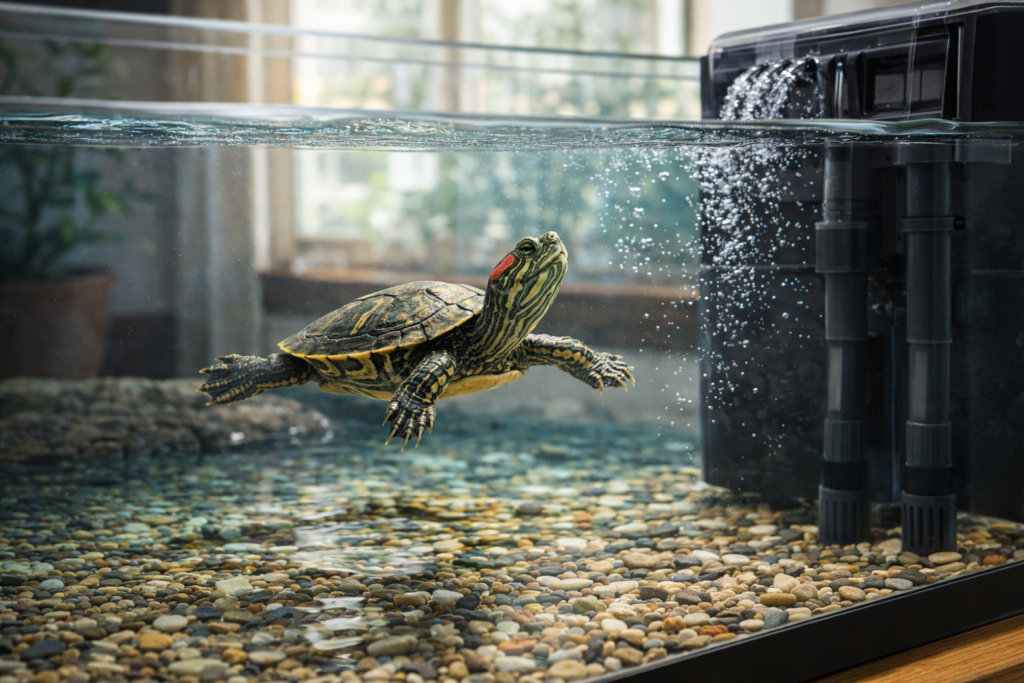
Weekly water changes help maintain water quality and reduce waste buildup.
The filter should be checked regularly to ensure it is functioning properly.
A full cleaning of the canister filter is typically needed every one to three months, depending on the setup.
The basking area should also be kept clean and dry.
Regular observation of your turtle is one of the best ways to detect problems early.
Handling and Interaction
Turtles are not highly social animals, but they can recognize their owners over time.
Handling should be kept to a minimum to avoid stress.
When handling your turtle, always support its body properly and avoid sudden movements.
Hygiene is important. Always wash your hands before and after handling your turtle.
Enrichment and Tank Environment
Providing a stimulating environment is an often overlooked but very important part of red eared slider care. While turtles can survive in a basic setup, they tend to thrive when their environment allows them to express natural behaviors like exploring, climbing, and interacting with their surroundings.
In the wild, red eared sliders live in dynamic environments filled with logs, rocks, plants, and varying water depths. Replicating some of these elements in your tank can significantly improve their quality of life. A well-structured tank does not just look better, it also keeps your turtle mentally and physically active.
Adding driftwood is one of the easiest ways to enhance your tank. It provides a natural climbing surface and can also act as a resting spot just below the water surface. Smooth rocks can be used to create different levels within the tank, giving your turtle areas to explore or pause while swimming. These small variations in the environment encourage movement and prevent boredom.
Aquatic plants, whether real or artificial, can also play a role in enrichment. Live plants can help improve water quality to some extent and create a more natural feel, while artificial plants are easier to maintain. Turtles may nibble on live plants, so choosing hardy or fast-growing varieties is important if you plan to include them.
Creating depth variation in the tank is another simple but effective strategy. Instead of having a completely uniform water level, adding structures that create shallow resting zones can make the environment more engaging. This mimics natural habitats where turtles move between deeper and shallower areas.
However, safety should always come first. All decorations should have smooth edges to prevent injury. Avoid anything with sharp points, loose parts, or materials that can break easily. Turtles are strong and curious, and they will push, climb, and sometimes try to bite objects in the tank.
It is also important to ensure that decorations do not interfere with filtration or block water flow. A well-decorated tank should still allow your filter to function efficiently and maintain good water circulation.
In the end, enrichment is about balance. You want to create an environment that is interesting without overcrowding the tank. A clean, well-organized setup with a few thoughtfully placed elements can go a long way in keeping your turtle active, healthy, and engaged.
Growth and Long-Term Care
As your turtle grows, its needs will change.
You may need to upgrade the tank size and filtration system over time.
Long-term care also includes regular monitoring of diet, water quality, and overall health.
Red eared sliders are hardy animals, but they rely on consistent care to thrive.
Final Thoughts
Proper red eared slider care is about creating a stable and balanced environment.
Clean water, proper lighting, a healthy diet, and regular maintenance all work together to keep your turtle healthy.
Once you set up everything correctly, caring for your turtle becomes much easier and more enjoyable.
These turtles are rewarding pets that can live for decades, making the effort worthwhile.
Frequently Asked Questions
How hard is red eared slider care for beginners
Red eared slider care is manageable for beginners if the tank is set up properly and maintenance is consistent.
How often should I feed a red eared slider
Juveniles should be fed daily, while adults can be fed every other day with regular access to greens.
Do red eared sliders need a filter
Yes, a strong filter is essential because turtles produce a large amount of waste.
Can red eared sliders live without UVB light
No, UVB lighting is necessary for proper calcium absorption and overall health.
How big do red eared sliders get
They can grow up to ten to twelve inches in shell length.


