
Shell rot is one of the most common and concerning health problems seen in pet turtles. While it may start as a small spot or discoloration on the shell, untreated shell rot can worsen over time and seriously affect your turtle’s health. The good news is that shell rot in pet turtles is often preventable and manageable when identified early.
In this guide, we will explain what shell rot is, why it happens, how to recognize the symptoms, and what safe steps you can take to protect your turtle’s shell health.
What is shell rot in pet turtles
Shell rot is a bacterial or fungal infection that affects a turtle’s shell. It usually develops when bacteria enter through small cracks, injuries, or soft areas on the shell. Poor water quality and improper basking conditions are the most common triggers.
A healthy turtle shell should feel hard, smooth, and have an even color. Any soft spots, pits, or foul smell may indicate shell rot. To learn about the unusual behavior and how you should overcome these health issues, please read our complete guide to turtle behavior.
What causes shell rot in pet turtles
Shell rot does not appear overnight. It is usually the result of ongoing care issues.
Dirty or stagnant water allows harmful bacteria to grow.
Small shell injuries can become infected if not kept clean.
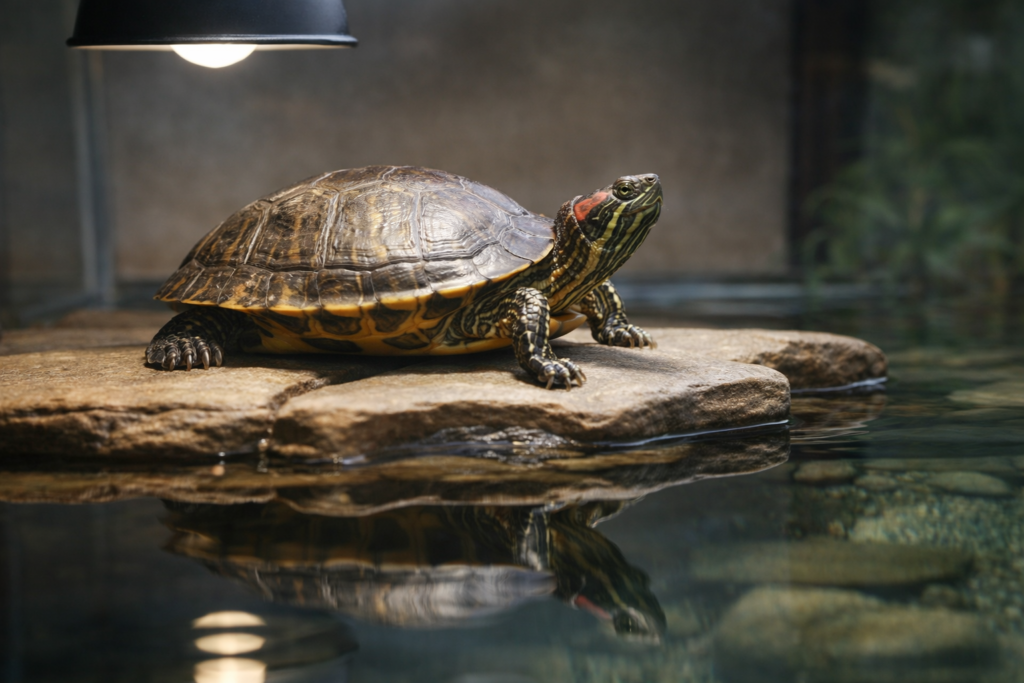
Lack of a proper basking area prevents the shell from drying fully.
Weak immunity caused by poor nutrition makes turtles more vulnerable.
Common shell rot symptoms to watch for
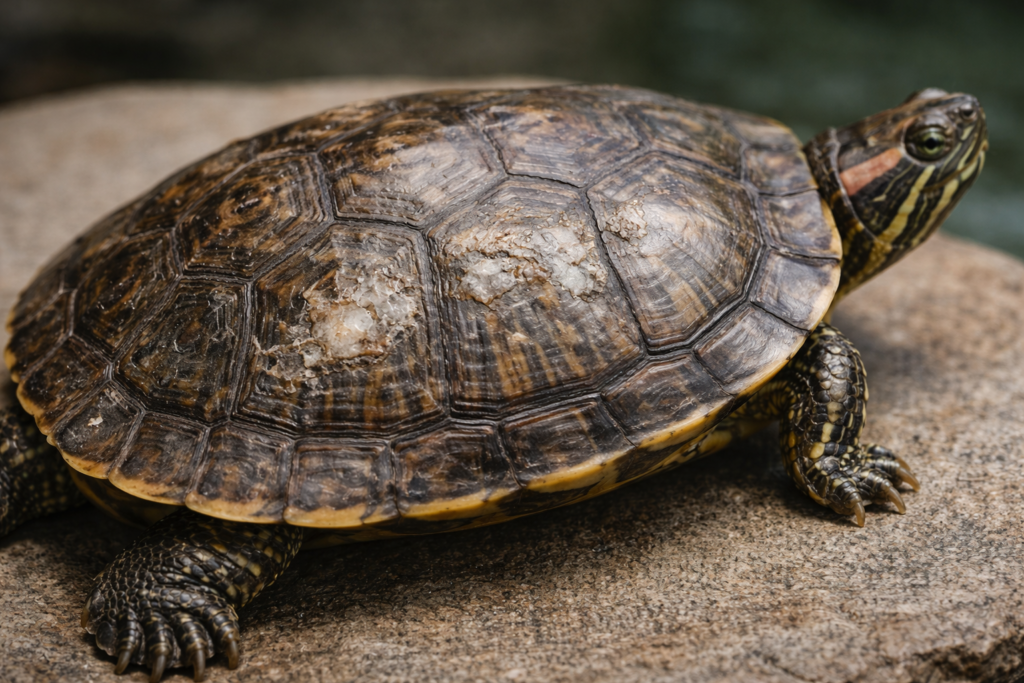
Early detection makes treatment much easier. Watch for these turtle shell rot symptoms:
White, gray, or discolored patches on the shell
Soft or spongy areas on the shell
Pitting, flaking, or peeling scutes
A strong unpleasant odor
Lethargy or reduced appetite in advanced cases, in order to treat reduced appetite in turtles, please read our complete guide to what turtles eat to understand on how to treat these issues.
Is shell rot contagious or dangerous
Shell rot is not contagious between turtles, but it is dangerous if ignored. Mild cases can become severe infections that spread deeper into the shell layers. Early care greatly improves recovery and reduces long-term damage.
How shell rot is treated in pet turtles
Shell rot treatment for turtles focuses on improving the environment and supporting natural healing.
- Keep the shell clean and dry by maintaining proper basking time.
- Improve water quality with regular cleaning and filtration. We have a separate detailed guide on Turtle tank filtration, please do read it.
- Ensure correct UVB lighting to support shell health.
- Provide a balanced diet to strengthen the immune system.
Avoid using chemicals or medications without guidance from a reptile veterinarian.
How to prevent shell rot in pet turtles
1. Prevention is the most effective approach.
2. Clean the tank regularly and monitor water quality.
3. Provide a dry, warm basking area.
4. Feed a balanced diet with proper calcium sources.
5. Observe your turtle frequently for early signs of shell issues.
When to see a vet for shell rot
If shell damage worsens, spreads, smells foul, or does not improve after habitat corrections, consult a reptile or exotic veterinarian. Professional treatment may be necessary for deep or advanced infections.
Final thoughts on shell rot and turtle shell health
Shell rot can look alarming, but with early detection and proper care, many turtles recover well. Consistent habitat maintenance and regular observation are the best defenses against shell rot and other shell problems.
Disclaimer:
This article is for educational purposes only and does not replace professional veterinary advice. Always consult a qualified reptile veterinarian for shell infections or serious health concerns.


