
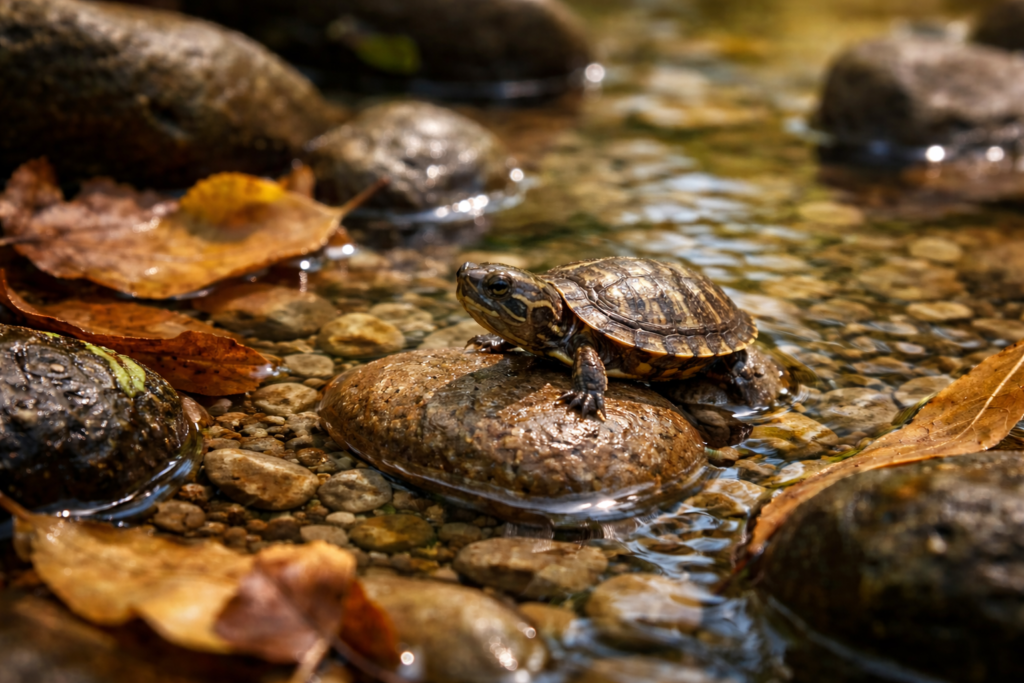
When people imagine turtles, they often picture large shells and slow-moving bodies. However, not all turtles grow big. Some turtle species remain surprisingly small throughout their entire lives. Let’s learn about the smallest turtle species in the world.
Understanding the smallest turtle species in the world is fascinating not only from an educational standpoint but also for those curious about turtle diversity. These tiny turtles have adapted to specific environments where small size offers survival advantages.
What Makes a Turtle “Small”?
A turtle is generally considered small if its adult shell length stays under 6 inches. These turtles often weigh only a few ounces and can fit comfortably in the palm of a hand.
Small size does not mean low maintenance. Even the smallest turtles require proper habitat, diet, and care to live healthy lives.
Bog Turtle – The Smallest Turtle in the World
The bog turtle is widely recognized as the smallest turtle species in the world.
Adult bog turtles typically measure only 3.5 to 4.5 inches in shell length. They are found in wetlands and marshes in parts of North America.
Bog turtles are critically endangered due to habitat loss, pollution, and illegal collection.
Spotted Turtle
Spotted turtles are small, visually striking turtles known for their black shells covered in bright yellow spots.
They usually grow between 4 and 5 inches in length and inhabit shallow wetlands, ponds, and marshes. Despite their small size, spotted turtles are active and alert.
Musk Turtle (Stinkpot Turtle)
Musk turtles, also called stinkpot turtles, are among the smallest freshwater turtles commonly kept as pets.
They typically reach 4 to 5 inches in shell length. Musk turtles spend most of their time underwater and are known for releasing a strong odor when threatened.
Flattened Musk Turtle
The flattened musk turtle is another small species, slightly larger than the common musk turtle.
It usually grows up to 5 inches and lives in fast-moving streams. This species is rare and faces threats from habitat destruction.
Why Some Turtles Stay Small
Small turtle size is influenced by:
• Genetics
• Habitat limitations
• Food availability
• Predation pressure
Staying small allows turtles to hide easily, require fewer resources, and survive in restricted environments.
Are Small Turtles Easier to Care For?
Small turtles are often mistaken as easier pets. While they need less space than large turtles, they still require proper filtration, UVB lighting, and a balanced diet.
Improper care can shorten their lifespan significantly.
Conservation Concerns
Many small turtle species are endangered due to:
• Habitat destruction
• Pollution
• Illegal pet trade
Protecting wetlands and enforcing wildlife laws are critical to preserving these species.
The smallest turtle species in the world prove that size does not define importance. These tiny turtles play vital roles in their ecosystems and represent some of the most fragile members of the turtle family. Learning about small turtles helps raise awareness and appreciation for turtle conservation.


