Choosing the right tank size for your turtle is one of the most important decisions you will ever make as a turtle owner. It affects your turtle’s health, growth, behavior, and even lifespan. An inappropriate size of a turtle tank may lead to unusual turtle activity and growth, to understand better about your turtle’s activity and habitat please do read our complete guide to turtle behavior. Many beginners underestimate how much space a turtle truly needs, mostly because turtles are sold when they are very small. What looks fine today can become dangerously cramped within a year.
This guide is written to remove confusion and guesswork. By the end, you will understand how tank size relates to turtle growth, why bigger tanks are always better, and how to choose the right size based on age and shell length.
Why Tank Size Matters More Than Anything Else
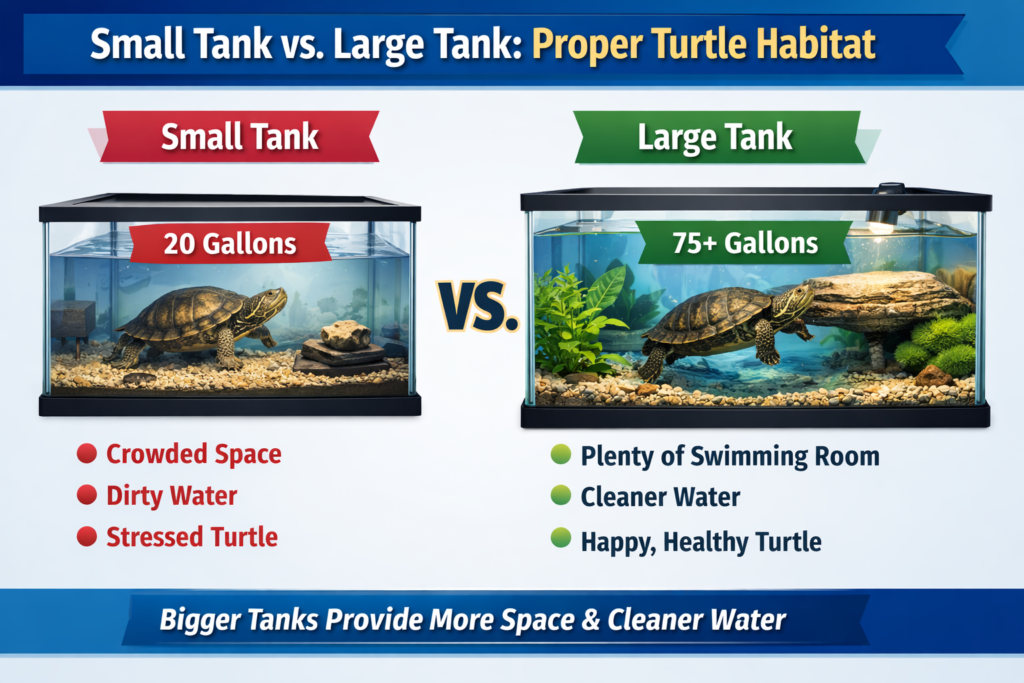
A turtle lives inside its tank. Unlike cats or dogs, it cannot walk away when it feels uncomfortable. When the tank is too small, water becomes dirty faster, stress levels rise, and health problems slowly appear.
Small tanks cause poor water quality. Poor water quality leads to infections, shell problems, and weakened immunity. Many beginner turtle health issues can be traced back to insufficient tank size.
A properly sized turtle tank setup gives your turtle room to swim, exercise, bask comfortably, and behave naturally. It also makes maintenance easier for you because water stays cleaner for longer.
The Golden Rule of Turtle Tank Size
There is one simple rule that works for most aquatic turtles.
For every inch of turtle shell length, you need at least ten gallons of water.
This rule refers to shell length measured from front to back, not including the head or tail.
For example, a turtle with a four inch shell needs at least forty gallons of water. A six inch turtle needs at least sixty gallons. This is the minimum starting point, not the ideal maximum.
Whenever possible, choose a tank larger than the minimum. More water volume means better stability and less frequent cleaning.
Tank Size by Turtle Age
Many beginners buy tanks based on the turtle’s current size without thinking ahead. Turtles grow, and they grow faster than most people expect.
Hatchlings and Very Young Turtles
Hatchlings are small and fragile. While they do not need massive tanks immediately, they still need enough water to swim safely.
A twenty gallon tank can work temporarily for hatchlings. It should never be considered permanent housing. Water must be kept shallow enough to prevent exhaustion but deep enough for swimming.
Even at this stage, planning for an upgrade is essential.
Juvenile Turtles
Juvenile turtles grow quickly. This stage often catches beginners off guard.
Once the shell reaches three to four inches, a forty gallon tank becomes necessary. This size allows proper swimming space and supports stronger filtration.
Juveniles are active and curious. Cramped tanks can lead to stress and aggressive behavior.
Adult Turtles
Adult turtles require large tanks. This is where long term planning truly matters.
Most adult aquatic turtles need tanks ranging from seventy five to one hundred twenty gallons or more. Large species may require custom setups.
At this stage, the turtle’s waste output is high. A small tank becomes unhealthy very quickly, even with strong filtration.
Tank Size by Shell Length
Instead of guessing by age, shell length provides a more accurate measurement.
A turtle with a two inch shell needs at least twenty gallons whereas a four inch shell needs forty gallons. A turtle with an eight inch shell needs eighty gallons.
Remember that these numbers represent minimum water volume. Larger tanks always provide better quality of life.
Why Bigger Tanks Are Always Better
Many beginners worry that large tanks will stress small turtles. In reality, the opposite is true when the setup is done correctly.
A larger tank allows better temperature stability and gives the turtle more exercise. It keeps waste diluted. It reduces sudden changes in water chemistry.
The only requirement is proper setup. Platforms, basking areas, and water depth must be adjusted to match the turtle’s size.
If budget and space allow, buying a large tank early saves money in the long run. Filtration system is a very important part related to the tank size which is why we have complete guide to filters according to the tank sizes.
1. 75 gallon turtle tank filters.
2. 40 gallon turtle tank filters.
Common Tank Size Mistakes Beginners Make
The most common mistake is buying a starter kit that includes a small tank. These kits are often marketed as complete solutions but quickly become inadequate.
Another mistake is relying on pet store advice alone. Many stores underestimate tank size needs to make sales easier.
Some owners believe frequent cleaning can compensate for small tanks. This is not true. Constant water changes stress turtles and remove beneficial bacteria.
Avoid stacking decorations to reduce swimming space. Open water is more important than visual decoration.
Indoor vs Outdoor Tank Size Considerations
Indoor tanks are limited by space. When setting up indoors, always measure the area where the tank will sit. Large tanks are heavy when filled with water.
Outdoor setups such as ponds offer more space and natural sunlight. They can be excellent for turtles in suitable climates. However, they require protection from predators and temperature extremes.
For beginners, indoor tanks are easier to control and monitor.
Planning for the Future
Turtles can live for decades. Choosing a tank is not a short term decision.
Ask yourself where you will be in five years. Will you have space for a large tank. Will you be able to maintain it. Thinking ahead prevents painful rehoming decisions later.
Upgrading tanks repeatedly costs more than buying a large tank once.
How Tank Size Affects Filtration and Heating
Larger tanks require stronger filters and heaters, but they also work more efficiently.
A strong filter in a large tank does not need to work as hard. Water stays cleaner longer. Temperature remains stable.
Small tanks with powerful equipment experience rapid fluctuations, which can stress turtles.
Balance is key. Tank size, filter strength, and heater capacity must match.
Emotional Responsibility of Space
Providing enough space is an act of respect. A turtle cannot tell you it feels cramped. It shows discomfort through reduced activity and health decline.
When given space, turtles swim confidently, explore their environment, and bask regularly. These behaviors indicate comfort and wellbeing.
Choosing the right tank size is one of the most loving decisions you can make for your turtle.
Final Thoughts for Beginners
If you remember only one thing from this guide, remember this. Bigger tanks are always better for turtles.
Start with the largest tank you can reasonably afford and fit into your home. Plan for growth, not just the present.
A proper tank size sets the foundation for everything else. Filtration works better. Maintenance becomes easier. Your turtle lives a healthier and calmer life.
Tank size is not about luxury. It is about meeting a basic need.
When you get this right, you are already doing better than most beginner turtle owners. However, choosing the right tank size is important — see our best turtle tanks for beginners guide


