Types of Turtles: A Complete Guide for Beginners and Future Turtle Owners
The first time I searched for types of turtles, I expected a simple answer. Maybe a list. Maybe a few pictures. Something easy to understand.
Instead, I found myself jumping between pages that either listed dozens of species without context or mixed turtles, tortoises and terrapins as if they were all the same thing.
That confusion is exactly why this guide exists.
If you are here, you are probably in one of these situations
- You are thinking about getting a pet turtle
- You already have one and want to understand it better
- You are simply curious about how many types of turtles exist
No matter where you are starting from, the goal of this guide is simple. I want you to walk away with clarity. Not just names, but understanding.
Because once you truly understand the different types of turtles, everything else becomes easier. Choosing a species. Setting up a tank. Avoiding beginner mistakes.
And trust me, I have made enough of those mistakes to know what matters.
How Many Types of Turtles Are There
There are more than 350 species of turtles across the world. At first, that number feels overwhelming. But in reality, you do not need to understand all 350 to make good decisions.
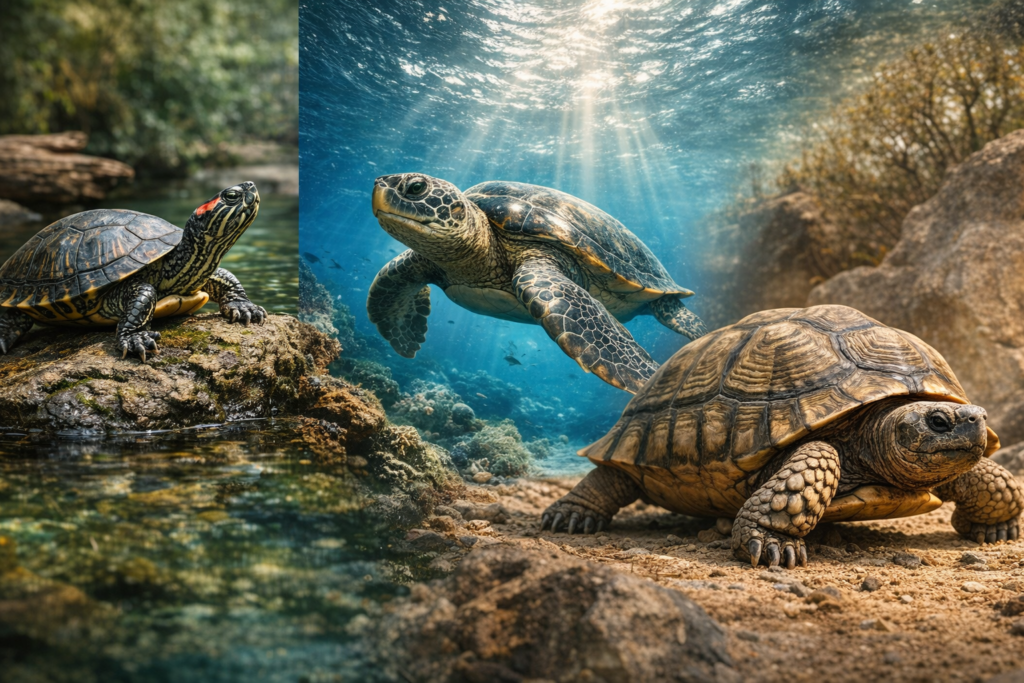
Everything becomes much simpler when you realize that all types of turtles fall into three main categories
- Freshwater turtles
- Sea turtles
- Land turtles, which are commonly called tortoises
Each of these groups behaves differently. They live in completely different environments. And most importantly, only one of these groups is suitable for typical home setups.
Everything becomes much simpler when you realize that turtles fall into three main categories.
According to World Wildlife Fund, turtle species are broadly distributed across freshwater, marine, and terrestrial ecosystems, each adapted to very different environments.
Everything becomes easier once you start seeing them through this structure.
Types of turtles can be grouped into the following categories:
Freshwater types of turtles
- Red eared slider
- Musk turtle
- Painted turtle
- Map turtle
- Snapping turtle
Sea turtles
- Green sea turtle
- Leatherback sea turtle
- Loggerhead turtle
- Hawksbill turtle
Land turtles (tortoises)
- Leopard tortoise
- Sulcata tortoise
- Russian tortoise
- Indian star tortoise
Understanding the Three Main Types of Turtles
Before you go deeper into species names and care guides, it is important to slow down for a moment and build a clear mental picture of how turtles are actually grouped.
Most confusion around all the types of turtles comes from one simple mistake. People try to understand individual species without first understanding the three main categories they belong to.
Once you get this part right, everything else becomes much easier.
All types of turtles fall into three broad groups
- Freshwater turtles
- Sea turtles
- Land turtles, commonly called tortoises
At first, this might sound like basic classification. But in reality, these categories define everything that matters
- Where the turtle lives
- How it behaves
- Whether you can realistically keep it
- And how easily you can even find one
Let’s walk through each type in a way that actually connects with real life situations.
Freshwater: Types of Turtles The Most Accessible and Common
Among all the types of turtles Freshwater turtles are by far the most commonly encountered type, especially if you are living in urban areas or browsing pet shops.
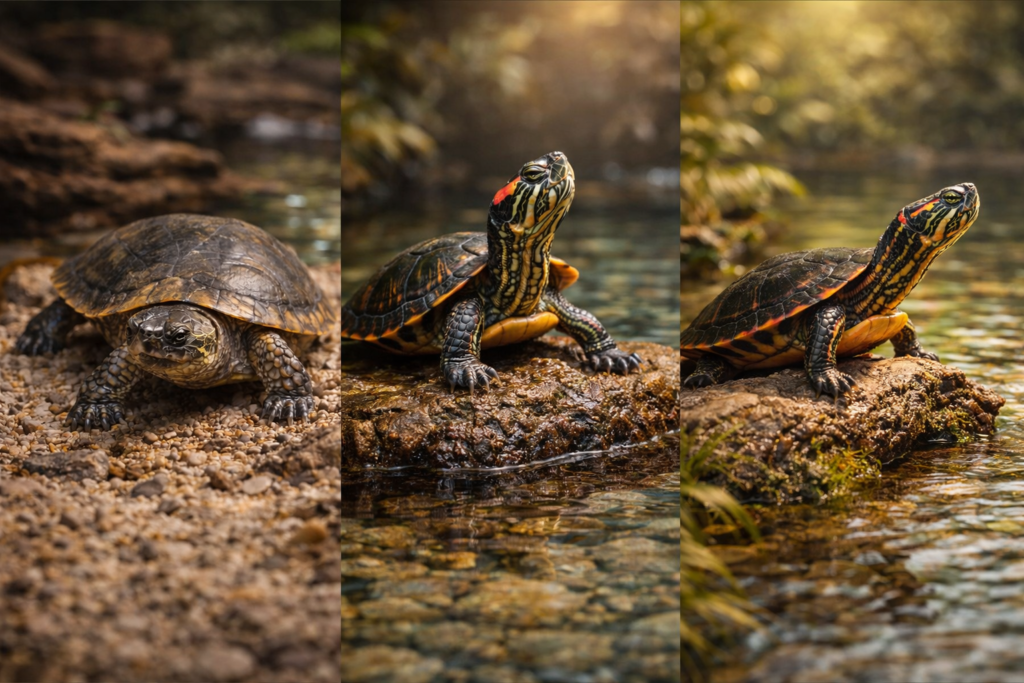
These types of turtles naturally live in
- Ponds
- Lakes
- Slow moving rivers
What makes them unique is that they live a balanced life between water and land. They swim actively, but they also need to come out of the water to bask and dry themselves.
Now here is the part that matters for most people
Freshwater turtles are the only category that is widely available and practical for home setups.
If you walk into a pet shop or browse local sellers, the chances are extremely high that you will see
- Red eared sliders
- Musk turtles
- Painted turtles
These species are bred in large numbers and are easily available in most regions.
But availability can be misleading.
Just because they are easy to find does not mean they are easy to care for. Many people buy them on impulse because they are small and affordable, without realizing that they grow larger and require proper filtration, space and long term commitment.
From experience, this is where most problems begin.
Real Experience Insight
From personal experience, the biggest challenge with most freshwater turtles is maintaining water quality. Many beginners focus on the turtle itself but underestimate how important filtration and tank size are.
Sea Turtles Rare, Protected and Completely Unavailable
Sea turtles belong to a completely different world.
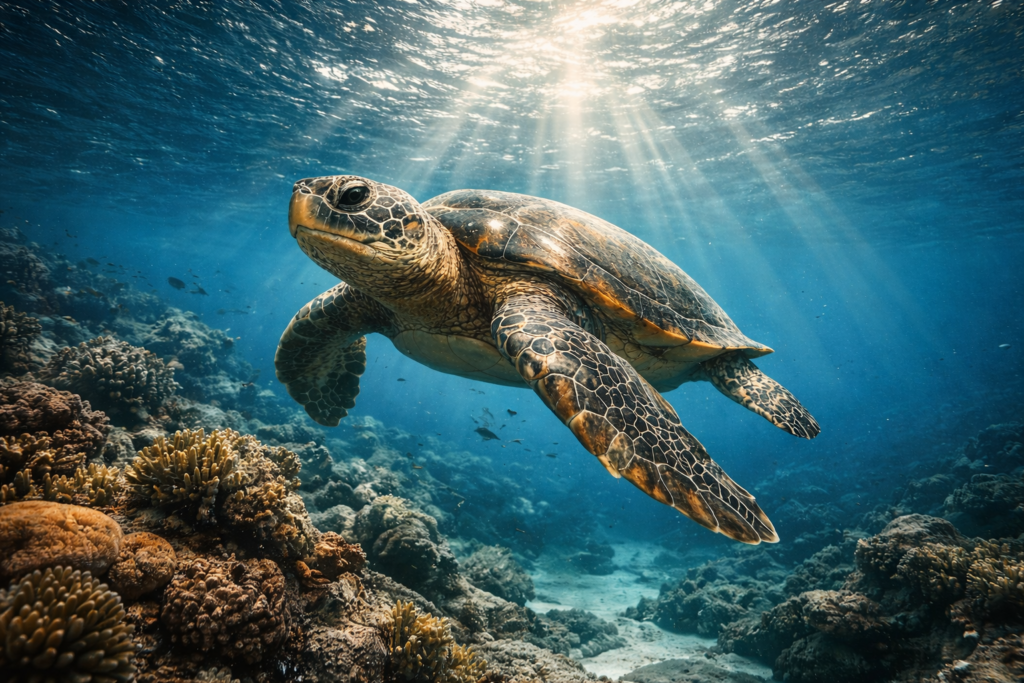
They live in vast ocean environments and are built for long distance travel. Some species migrate across entire oceans, navigating using instincts that we still do not fully understand.
Because of their ecological importance, sea turtles are protected under international conservation laws.
What this means in practical terms is simple
- You will not find sea turtles in pet shops
- You cannot legally own one
- You cannot replicate their natural habitat at home
Organizations like National Geographic Society have extensively documented their migration patterns and behavior, showing just how complex and large scale their natural movement really is.
Even if someone comes across a baby sea turtle on a beach, the correct action is always to leave it undisturbed or contact conservation authorities.
So while sea turtles are often the most fascinating to read about, they are not part of the conversation when it comes to keeping turtles as pets.
Understanding this early prevents a lot of unrealistic expectations.
Land Turtles Also Known as Tortoises Limited Availability but High Commitment
Land turtles, or tortoises, are a different kind of commitment altogether.
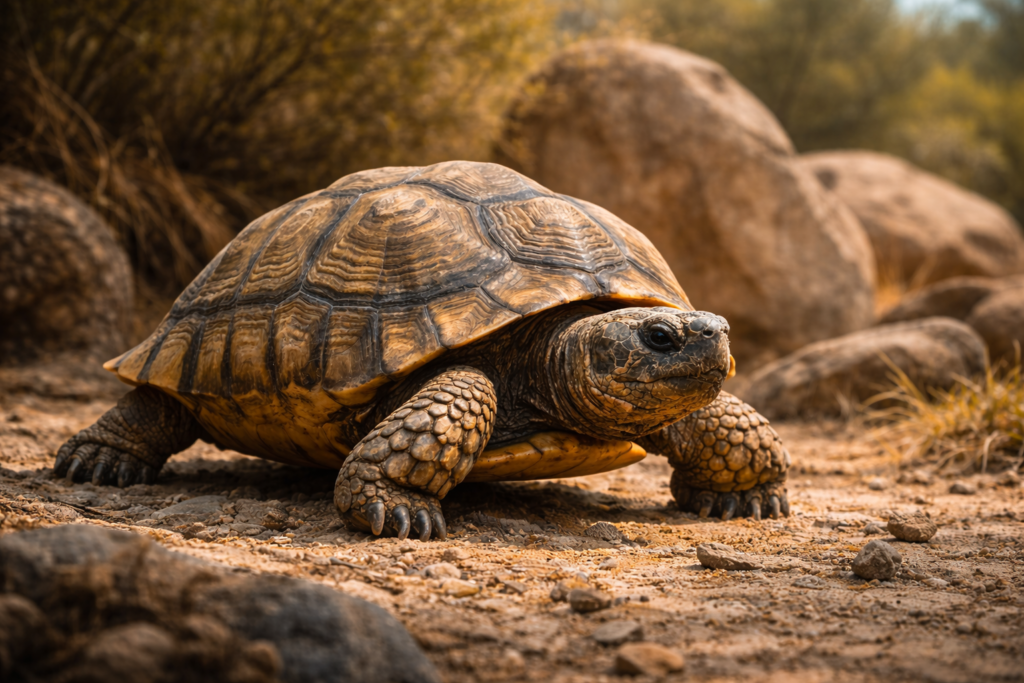
Unlike freshwater turtles, they do not need water to swim. Their entire lifestyle is adapted to land environments such as
- Dry deserts
- Grasslands
- Semi arid regions
At first glance, they might seem easier to care for since they do not require aquariums or filtration systems.
But the reality is more nuanced.
Tortoises are not as widely available as freshwater turtles, and depending on where you live, their availability can be quite limited or regulated.
In some regions, you may find species like
- Russian tortoises
- Indian star tortoises
However, larger species like the Sulcata tortoise are not only harder to find but also require significant space and long term planning.
Here is where most people underestimate them
- They live for decades, often outliving their owners
- They need outdoor space as they grow
- Their diet and environment must be carefully managed
So while tortoises are available in certain markets, they are not impulse friendly pets. They require intention.
Bringing It All Together
If you look at these three types from a practical perspective, a clear pattern emerges
- Freshwater turtles are widely available and suitable for home setups
- Sea turtles are protected and completely unavailable for ownership
- Land turtles are selectively available but require serious long term commitment
This is why most beginner journeys naturally lead toward freshwater turtles.
Not because they are the only option, but because they are the only option that realistically fits into a controlled home environment.
Once you understand this structure, choosing the right turtle becomes far less confusing and far more intentional.
Freshwater Turtles The Ones Most People Keep
When people talk about pet turtles, they are almost always referring to freshwater turtles.
I remember when I first brought mine home. I thought the setup would be simple. A tank, some water, a small filter and I was done.
Within a week, the water turned cloudy. Within two weeks, there was a smell that I could not ignore.
That was my introduction to the reality of freshwater turtles.
They are fascinating, active and surprisingly interactive animals. But they are also messy. Understanding this early changes how you approach everything.
Freshwater turtles need
- Clean water that is constantly filtered
- A basking area where they can dry off completely
- Proper lighting to support shell health
- Enough space to swim comfortably
Let’s look at some of the most common types.
Red Eared Slider
This is the turtle that most beginners end up choosing, and honestly, this is where most turtle journeys begin.
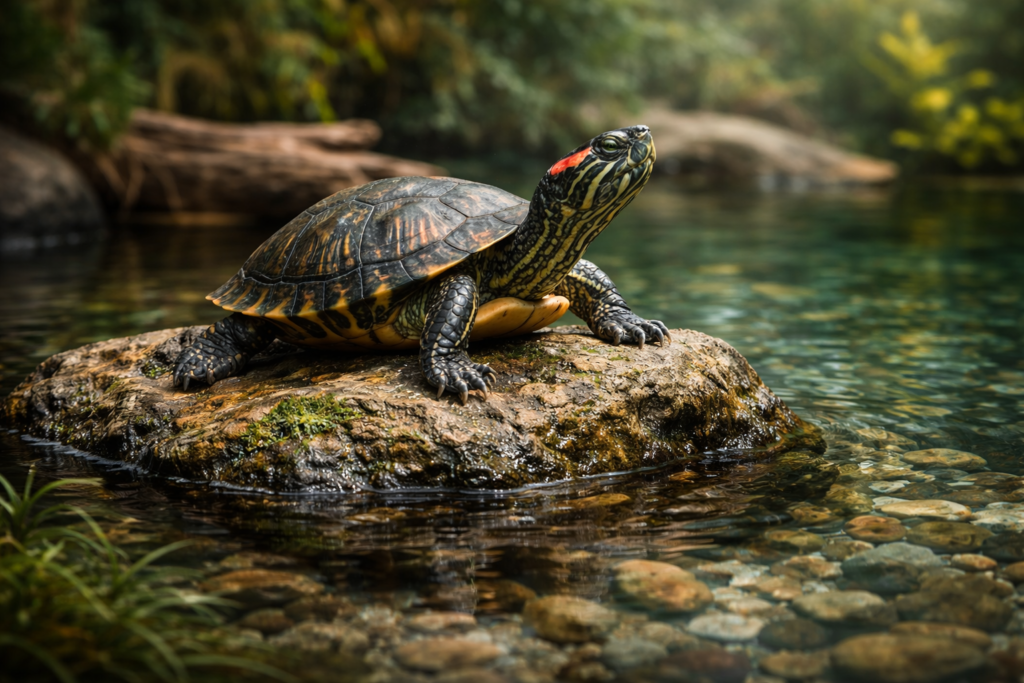
If you have ever walked past a pet shop or seen a small green turtle with a bright red patch near its ear, chances are you were looking at a red eared slider. They are small, active, and almost look like the perfect low maintenance pet.
That is exactly why so many people bring them home without fully understanding what comes next.
When I first started, I thought I was getting a small aquatic pet that would stay manageable. What I did not realize was that this tiny turtle would eventually grow into a strong, messy, and long term commitment.
And that is the reality of red eared sliders. If you want to learn about How to Care for Red Eared Sliders check our complete guide.
Habitat
In the wild, red eared sliders are found in calm freshwater environments such as ponds, lakes, and slow moving rivers. These environments are rich in sunlight, have plenty of basking spots, and allow the turtle to move freely between water and land.
In captivity, this balance needs to be recreated as closely as possible.
A proper setup includes
- A large tank with enough water depth for swimming
- A stable basking platform where the turtle can completely dry off
- Access to heat and UVB lighting to support shell and bone health
One thing I learned over time is that they spend a significant portion of their day basking. If the basking area is not comfortable or properly heated, they simply will not use it, which leads to long term health issues.
Size
This is where most beginners get surprised.
Red eared sliders are often sold when they are very small, sometimes just a few inches in size. At that stage, they seem easy to manage and do not require much space.
But they grow.
And they grow more than people expect.
Adult red eared sliders typically reach between 8 to 12 inches, with females often growing larger than males. As they grow, their space requirements increase significantly.
A small tank that seemed fine in the beginning quickly becomes overcrowded, leading to
- Faster water pollution
- Increased stress for the turtle
- Higher maintenance effort
This is why planning ahead is so important. It is always better to think in terms of the adult size rather than the baby size.
Lifespan
One of the most overlooked aspects of owning a red eared slider is how long they live.
With proper care, they can live anywhere between 20 to 40 years.
This is not a short term pet. It is a long term responsibility.
When people buy them on impulse, they rarely think about where they will be in 10 or 20 years. Unfortunately, this is one of the reasons many turtles end up abandoned.
From a practical perspective, owning a red eared slider is closer to a long term commitment like keeping a dog or cat, rather than a short term hobby.
Can it be a pet
Yes, red eared sliders can absolutely be kept as pets, and when cared for properly, they are fascinating to observe.
They develop routines, recognize feeding times, and can even become responsive to their environment.
However, they are not low maintenance.
To keep them healthy, you need
- A properly sized tank
- Strong filtration that can handle heavy waste, check out the best canister filter guides before you get a RES.
- Regular water maintenance
- Balanced feeding habits, check out our complete guide on what RES turtles eat.
- Consistent lighting and basking conditions
Without these, problems start to appear quickly.
The Reality Most Beginners Learn Too Late
If there is one lesson that every red eared slider owner learns, it is this
Water quality controls everything.
In the beginning, I underestimated how much waste they produce. I thought a basic filter would be enough. Within days, the water became cloudy. Within weeks, it became frustrating to manage.
What I realized over time is simple
- These turtles eat a lot
- They produce a lot of waste
- And weak filtration cannot keep up
Maintaining proper water quality is critical, and general animal care resources like ASPCA also emphasize the importance of clean environments for long term animal health.
When filtration is not strong enough, everything else starts to fail
- The tank smells
- The water becomes unsafe
- The turtle’s health is affected
This is why experienced keepers always emphasize one thing
A strong filtration system is not optional. It is essential.
Quick Summary
If you are considering a red eared slider, here is what you need to remember
- They start small but grow significantly
- They live for decades and require long term commitment
- They are widely available but often misunderstood
- Their care revolves heavily around water quality and proper setup
When done right, they are incredibly rewarding to keep.
When done wrong, they quickly become overwhelming.
And that difference comes down to how well you understand them from the beginning.
Musk Turtle
If the red eared slider is the turtle most people start with, the musk turtle is the one many people wish they had discovered earlier.
At first glance, it does not look as flashy or eye catching. It is smaller, darker, and far less dramatic in appearance. Because of that, it often gets overlooked by beginners who are drawn to brighter and more active species.
But once you understand how musk turtles behave, you start to realize something important.
They are one of the most practical turtles you can keep at home.
When I first came across musk turtles, what stood out immediately was how different they felt compared to larger freshwater turtles. They were calmer, more contained, and did not demand as much space or constant adjustment.
That does not mean they are effortless. But it does mean they are far more manageable if you set things up properly.
Habitat
In the wild, musk turtles live in slow moving freshwater environments such as shallow rivers, ponds, and marshes.
Unlike many other turtles, they do not rely heavily on basking under direct sunlight. Instead, they spend most of their time walking along the bottom of the water, exploring their surroundings rather than constantly swimming at the surface.
This behavior changes how you should think about their tank setup. We have a complete guide on the behavior of different types of turtles, check it out.
A musk turtle setup works best when it focuses on
- Moderate water depth rather than very deep water
- A bottom area with rocks, driftwood, or structures to explore
- Gentle water flow instead of strong currents
- Easy access to the surface for breathing
They can bask, but they do not depend on it in the same way as red eared sliders. This makes them more flexible when it comes to tank design.
From experience, creating a tank that feels natural and structured at the bottom makes a noticeable difference in how active and comfortable they are.
Size
One of the biggest advantages of musk turtles is their size.
They stay small.
Most musk turtles grow between 3 to 5 inches, which is significantly smaller than many other freshwater species.
This changes everything.
A smaller turtle means
- Less waste compared to larger species
- Lower space requirements
- Easier maintenance overall
But there is something important to understand here.
Even though they are small, they are still turtles.
They still need proper space, clean water, and a stable environment. A small turtle in a poorly maintained tank will still struggle just as much as a large one.
The difference is that managing their environment is simply more forgiving.
Lifespan
Musk turtles are not short lived pets.
With proper care, they can live between 20 to 30 years.
This is something many people overlook because of their size. They appear small and manageable, which creates the impression that they are less of a long term responsibility.
In reality, they require the same level of commitment as most freshwater turtles.
When you bring one home, you are making a decision that will stay with you for decades.
Can it be a pet
Yes, and for many people, musk turtles are one of the best choices available among all the types of turtles.
They are especially suitable if you
- Have limited space
- Want a more manageable setup
- Prefer a turtle that is less demanding in terms of basking and movement
However, they are not completely hands off.
To keep them healthy, you still need
- Clean, well filtered water
- A stable tank setup with hiding and resting areas
- A balanced diet
- Consistent maintenance
They may be easier than larger turtles, but they still require attention and care.
Behavior and What Makes Them Different
This is where musk turtles really stand out.
Unlike red eared sliders, which are active swimmers and frequent baskers, musk turtles behave more like bottom explorers.
They spend most of their time
- Walking along the tank floor
- Climbing over rocks and structures
- Resting in hidden spots
They are less likely to constantly swim back and forth or demand open space.
This gives their tank a very different feel.
Instead of building a tall, open aquarium, you are creating a more grounded, structured environment.
From a keeper’s perspective, this makes them incredibly interesting to watch. Their movement feels more intentional and less repetitive.
The Reality of Care
Many people assume that because musk turtles are small compared to the other types of turtles, they are low maintenance.
That assumption can lead to problems.
While they do produce less waste than larger turtles, they still rely heavily on water quality.
Here is what I noticed over time
- Even a small amount of uneaten food affects water clarity
- Poor filtration still leads to buildup, just at a slower pace. Check out our complete guide on turtle tank filtration to avoid beginner mistakes.
- A neglected tank will still become unhealthy
So while they are more forgiving, they are not immune to poor care.
The difference is that they give you more room to manage things properly without things going out of control too quickly.
Quick Summary
If you are considering a musk turtle, here is what you should keep in mind
- They stay small and are easier to manage in limited space
- They live long and require long term commitment
- They behave differently, spending more time at the bottom than basking
- They are more forgiving than larger turtles but still depend on proper water quality
For many beginners, they strike a balance that is hard to find in other species.
They are not the most eye catching turtle at first glance, but once you understand them, they often turn out to be one of the smartest choices you can make.
Painted Turtle
If there is one turtle out of all the types of turtles that naturally draws attention without trying too hard, it is the painted turtle.
The first time you see one up close, what stands out immediately is the color. The shell patterns, the subtle reds and yellows along the edges, and the smooth, clean lines make it one of the most visually appealing freshwater turtles.
It almost looks like something carefully designed rather than something found in nature.
Because of this, many beginners feel drawn to painted turtles right away. They look active, healthy, and somehow more “alive” compared to darker or less colorful species.
But what makes them truly interesting is not just how they look. It is how they behave.
Painted turtles bring a balance that sits somewhere between the energy of a red eared slider and the calm nature of a musk turtle. Understanding this balance is what helps you care for them properly.
Habitat
In the wild, painted turtles are found in calm, sunlit freshwater environments.
They prefer
- Ponds
- Lakes
- Slow moving streams
These environments are usually rich in sunlight, which explains one of their most noticeable behaviors.
They love to bask.
If you observe a painted turtle in a natural setting, you will often find it sitting on a log or rock, completely still, absorbing heat from the sun. This is not just a casual habit. It is essential for their health.
In captivity, this behavior needs to be supported properly.
A well designed tank should include
- Clean water with enough space to swim
- A stable basking platform that is easy to access
- Proper lighting that mimics natural sunlight
From experience, if the basking area is not comfortable or warm enough, painted turtles become less active and less visible. When the setup is right, they spend a good amount of time basking, which makes them more enjoyable to observe.
Size
Painted turtles fall into a middle ground when it comes to size.
They are not as small as musk turtles, but they also do not reach the larger sizes of some red eared sliders.
Most painted turtles grow between 5 to 10 inches, depending on the specific type and gender.
This moderate size makes them manageable, but it also comes with a responsibility.
As they grow, they still require
- Adequate swimming space
- A tank that can support their adult size
- Proper filtration to maintain water quality
One common mistake is assuming that because they are not very large, they can be kept in smaller setups long term.
In reality, they still need room to move comfortably.
Lifespan
Painted turtles are long lived animals.
With proper care, they can live between 20 to 30 years.
This places them in the same category as most freshwater turtles in terms of commitment.
When people first choose a painted turtle, they are often drawn by appearance. But what matters just as much is understanding that this is a long term responsibility.
They will not outgrow your interest in a few years. If cared for properly, they will stay with you for decades.
Can it be a pet
Yes, painted turtles can make excellent pets when their needs are properly understood.
They are active, visible, and tend to spend more time basking compared to some other species. This makes them more engaging to watch on a daily basis.
They are especially suitable if you want a turtle that
- Shows natural behaviors clearly
- Spends time both swimming and basking
- Adds visual appeal to your setup
However, like all types of turtles, they are not low maintenance.
They still require
- Clean, filtered water
- A proper basking setup with heat and light
- Consistent feeding and care
When these conditions are met, they adapt well and remain active.
Behavior and Daily Activity
This is where painted turtles become particularly interesting.
They are more expressive in their daily routine compared to many other turtles.
You will often notice
- Regular basking patterns throughout the day
- Smooth and active swimming
- Quick responses during feeding time
Their behavior feels more dynamic.
Instead of staying hidden or remaining at the bottom, they move between water and basking areas frequently. This creates a more interactive experience for the keeper.
From a personal perspective, this is what makes them stand out. They are easier to observe and understand because their behavior is more visible.
The Reality of Care
While painted turtles are often considered beginner friendly, they still come with challenges.
One of the most common misconceptions is that their moderate size means easier care.
In reality, their needs are quite similar to other freshwater turtles.
Here is what you need to keep in mind
- They still produce waste that affects water quality
- Poor filtration leads to cloudy water and maintenance issues
- Inconsistent basking conditions can affect their health
From experience, maintaining stable water quality is just as important for painted turtles as it is for larger species.
The difference is not in how much care they need, but in how manageable that care feels when everything is set up correctly.
Quick Summary
If you are considering a painted turtle, here is what you should remember
- They are visually striking and naturally active
- They grow to a moderate size but still need proper space
- They live for decades and require long term commitment
- They rely heavily on basking and proper lighting
- They are beginner friendly but not low maintenance
They are often chosen for their appearance, but what keeps people interested over time is their behavior.
When the setup is right, they bring a sense of movement and balance that makes the entire tank feel alive.
Freshwater Turtle Comparison
| Species | Size | Lifespan | Difficulty Level | Pet Suitability |
| Red eared slider | Medium to large | 20 to 40 years | Moderate | Yes |
| Musk turtle | Small | 20 to 30 years | Easy | Yes |
| Painted turtle | Medium | 20 to 30 years | Moderate | Yes |
Sea Turtles Beautiful but Not for Home
At some point, almost everyone who gets interested in turtles goes through the same thought.
You see a sea turtle gliding effortlessly through clear blue water, calm and almost weightless, and a question naturally comes to mind.
Can I keep one like this?
It feels like a harmless curiosity at first. After all, they are turtles. And if freshwater turtles can be kept at home, why not sea turtles?
The answer becomes clear once you understand what a sea turtle actually is, not just how it looks.
They Are Built for an Entire Ocean, Not a Tank
Sea turtles are not just aquatic animals. They are ocean animals.
Their entire body is designed for
- Long distance swimming
- Deep diving
- Navigating massive open environments
Some species travel thousands of kilometers across oceans, moving between feeding and nesting grounds with precision that scientists are still studying.
Now compare that to a home aquarium.
Even a large tank, something that feels big in a room, is insignificant compared to what these turtles are built for. It is not just about size. It is about movement, depth, and natural behavior.
A sea turtle in a confined space would not simply be “limited.” It would be completely disconnected from everything it is designed to do.
Their Habitat Cannot Be Recreated
Freshwater turtles can adapt to a controlled environment because their natural habitat is relatively contained.
Sea turtles are different.
They rely on
- Saltwater ecosystems
- Ocean currents
- Natural feeding patterns
- Specific temperature ranges across large areas
Recreating even a fraction of this is not realistic.
You would need
- Massive volumes of perfectly balanced saltwater
- Advanced systems to simulate ocean conditions
- Continuous environmental control
Even public aquariums with large budgets struggle to maintain suitable conditions for sea turtles.
For a home setup, it is simply not possible.
Their Diet and Lifestyle Are Complex
Sea turtles do not follow simple feeding routines.
Depending on the species, their diet may include
- Jellyfish
- Sea grass
- Crustaceans
- Marine invertebrates
Their feeding patterns are tied to their environment. They forage, migrate, and adapt based on what is available in the ocean.
In a home environment, replicating this diet consistently would be extremely difficult. Even if you manage to provide substitutes, it would not match the diversity and natural balance they are used to.
Over time, this leads to health issues that are not always immediately visible.
They Are Protected for a Reason
One of the strongest reasons why sea turtles should not be kept at home is legal and ethical.
Sea turtles are protected species in most parts of the world.
This protection exists because
- Their populations have declined significantly
- They are vulnerable to environmental changes
- Human interference has already impacted them heavily
Keeping one is not just impractical. It is illegal in many regions.
But beyond legality, there is a deeper reason.
These animals are meant to exist in the wild. Removing them from that environment does not just affect the turtle. It affects the entire ecosystem they are part of.
Even If It Were Possible, It Would Not Be Right
Let’s imagine, for a moment, that all technical and legal barriers did not exist.
Even then, there is a question worth asking.
Would it actually be right to keep a sea turtle at home?
When you understand how they live, how far they travel, and how deeply connected they are to the ocean, the answer becomes clear.
They are not meant to be observed in confined spaces.
They are meant to be experienced in their natural environment, whether through documentaries, conservation programs, or responsible wildlife tourism.
The Right Way to Appreciate Sea Turtles
Appreciating sea turtles does not mean owning them.
It means understanding them.
It means
- Learning about their role in the ecosystem
- Supporting conservation efforts
- Respecting their natural habitat
When you shift your perspective this way, the idea of keeping one at home no longer feels necessary.
Instead, you start to see them for what they truly are.
Not pets, but part of something much larger.
Bringing It Back to Your Choice
If your goal is to keep a turtle at home, the path becomes much clearer once you understand sea turtles.
They are not an option.
And that is not a limitation. It is actually a form of clarity.
It allows you to focus on species that can genuinely thrive in a home environment, where your effort translates into proper care rather than constant compromise.
Freshwater turtles exist within that balance.
Sea turtles do not.
And understanding that difference is one of the most important steps you can take as a responsible turtle owner.
Green Sea Turtle
If there is one sea turtle that people recognize instantly, it is the green sea turtle.
You have probably seen it in documentaries or videos, moving slowly through clear ocean water, surrounded by coral reefs, with a calm and almost peaceful presence.
There is something about the way it moves that feels effortless. No rush, no sudden motion. Just a steady glide through an environment that seems endless.
And that is exactly the point.
The green sea turtle is not just living in the ocean. It belongs to it in a way that is difficult to replicate or even fully understand from the outside.
Habitat
Green sea turtles live in tropical and subtropical oceans around the world.
But simply saying “ocean” does not fully capture what that means.
Their environment includes
- Vast open water with no boundaries
- Coastal areas with sea grass beds where they feed
- Coral reefs that provide shelter and navigation points
The National Oceanic and Atmospheric Administration has documented that green sea turtles can migrate thousands of kilometers between feeding and nesting grounds, which highlights how dependent they are on large, uninterrupted ecosystems.
They do not stay in one place. They move between feeding grounds and nesting beaches, often traveling long distances across entire regions.
This constant movement is part of their natural rhythm.
Trying to imagine this within the limits of a tank or enclosed space makes the gap very clear.
Even the largest artificial environments cannot recreate this scale or freedom.
Size
Green sea turtles grow much larger than most people expect.
As adults, they can reach up to 4 feet in length and weigh over 150 kilograms.
This size alone changes everything.
It is not just about space. It is about strength, movement, and the physical demands of supporting such an animal.
Even if someone were to think about containment, the sheer size of an adult green sea turtle makes it completely impractical.
Lifespan
Green sea turtles are long lived animals.
They can live anywhere between 60 to 80 years, and in some cases even longer.
This lifespan reflects a life that unfolds slowly over time.
They mature gradually, adapt to changing environments, and live through decades of migration and survival in the wild.
This is not an animal designed for short term observation or controlled environments.
Can it be a pet
No.
Green sea turtles cannot be kept as pets.
They are protected under international laws, and keeping one is illegal in most parts of the world.
But beyond legality, there is a more important reason.
They are not suited for captivity in any realistic way.
Their needs go far beyond what a home environment can provide.
Diet and Natural Behavior
Green sea turtles have a unique diet compared to many other sea turtles.
As adults, they are primarily herbivorous, feeding on
- Sea grass
- Algae
This diet plays an important role in maintaining healthy marine ecosystems.
By grazing on sea grass, they help keep underwater habitats balanced and prevent overgrowth.
Their feeding behavior is not just about survival. It is part of a larger ecological system.
In a home environment, replicating this diet consistently and naturally would be extremely difficult.
But more importantly, their feeding is tied to movement. They do not eat from a fixed location. They forage across large areas, which is something that cannot be recreated in confinement.
The Reality Behind Their Calm Appearance
At first glance, green sea turtles appear calm and slow.
This often creates the illusion that they would be easy to manage.
But that calmness is not a sign of simplicity.
It is a result of being perfectly adapted to a stable, vast environment.
Their movements are efficient because they are designed for long distance travel.
Their behavior is steady because they are not confined.
Once that environment is removed, everything changes.
A space that feels large to us becomes restrictive to them.
A controlled setup becomes unnatural.
And over time, this mismatch leads to stress and health issues that cannot be easily corrected.
Why Understanding This Matters
The green sea turtle represents something important.
It shows the difference between animals that can adapt to captivity and those that cannot.
Freshwater turtles, even though they require effort, can live in controlled environments if their needs are met.
Green sea turtles cannot.
Understanding this difference helps you make better decisions.
It shifts your focus away from what looks appealing and toward what is actually possible and responsible.
Quick Summary
If you are thinking about the green sea turtle, here is what you should take away
- They live in vast ocean environments that cannot be recreated
- They grow very large and require immense space
- They live for decades and follow natural migration patterns
- They are protected and cannot be kept as pets
- Their lifestyle is deeply connected to the ocean ecosystem
They are one of the most fascinating turtles in the world.
But they are not meant to be part of a home setup.
They are meant to remain where they belong.
In the ocean.
Leatherback Sea Turtle
If the green sea turtle feels graceful and calm, the leatherback sea turtle feels almost unreal.
The first time you see one, it does not even look like a typical turtle. There is no hard, patterned shell. Instead, its back is smooth, dark, and almost rubber-like, with ridges running along its body.
It looks ancient. More like something that has existed unchanged for millions of years.
And in many ways, it has.
The leatherback is the largest of all turtle species and one of the most powerful swimmers in the ocean. It does not just live in the sea. It dominates it in a way that is difficult to imagine unless you understand the scale it operates on.
Habitat
Leatherback sea turtles live in the open ocean, far beyond the calm coastal areas that many other turtles prefer.
They are known for traveling across entire ocean basins, moving between tropical and colder regions with ease.
What makes them unique is their ability to handle a wide range of temperatures.
Unlike most reptiles, leatherbacks can regulate their body temperature to some extent, allowing them to survive in colder waters where other turtles cannot.
Their environment includes
- Deep ocean zones where light barely reaches
- Vast open water with no physical boundaries
- Long migration routes that span thousands of kilometers
Research supported by International Union for Conservation of Nature shows that leatherback populations are vulnerable and highly sensitive to environmental changes, which is one of the main reasons they are protected globally.
This is not just a habitat. It is an endless, constantly changing system.
Trying to imagine this inside any form of enclosure immediately shows how impossible it is to replicate.
Size
Leatherback sea turtles are massive.
They can grow up to 7 feet in length and weigh between 500 to 900 kilograms.
To put that into perspective, this is not just larger than most turtles. It is larger than many animals people would ever consider keeping.
Their size affects everything
- The space they need to move
- The amount of food they consume
- The strength required to support their body
Even large public aquariums struggle to accommodate animals of this size, and in many cases, they simply do not attempt it.
For a home environment, it is completely out of the question.
Lifespan
Leatherbacks are long lived animals, though their exact lifespan is still being studied.
They are believed to live for several decades, potentially 40 to 50 years or more.
What makes their lifespan unique is how it is tied to their migration and survival in the wild.
They grow slowly, travel extensively, and rely on vast ecosystems to sustain them over time.
This is not a life that can be compressed into a controlled space.
Can it be a pet
No.
Leatherback sea turtles cannot be kept as pets under any circumstances.
They are protected by international conservation laws, and their survival depends on remaining in the wild.
But even if legal restrictions did not exist, the reality remains the same.
There is no environment that a person can create that would meet their needs.
Diet and Feeding Behavior
Leatherback sea turtles have a diet that is as unique as their appearance.
They primarily feed on
- Jellyfish
- Soft bodied marine organisms
At first, this might sound simple. But in reality, it is not.
They consume large quantities of jellyfish, often traveling long distances to find enough food. Their feeding behavior is directly linked to ocean currents and the movement of their prey.
This creates a cycle
- They move across vast areas
- They locate food based on natural patterns
- They feed continuously as they travel
In a confined environment, this entire system breaks down.
Providing enough appropriate food, in the right way, at the right scale, is not something that can be realistically maintained.
The Power Behind Their Movement
One of the most fascinating aspects of leatherback turtles is how they move.
Despite their size, they are incredibly efficient swimmers.
Their large, powerful flippers allow them to glide through water with minimal effort, covering great distances without exhaustion.
But this movement is not just about strength.
It is about space.
Their entire design depends on having room to move freely, without restriction.
When that space is taken away, their natural behavior cannot function the way it is meant to.
This is why confinement is not just limiting for them. It is fundamentally incompatible with how they live.
Why They Can Never Fit Into a Home Environment
At this point, the reasons become very clear.
Leatherback sea turtles
- Require vast, open ocean environments
- Grow to an enormous size
- Depend on natural feeding patterns across large distances
- Are protected and cannot be kept legally
But beyond all of these points, there is a deeper understanding that matters.
Some animals are simply not meant to be kept.
They exist on a scale that goes beyond controlled environments.
Trying to bring them into that environment does not simplify their care. It removes everything that makes them what they are.
Quick Summary
If you are thinking about leatherback sea turtles, here is what you should take away
- They are the largest turtle species in the world
- They live in deep, open oceans and migrate across vast distances
- They have specialized feeding and movement patterns
- They cannot be kept as pets under any conditions
- Their needs go far beyond what any controlled environment can provide
They are not just another type of turtle.
They represent the extreme end of what turtles can be.
And that is exactly why they must remain in the wild, where they belong.
Land Turtles Also Known as Tortoises
At some point, almost everyone who starts learning about turtles runs into a confusing question.
Are turtles and tortoises the same thing?
On the surface, they look similar. They both have shells. They move slowly. They feel like part of the same group.
But once you spend a little time understanding them, the difference becomes very clear.
Tortoises are not just turtles that live on land. They are built for an entirely different way of life.
And that difference changes everything, from how they behave to how you care for them.
They Are Designed for Land, Not Water
Unlike freshwater turtles, tortoises have no real relationship with water beyond drinking it.
They do not swim. In fact, deep water can be dangerous for them.
Their bodies are adapted for land in very specific ways
- Their legs are thick and strong, built for walking rather than swimming
- Their shells are more dome shaped, offering protection from predators
- Their movement is steady and slow, designed for endurance rather than speed
When you watch a tortoise move, it feels grounded. There is no urgency, no quick bursts of energy. Just a consistent, deliberate pace.
This alone changes how you approach their care.
You are not building a tank. You are creating a land based environment.
Their Environment Is Completely Different
Freshwater turtles require aquariums, filtration systems, and constant water maintenance.
Tortoises require something entirely different. Tortoises are fully adapted to land based environments and behave very differently from aquatic turtles.
According to Smithsonian National Zoo, tortoises are strictly terrestrial reptiles with specific dietary and environmental needs that must be met for long term health.
This is why their care requires a completely different approach.
Their environment needs to reflect dry, open spaces such as
- Grasslands
- Semi arid regions
- Desert like conditions
In a home setup, this translates to
- Open enclosures rather than tanks
- Substrates like soil or sand instead of water
- Access to natural or artificial sunlight
- Space to walk, explore, and graze
This is where many beginners make a critical mistake.
They assume that because tortoises do not need water tanks, they are easier to care for.
In reality, they are different, not necessarily easier.
Availability and What You Will Actually Find
Compared to freshwater turtles, tortoises are less commonly available, and their availability depends heavily on your location.
In some regions, you may come across species like
- Russian tortoises
- Indian star tortoises
These are among the more manageable options.
However, larger species such as the Sulcata tortoise are not only less common but also require significant planning before you even consider bringing one home.
Another important factor is regulation.
In many places, certain tortoise species are protected or require permits. This means you cannot always buy them freely like freshwater turtles.
So while they are available, they are not as accessible or impulse friendly.
Size and Growth The Part Most People Underestimate
One of the biggest misconceptions about tortoises is related to their size.
When people see a small tortoise, it is easy to assume that it will stay that way.
But many tortoises grow steadily over time.
Some species remain manageable, but others grow much larger than expected.
This creates long term challenges
- Indoor space becomes insufficient
- Outdoor enclosures become necessary
- Handling and maintenance become more demanding
The key difference here is that tortoises grow into their environment.
If your setup cannot grow with them, it eventually becomes a problem.
Lifespan A Commitment Across Decades
Tortoises are among the longest living animals you can keep.
Many species live for decades, and some can live for over 50 to 70 years.
This changes the entire perspective of ownership.
You are not just caring for a pet. You are taking on a long term responsibility that may extend far beyond your current lifestyle.
This is something that needs to be understood clearly before making a decision.
Can Tortoises Be Pets
Yes, tortoises can be kept as pets, but only under the right conditions.
They are suitable for people who
- Have enough space to provide a proper enclosure
- Are willing to commit for the long term
- Understand their dietary and environmental needs
They are not ideal for
- Small indoor setups with limited space
- Short term pet ownership expectations
- People looking for low effort care
When cared for properly, tortoises can be calm, consistent, and surprisingly engaging animals.
But they require intention.
Behavior: What to Expect
Tortoises behave very differently compared to aquatic turtles.
Instead of swimming or basking frequently, they spend their time
- Walking slowly through their environment
- Exploring their surroundings
- Grazing on food throughout the day
Their behavior feels steady and predictable.
There is no constant movement or rapid activity. Instead, there is a sense of rhythm.
From a keeper’s perspective, this can be either calming or underwhelming, depending on what you expect.
If you are looking for an active, visually dynamic pet, freshwater turtles might feel more engaging.
If you prefer something quieter and more grounded, tortoises offer that experience.
The Reality of Care
At first, tortoises seem simpler because there is no water involved.
But over time, different challenges appear.
Here are some realities that often surprise beginners
- Maintaining the right temperature and lighting is critical
- Their diet needs to be carefully balanced and consistent
- Space requirements increase as they grow
- Outdoor setups may become necessary
So while you avoid the complexity of water filtration, you take on the responsibility of managing a stable land environment.
If you look at tortoises from a practical perspective, a clear picture forms
- They are land based and require dry environments
- They are less commonly available and sometimes regulated
- They grow over time and need space that adapts with them
- They live for decades and require long term commitment
They are not difficult in the same way freshwater turtles are.
They are different in a way that requires planning.
And once you understand that difference, it becomes much easier to decide whether they fit into your life or not.
Sulcata Tortoise
Habitat
They come from dry desert regions.
Size
They can grow up to 30 inches and become extremely heavy.
Lifespan
They can live for more than 70 years.
Can it be a pet
Only for experienced keepers with enough space.
This is not a beginner animal. It requires long term commitment and outdoor space.
Russian Tortoise
Habitat
They live in grasslands and dry regions.
Size
They grow between 6 to 10 inches.
Lifespan
They can live for over 40 years.
Can it be a pet
Yes, they are one of the more manageable tortoise species.
Comparing All Turtle Types
| Feature | Freshwater turtles | Sea turtles | Land turtles |
| Living environment | Water and land | Ocean | Land only |
| Suitable as pets | Yes | No | Sometimes |
| Maintenance level | Moderate to high | Not applicable | Moderate |
Best Types of Turtles for Home Aquariums
If your goal is to keep a turtle at home, the decision becomes much simpler.
From experience, these are the safest and most practical choices
- Red eared slider
- Musk turtle
- Painted turtle
Each of these species can adapt to a well maintained aquarium setup.
But here is something most guides do not emphasize enough
The success of keeping a turtle does not depend only on the species. It depends heavily on your setup.
Water quality, filtration, tank size and lighting will determine whether your experience is enjoyable or frustrating.
The Reality of Turtle Care What Most People Do Not Expect
When I started, I thought feeding and basic cleaning would be enough.
What I did not expect was how quickly things can go wrong if the setup is not correct.
Here are a few realities every beginner should know
- Turtles produce a lot of waste, much more than fish
- Water becomes dirty faster than expected
- Weak filtration leads to constant maintenance
- Small tanks create more problems than they solve
This is why understanding turtle types is only the first step. The real challenge is creating the right environment for them.
Frequently Asked Questions About Types of Turtles
There are three main types of turtles which include freshwater turtles, sea turtles, and land turtles also known as tortoises. Freshwater turtles are the most commonly kept as pets, while sea turtles live in oceans and cannot be domesticated. Tortoises live on land and require completely different care compared to aquatic turtles.
Freshwater turtles such as red eared sliders, musk turtles, and painted turtles are generally the best choices for beginners. They are widely available and can adapt well to home environments when proper care and setup are provided.
No, not all turtles can be kept as pets. Sea turtles are protected and cannot be legally owned. Some tortoises also require large outdoor environments and long term commitment, making them unsuitable for most beginners.
Musk turtles are one of the smallest types of turtles and usually stay under 5 inches in size. This makes them more manageable for people with limited space, although they still require proper care and a well maintained environment.
The main difference is their habitat and lifestyle. Turtles usually live in water and need both swimming and basking areas, while tortoises live entirely on land and do not swim. Their bodies and care requirements are adapted to these environments.
Turtles are often misunderstood as easy pets, but they require consistent care. They need proper tank setup, filtration, lighting, and a balanced diet. Without these, maintaining their health becomes difficult.
Most turtles live for several decades. Freshwater turtles typically live between 20 to 40 years, while tortoises can live even longer. This makes them a long term responsibility rather than a short term pet.
Yes, freshwater turtles require a strong filtration system. They produce a significant amount of waste, and without proper filtration, the water becomes dirty quickly. Maintaining clean water is one of the most important parts of turtle care.
Turtle diets vary depending on the species. Freshwater turtles often eat a mix of pellets, vegetables, and protein sources such as insects or fish. Tortoises mainly eat plant based foods, while sea turtles have specialized diets depending on their environment.
Turtles can become familiar with their environment and may respond to feeding routines. While they do not form bonds in the same way as mammals, they can recognize patterns and react to regular interaction.
The space required depends on the species and size of the turtle. Larger turtles need significantly more space, especially for swimming. It is always better to plan based on the turtle’s adult size rather than its current size.
Turtles produce more waste than fish, and uneaten food can quickly affect water quality. Without proper filtration and maintenance, the tank can become cloudy and develop odor within a short time.
If you have a turtle at home, you can check our detailed guides on:


