If you’re new to turtle keeping, you’ve probably seen small, fully submersible filters marketed as an easy solution.
They’re compact.
They’re affordable.
They’re simple to install.
But here’s the real question:
Are internal filters powerful enough for proper turtle tank filtration?
The short answer is: sometimes but only in very specific situations.
Let’s break it down properly so you understand when internal filters work, when they don’t, and how they fit into a long-term turtle care plan.
What Is an Internal Filter?
An internal filter is a fully submersible filtration unit that sits inside the aquarium.

It usually contains:
A small water pump
A sponge or cartridge chamber
An output nozzle
Water is pulled directly into the unit, passes through media, and is pushed back into the tank.
Unlike hang-on-back or canister filters, internal filters are completely inside the aquarium.
For fish tanks, they can work very well.
For turtle tank filtration, the situation is more complicated.
Why Turtles Are Hard on Filters
To understand whether internal filters work, you have to understand turtle waste production.
Turtles:
Produce large solid waste
Eat protein-heavy diets
Tear apart food
Generate heavy ammonia loads
This creates a high bioload.
Bioload is the total waste burden placed on your filtration system.
Because turtles produce more waste than fish of similar size, turtle tank filtration needs more mechanical and biological capacity.
And this is where internal filters often struggle.
How Internal Filters Handle the Three Types of Filtration
Every filtration system must support:
Mechanical filtration
Biological filtration
Chemical filtration
Let’s look at how internal filters perform in each area.
Mechanical Filtration
Internal filters usually contain a sponge or small cartridge to trap debris.
For small hatchling tanks, this can remove visible waste reasonably well.
However, turtles create larger and heavier waste particles. Small internal filters clog quickly, reducing flow and efficiency.
Frequent cleaning becomes necessary.
If not maintained properly, flow slows down and debris begins circulating in the tank again.
Biological Filtration
This is the most important part of turtle tank filtration — and the biggest limitation of internal filters.
Most internal filters have limited space for biological media.
That means fewer beneficial bacteria can colonize.
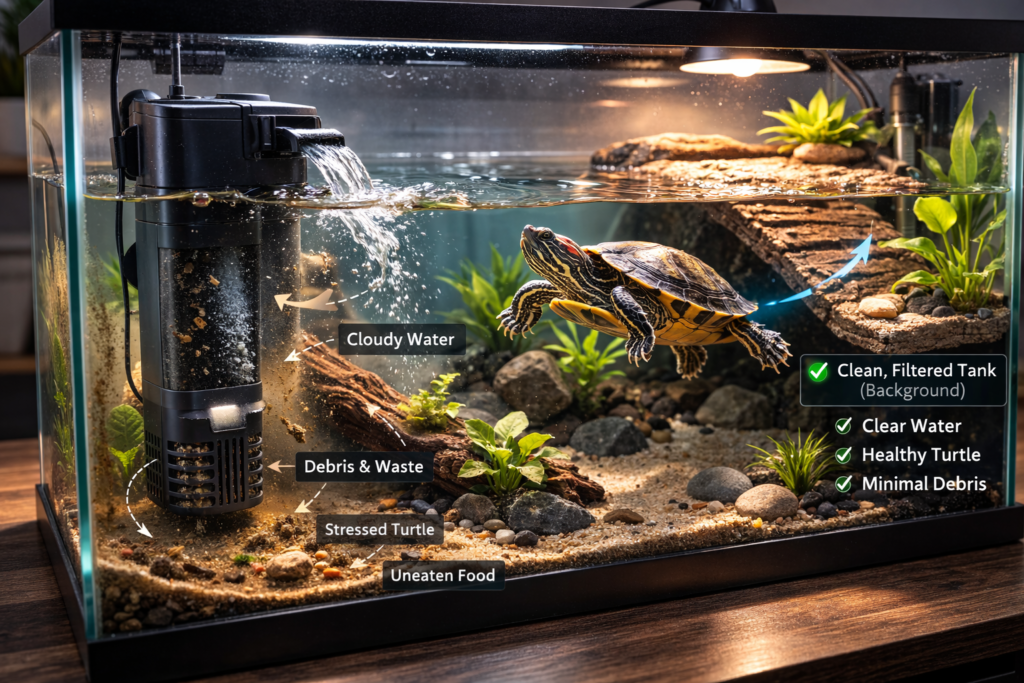
With heavy turtle waste production, limited biological media often leads to:
Ammonia spikes
Nitrite instability
Cloudy water
Persistent odor
While internal filters can support some biological filtration, their capacity is often insufficient for medium to large turtle tanks.
Chemical Filtration
Some internal filters include small carbon inserts.
While carbon can help reduce odor and discoloration, it does not replace proper mechanical and biological filtration.
Carbon also needs regular replacement.
For turtle tank filtration, chemical media should always be secondary — not the main solution.
When Internal Filters Can Work for Turtles
Despite their limitations, internal filters do have valid uses.
Small Hatchling Tanks
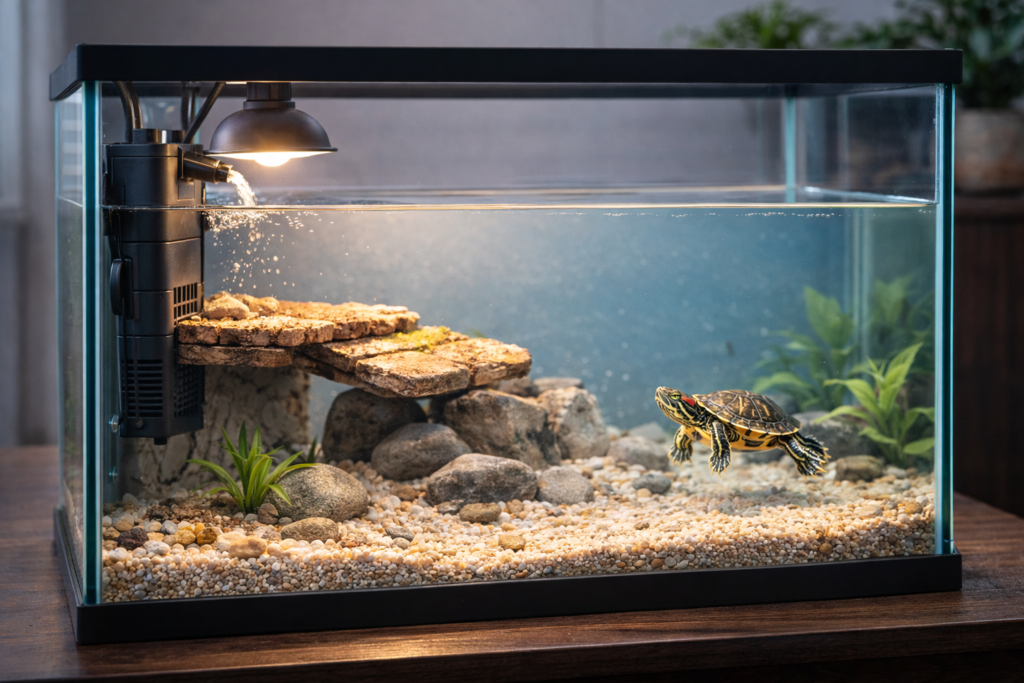
For turtles under 2–3 inches kept in tanks under 20 gallons, a high-quality internal filter can work temporarily.
However, turtles grow quickly. What works today may not work in six months.
Quarantine or Hospital Tanks
Internal filters are useful for:
Temporary isolation tanks
Medical treatment setups
Short-term enclosures
Because they are easy to install and remove, they’re convenient for temporary situations.
Supplemental Filtration
Some turtle keepers use internal sponge filters alongside stronger systems to add extra biological support.
In this case, the internal filter is not the primary filtration system — it’s additional support.
When Internal Filters Are Not Enough
Internal filters usually struggle in:
Tanks 30 gallons and above
Tanks with growing juvenile turtles
Adult turtle setups
High feeding frequency environments
Signs your internal filter is underpowered include:
Cloudy water returning quickly
Strong odor
Frequent ammonia readings above zero
Filter clogging every few days
Visible debris floating in the tank
These are clear indicators that turtle tank filtration capacity is insufficient.
The Biggest Problem: Limited Media Capacity
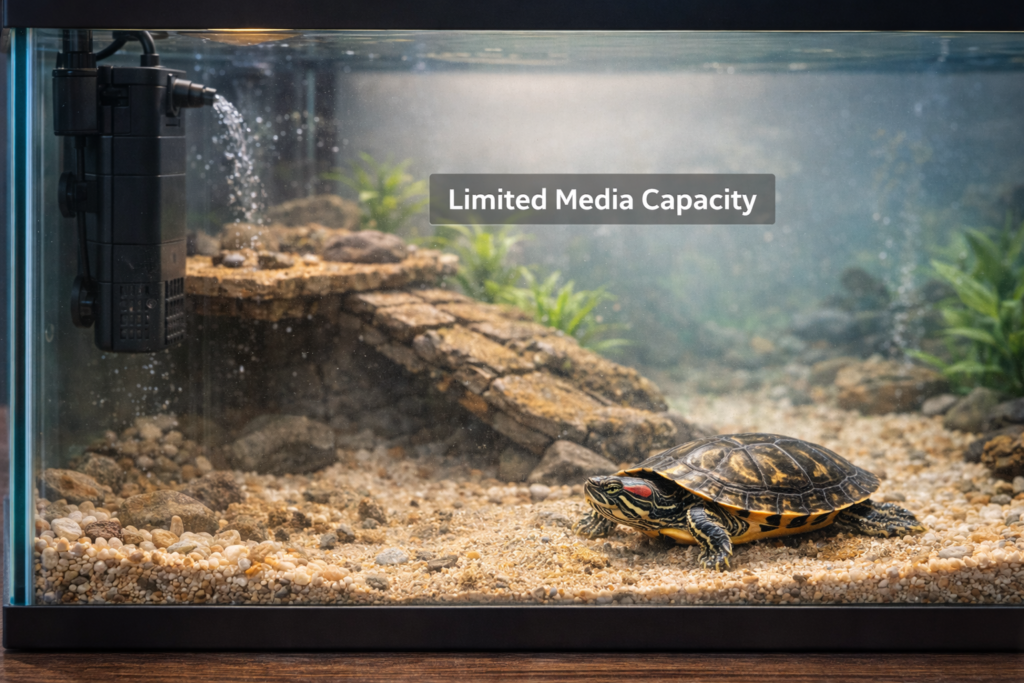
The core limitation of internal filters is size.
Because they sit inside the tank, they must remain compact.
That means:
Less mechanical media
Less biological surface area
Lower overall capacity
For turtles, capacity matters more than convenience.
This is why many turtle keepers eventually upgrade to hang-on-back or canister filters as their turtles grow.
Flow Strength vs Filtration Strength
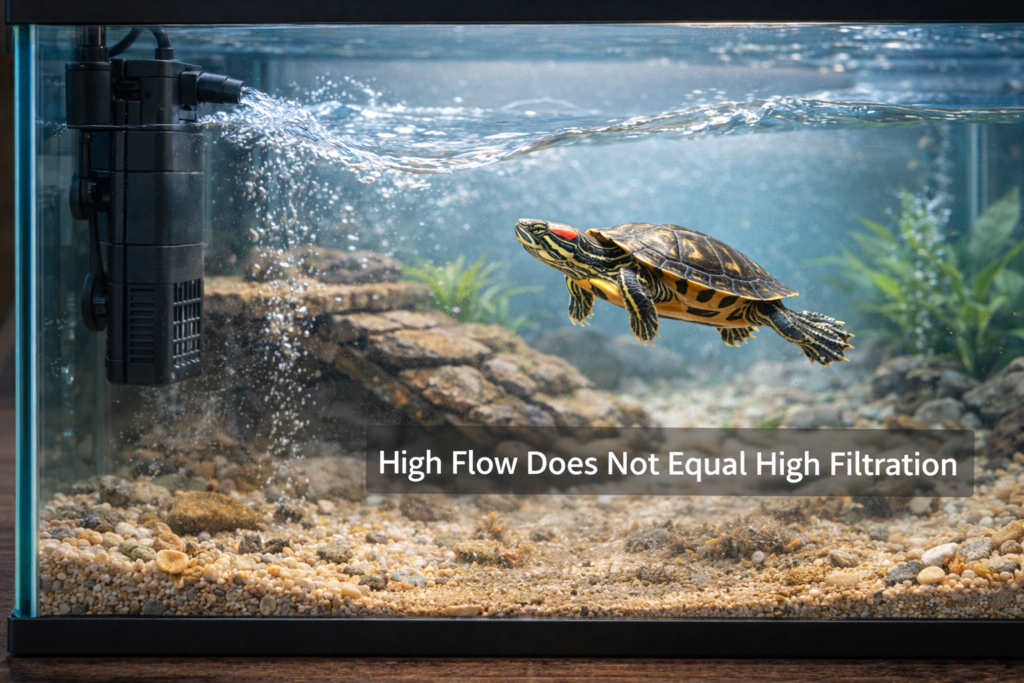
Some internal filters advertise high flow rates.
But high flow does not equal strong filtration.
You can have strong water movement with limited biological media.
For proper turtle tank filtration, biological capacity is more important than just pump strength.
Advantages of Internal Filters
Affordable
Compact
Easy to install
Quiet operation
Good for temporary setups
For beginners with very small tanks, internal filters can be a starting point.
Disadvantages for Long-Term Turtle Care
Limited biological media capacity
Clogs quickly with turtle waste
Visible inside the tank
Reduced effectiveness in larger setups
Frequent cleaning required
For long-term stability in medium or large tanks, they are rarely the best primary option.
Should You Use an Internal Filter for Your Turtle?
If you have:
A very small hatchling
A temporary setup
A quarantine tank
A tight short-term budget
An internal filter may be sufficient for now.
If you have:
A 40+ gallon tank
A growing juvenile turtle
An adult turtle
Ongoing water clarity issues
Upgrading to a higher-capacity filtration system is strongly recommended.
Proper turtle tank filtration must match your turtle’s waste output — not just your tank size.
Internal filters are not useless for turtle tanks, but they are limited.
They can work for:
Small tanks
Temporary setups
Supplemental filtration
However, because turtles produce heavy waste and high ammonia loads, internal filters often become overwhelmed in medium to large aquariums.
For stable, long-term turtle tank filtration, biological capacity and mechanical strength matter more than convenience.
As your turtle grows, upgrading your filtration system is not just recommended — it becomes necessary.
Choosing the right filtration strategy early saves you frustration, protects your turtle’s health, and creates a cleaner, more stable aquatic environment.


