Red Eared Slider Tank Setup Guide (Beginner Friendly + Checklist)
Setting up the right tank for your red eared slider is the single most important thing you can do for its long-term health.
Most beginner issues like cloudy water, shell problems, or a turtle not eating can usually be traced back to one thing, an improper setup.
If you get this part right from day one, everything else becomes much easier.
In this guide, I’ll walk you through exactly how to set up a proper turtle tank, based on what actually works in real setups, not just theory.
If you’re setting up your tank for the first time, it’s worth going through a complete red eared slider care guide to understand how tank size, lighting, and diet all work together.
Complete Your Turtle Setup
If you’re setting up your tank, these guides will help you get each part right:
Choosing the right filtration system?
👉 Best Filter for Turtle Tank
Setting up basking and lighting properly?
👉 Turtle Basking Setup Guide
Not sure what to feed your turtle?
👉 Red Eared Slider Diet Guide
Turtle not eating or acting inactive?
👉 Why Your Turtle Is Not Eating
1. Choosing the Right Tank Size
One of the biggest mistakes beginners make is starting with a tank that’s too small. Before setting up your red-eared slider tank, the first and most important step is choosing the correct tank size.
Most beginner problems like dirty water, shell issues, and stress come from using a tank that’s too small.
Use this calculator to find the ideal tank size based on your turtle’s size and setup.
Why Getting Tank Size Right Changes Everything
If your tank is too small, even a strong filter won’t be enough to keep the water clean. Red-eared sliders produce a lot of waste, and small tanks get dirty very quickly.
Starting with the right tank size makes everything else easier from filtration to maintenance.
You can also use our turtle tank size calculator anytime to double-check your setup as your turtle grows.
A common rule you’ll hear is:
👉 10 gallons of water per inch of turtle shell
Quick Reference Table:
| Turtle Size | Minimum Tank Size |
| Hatchling (1–2 inch) | 20–30 gallons |
| Juvenile (3–5 inch) | 40–75 gallons |
| Adult (6–10 inch) | 75–120+ gallons |
Even if your turtle is small right now, it will grow faster than you expect. Planning ahead saves money and prevents frequent upgrades.
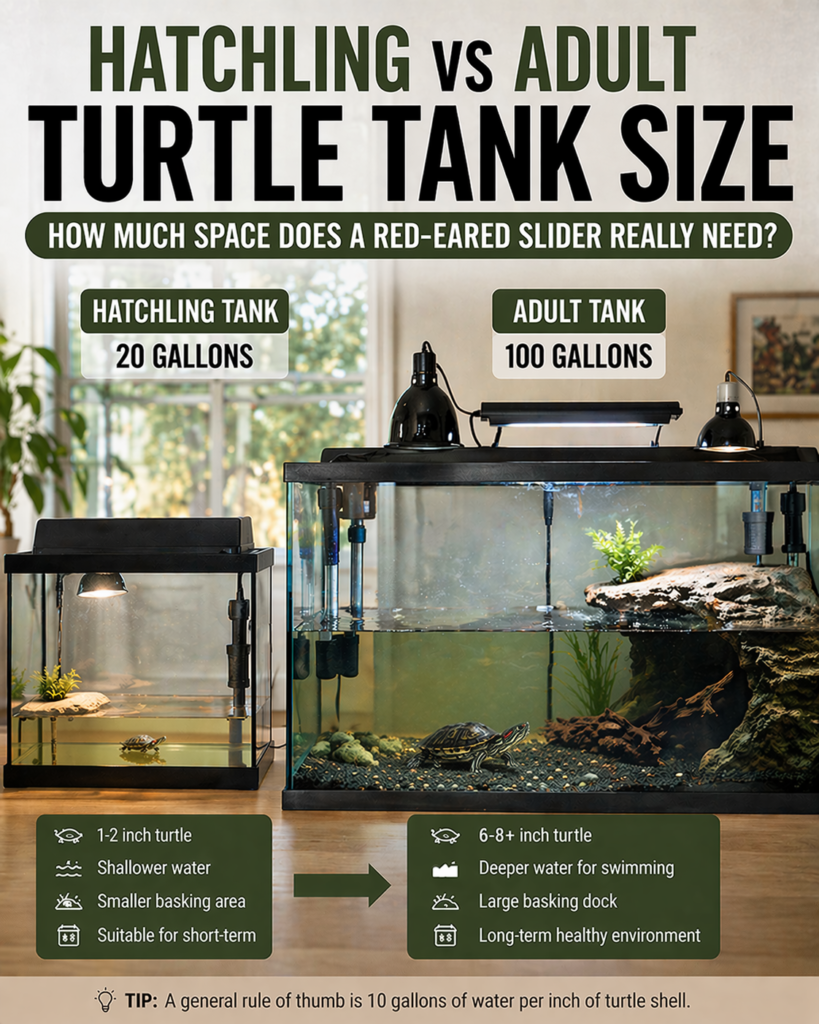
A larger tank not only gives your turtle more room to swim but also helps maintain better water quality over time.
2. Water Depth & Swimming Space
Red eared sliders are strong swimmers, so they need deep water.
👉 A good rule:
Water depth should be at least 2–3x the length of your turtle
Shallow water restricts movement and can lead to stress.
Also:
- Avoid cluttering the tank
- Leave open swimming space
3. Basking Area Setup (Non-Negotiable)
Your turtle needs a dry area where it can completely come out of the water.
This is where it:
- Dries its shell
- Absorbs heat
- Gets UVB exposure
Ideal Conditions:
- Temperature: 30–32°C
- Fully dry surface
- Easy access ramp
Without proper basking, turtles can develop shell rot and other serious issues.
👉 For a full breakdown, check your detailed guide on basking setups
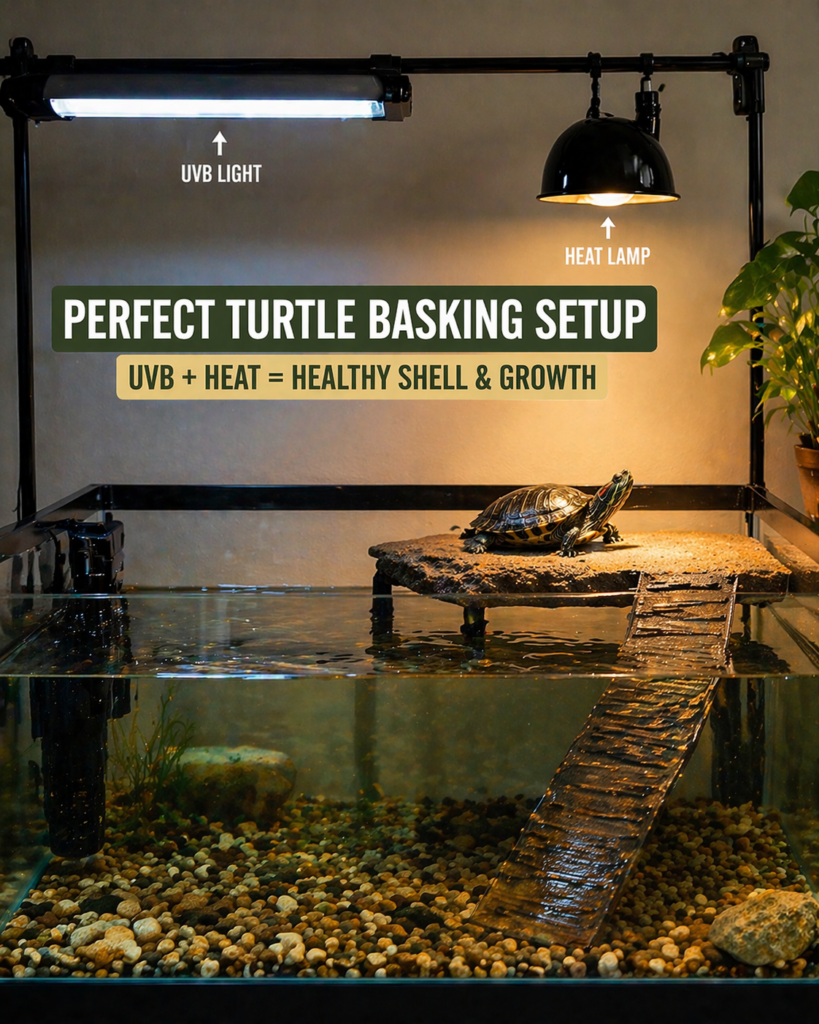
Without proper UVB and heat, turtles cannot metabolize calcium properly, which can lead to serious long-term health issues.
A proper basking setup is not optional for red-eared sliders. It directly impacts their shell health, digestion, and overall activity levels. If your turtle isn’t basking regularly, it’s usually a sign that something in the setup is off.
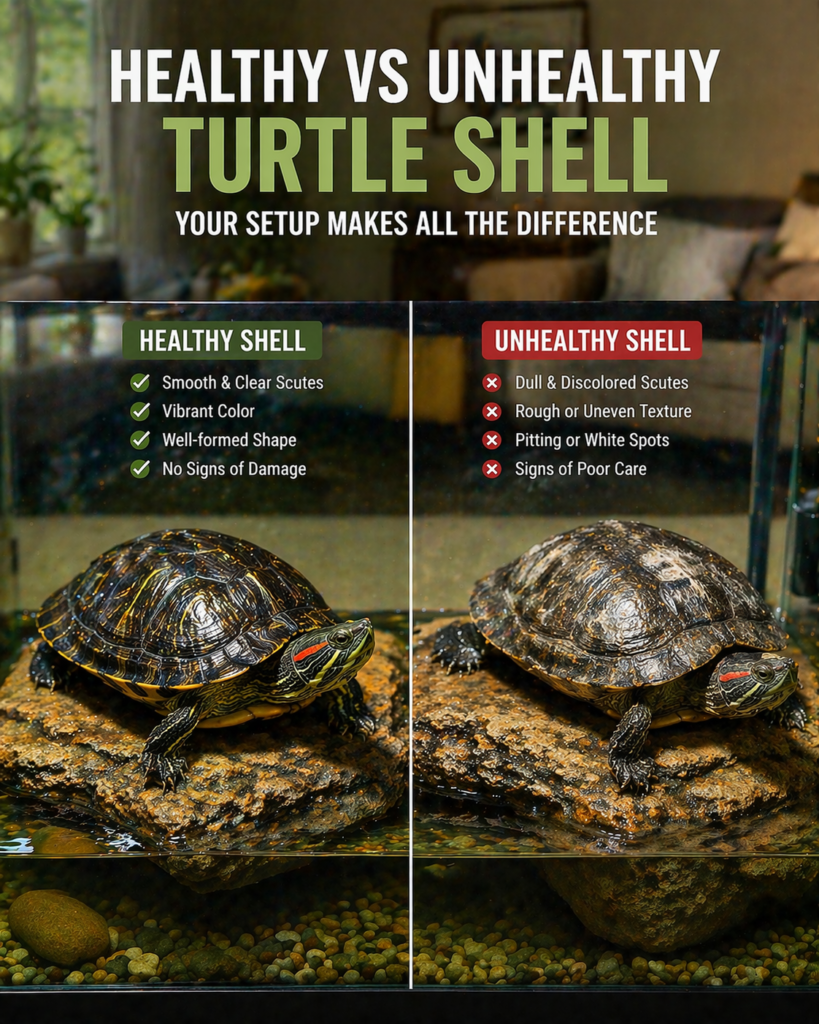
Most shell problems are caused by poor basking, lack of UVB lighting, or dirty water conditions.
Your turtle’s shell is one of the clearest indicators of its overall health. If the setup is correct, including proper basking, lighting, and filtration, the shell will remain smooth and healthy over time.
4. Lighting: UVB + Heat Lamp
This is where many setups go wrong.
You need two separate lights:
UVB Light
- Helps absorb calcium
- Prevents metabolic bone disease
Heat Lamp
- Keeps basking area warm
- Encourages natural basking behavior
Lights should be on:
- 10–12 hours daily
Skipping UVB is one of the fastest ways to harm your turtle long-term.
5. Filtration System (Where Most People Struggle)
Turtles are messy. Much messier than fish.
This means:
👉 A weak filter = dirty water very quickly
Rule of Thumb:
Use a filter rated for 2–3x your tank size
Example:
- 50-gallon tank → 100–150 gallon rated filter
Canister filters are usually the best option for turtle tanks because they:
- Handle heavy waste
- Keep water clear longer
- Require less frequent cleaning
👉 If you want specific recommendations, check your filter guide
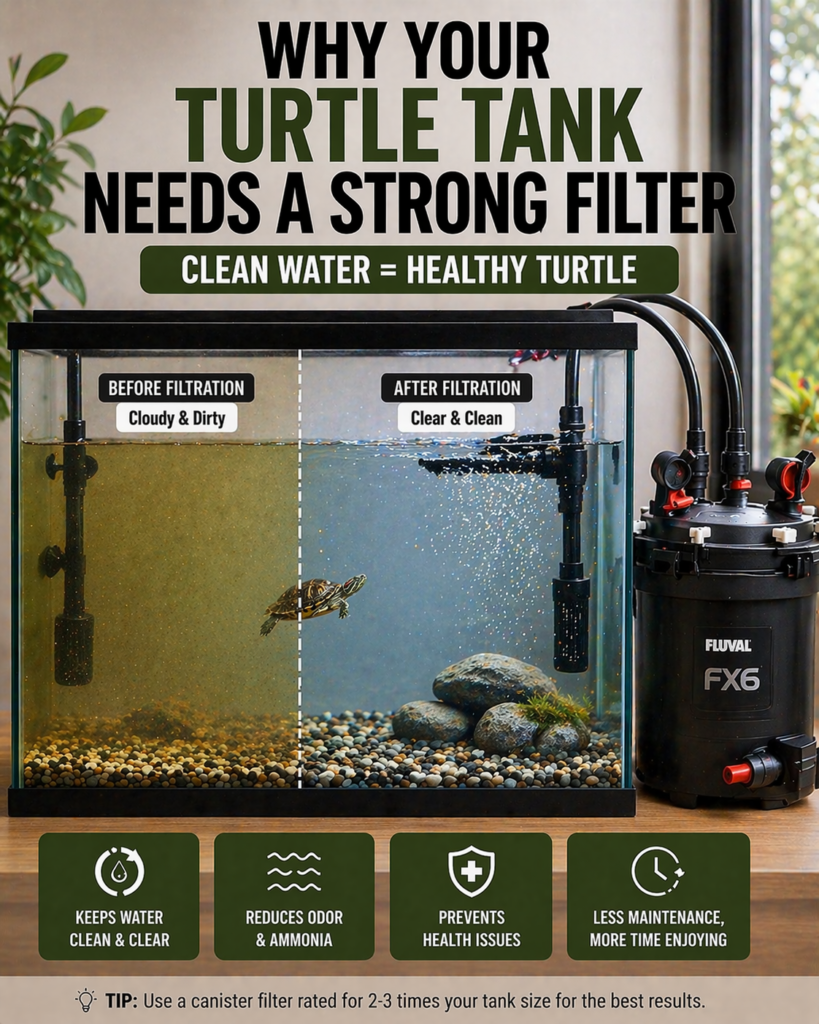
Turtles produce much more waste than fish, which is why a strong canister filter rated for 2 to 3 times your tank size is recommended.
If your turtle tank water keeps getting cloudy, the issue is almost always related to filtration. A properly sized canister filter can completely change your tank’s water quality and reduce maintenance significantly.
Water temperature plays a huge role in your turtle’s activity and appetite.
Ideal Range:
- 24–26°C (75–78°F)
Use an aquarium heater if needed, especially for hatchlings.
Cold water can make turtles:
- Lethargic
- Stop eating
- More prone to illness
7. Substrate (Do You Need It?)
This is optional.
Bare bottom tank:
✅ Easy to clean
❌ Less natural look
Gravel or rocks:
✅ More aesthetic
❌ Risk of swallowing (if too small)
👉 If you use substrate, go for:
- Large river rocks (too big to swallow)
Common Beginner Mistakes
Avoid these early:
- Using small tanks
- No UVB lighting
- Weak filtration
- Feeding in dirty water
- No basking area
These are the exact reasons most turtles struggle in beginner setups.
Simple Setup Checklist
Before adding your turtle, make sure:
- Tank size is appropriate
- Basking platform installed
- UVB + heat lamp working
- Filter running properly
- Water temperature stable
Want real-time help with your turtle setup?
We regularly share practical tips, fixes, and real turtle care scenarios on our Facebook page.
👉 Follow here: PetYourTurtle
Frequently Asked Questions:
At least 10 gallons per inch of shell, but bigger is always better.
You can for a short time, but it’s not ideal and will quickly cause issues.
Yes, absolutely. Without a filter, water quality will decline very fast.
Partial water changes weekly, deep cleaning every few weeks depending on filtration.