Best Filter for Turtle Tank: What Actually Works
Choosing the right filter for a turtle tank is different from choosing one for a typical fish aquarium. Aquatic turtles produce a substantial amount of solid waste, and leftover food, tank size, filtration capacity and maintenance all affect how quickly water becomes dirty.
The right filter can help remove solid waste, support biological filtration and keep the water cleaner between routine water changes. But buying a more powerful filter isn’t the only solution — the filter needs to be appropriate for your tank size and turtle’s waste load.
In this guide, I’ll explain which types of filters work best for turtle tanks, how much filtration you actually need, and which setup makes sense for different tank sizes and budgets.
Already know you want a canister? See my Best Canister Filters for Turtle Tanks guide.
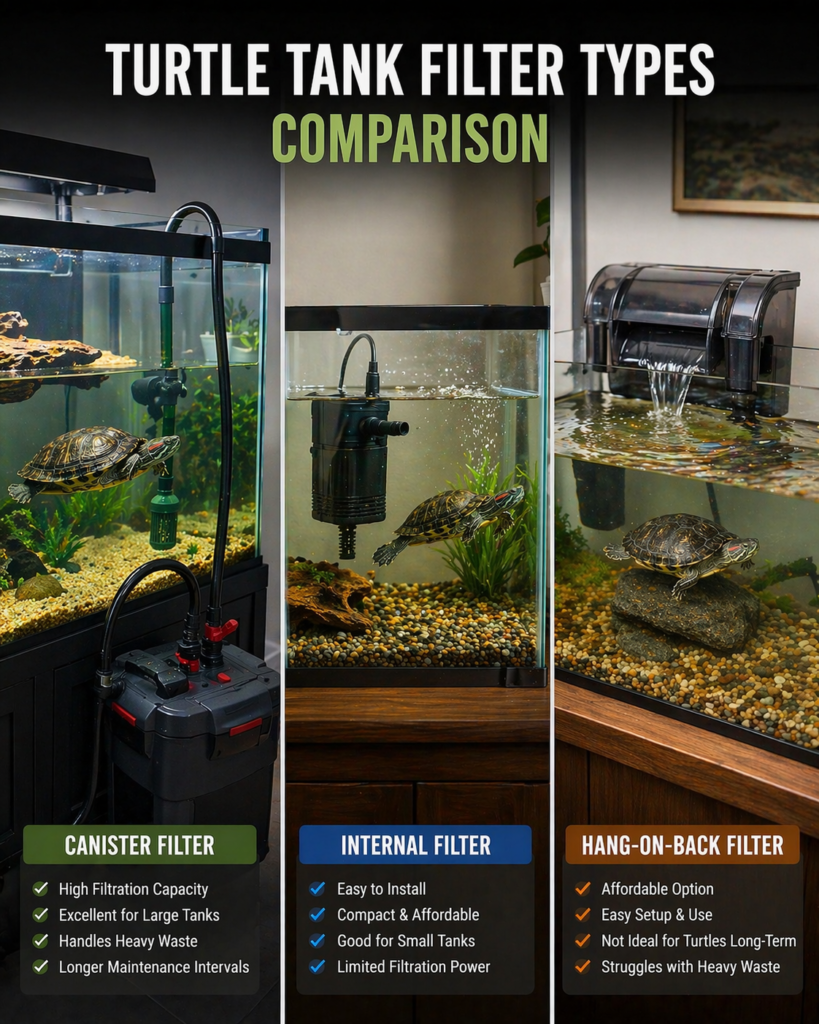
A properly sized canister filter can completely transform your tank experience by keeping water clean for longer periods with less effort.
What Type of Filter Is Best for a Turtle Tank?
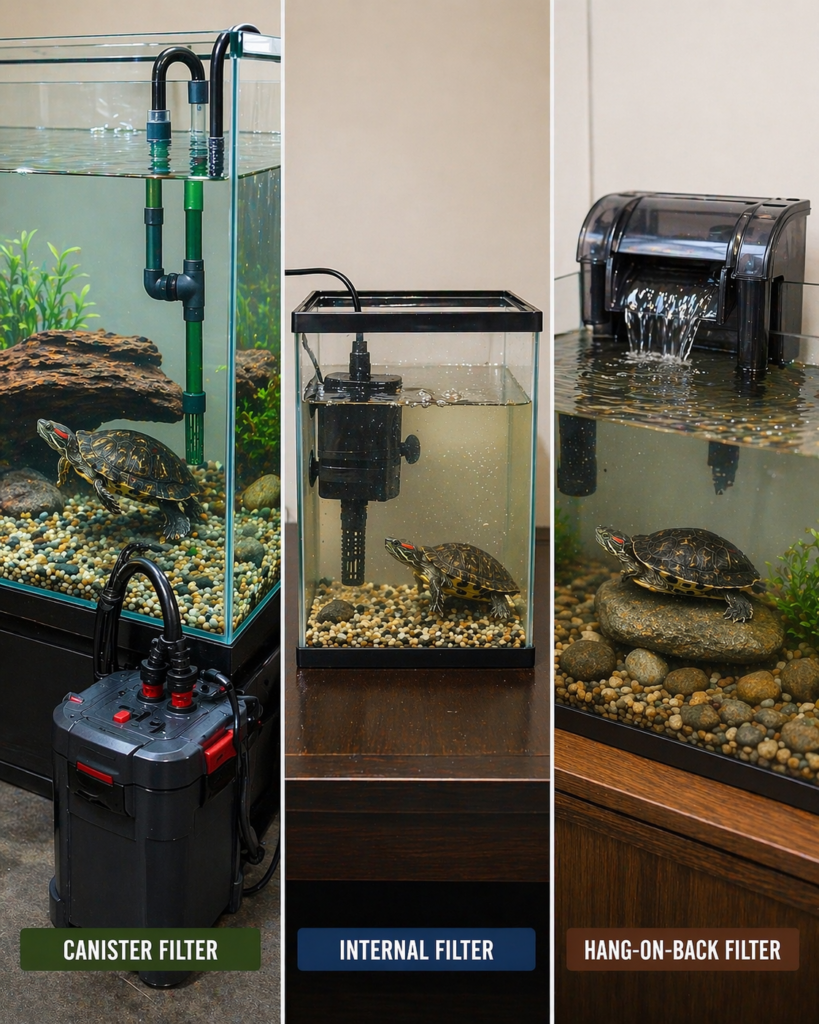
There isn’t one filter type that is right for every turtle setup. The best choice depends on your tank size, turtle’s size, waste load, budget and how much maintenance you’re willing to do.
Canister Filters — Best for Medium to Large Turtle Tanks
Canister filters generally offer the largest media capacity and are a strong choice when you’re dealing with a larger turtle, a larger tank or a heavier waste load.
Best for: Medium and large setups
Main advantage: High mechanical and biological filtration capacity
Main drawback: Higher cost and more involved setup
If you’re looking specifically for a canister filter, see our Best Canister Filters for Turtle Tanks guide.
Hang-On-Back (HOB) Filters — Best for Smaller Setups
A properly sized HOB filter can work for some smaller turtle tanks, particularly when the turtle is young and the waste load is manageable.
Best for: Smaller setups and simpler installations
Main advantage: Easy access and relatively low cost
Main drawback: Less media capacity than many large canister filters
Internal Filters — Best for Small or Temporary Setups
Internal filters are compact and easy to install, but their smaller media capacity limits how useful they are as turtles grow and their waste production increases.
Best for: Small setups or temporary use
Main advantage: Compact and inexpensive
Main drawback: Limited filtration capacity
Not all filters perform equally in turtle tanks. While internal and hang-on-back filters may work for smaller setups, they often struggle to keep up with the amount of waste turtles produce, which is why canister filters are usually the most reliable long-term option.
Canister filters are generally the most effective option for turtle tanks because they handle heavy waste and maintain water clarity more consistently.
Filter Type Comparison Table
| Filter Type | Best For | Main Advantage | Main Limitation |
|---|---|---|---|
| Canister | Medium–large tanks | High media capacity and strong filtration | Higher cost |
| HOB | Small–medium tanks | Easy to install and maintain | Less media capacity |
| Internal | Small/temporary setups | Compact and inexpensive | Limited capacity |
Which Filter Type Should You Choose?
Small tank with a young turtle → HOB or internal filter
Medium tank → HOB or canister, depending on waste load
Large tank → Canister filter
Multiple turtles → High-capacity canister filter
Want the strongest long-term setup? → Canister filter
If a canister filter makes sense for your setup, see our Best Canister Filters for Turtle Tanks guide for our five recommended models.
How to Choose the Right Filter Size
Choosing the right filter size is just as important as choosing the type of filter. Most beginners underestimate how much filtration a turtle tank needs, which leads to poor water quality over time.
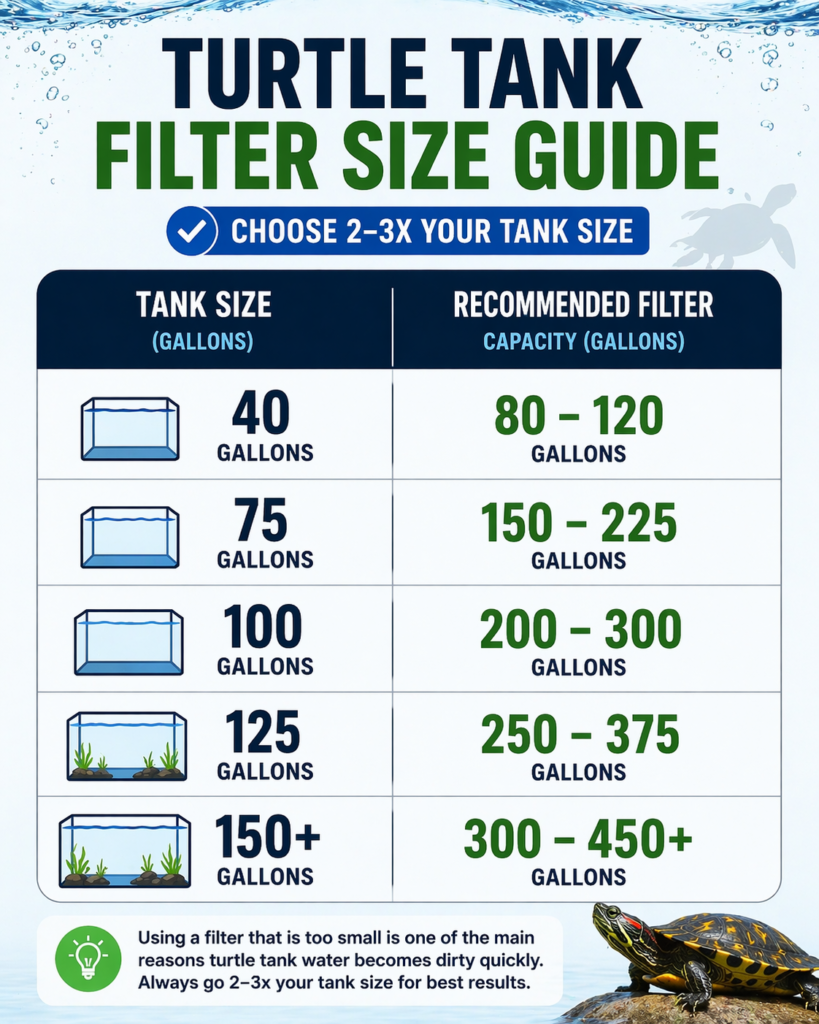
Using a filter that is too small is one of the main reasons turtle tank water becomes cloudy and difficult to maintain.
This is where most people go wrong.
Best Filters for Turtle Tanks: Quick Picks
These are solid options, but if you want a more detailed comparison including pros, cons, and long-term performance, check out this guide to the best canister filters for turtle tanks.
Best Overall for Medium–Large Tanks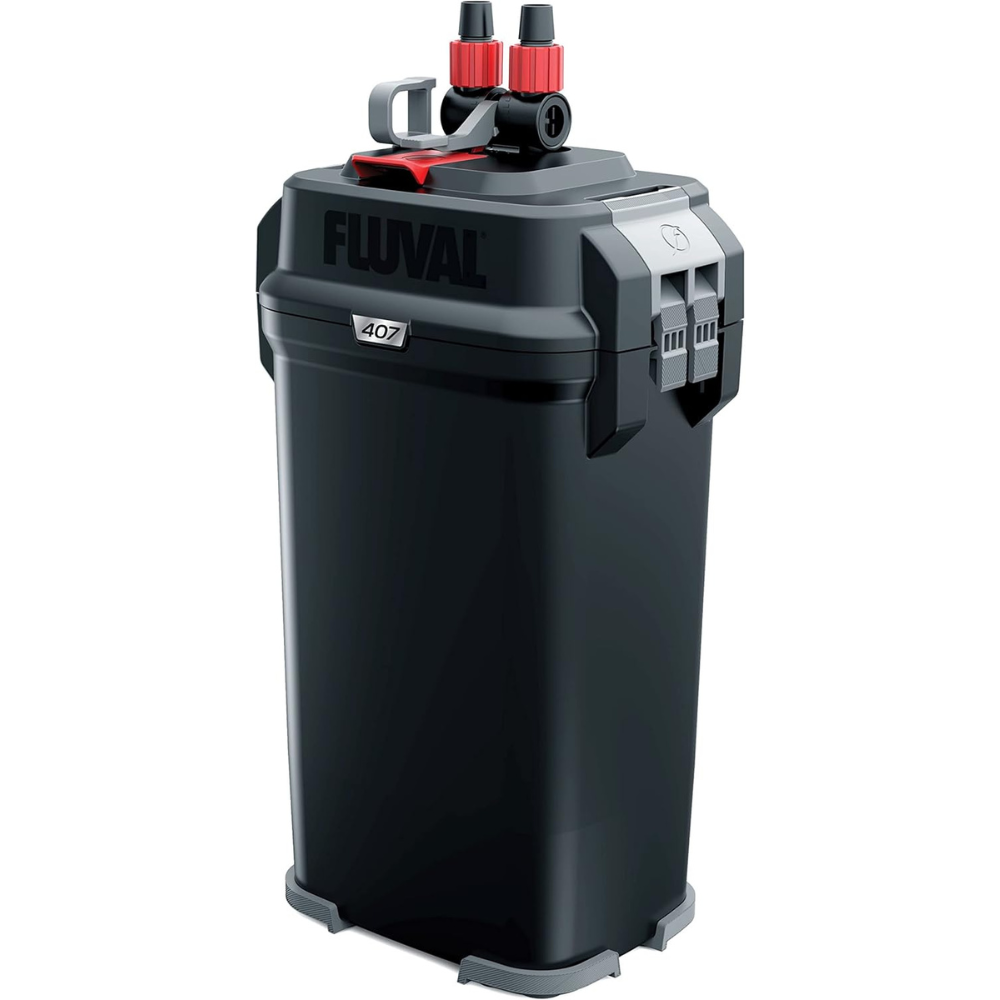 Fluval 407 |
Best for Large Tanks & Heavy Bioloads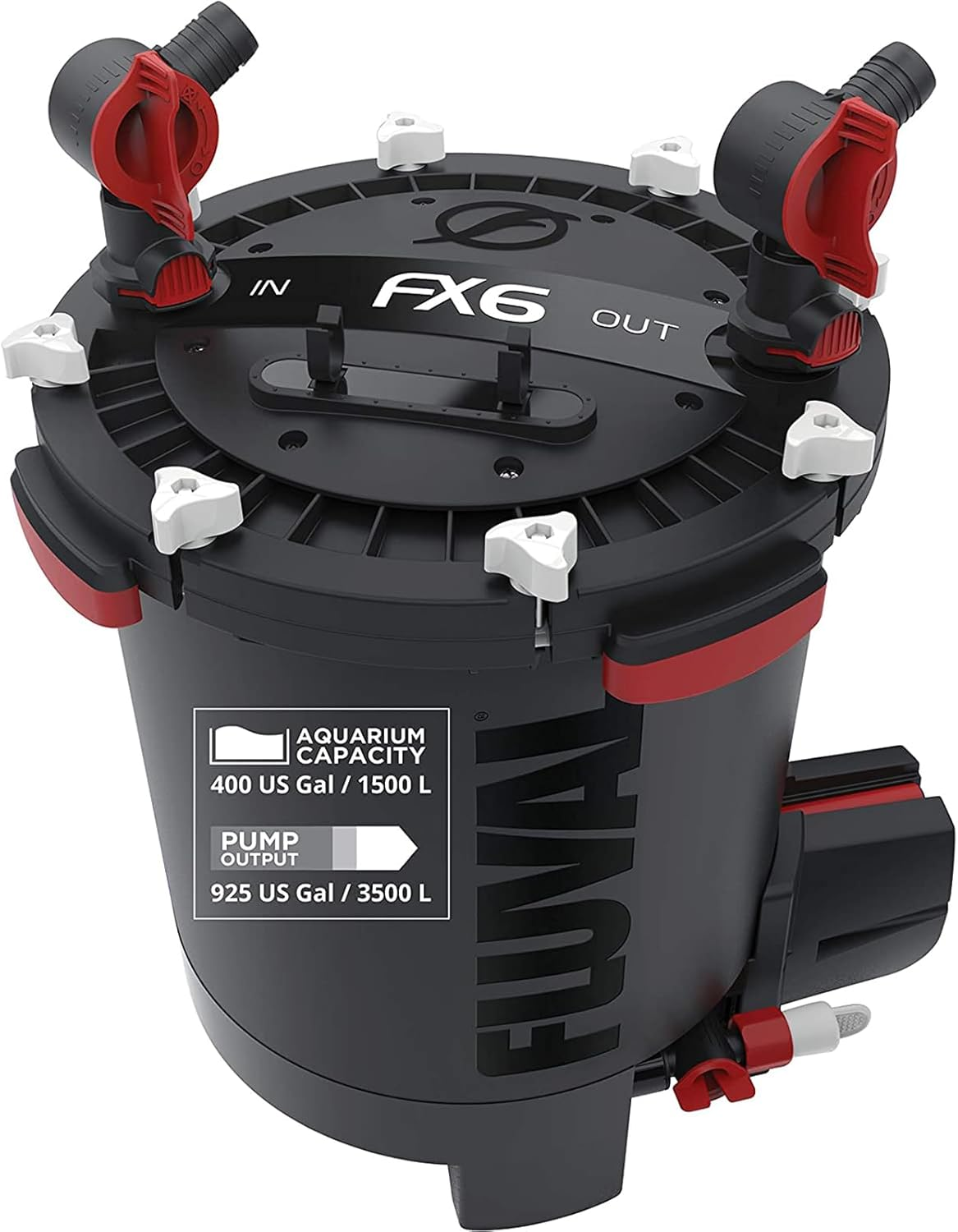 Fluval FX6 |
Best Budget Canister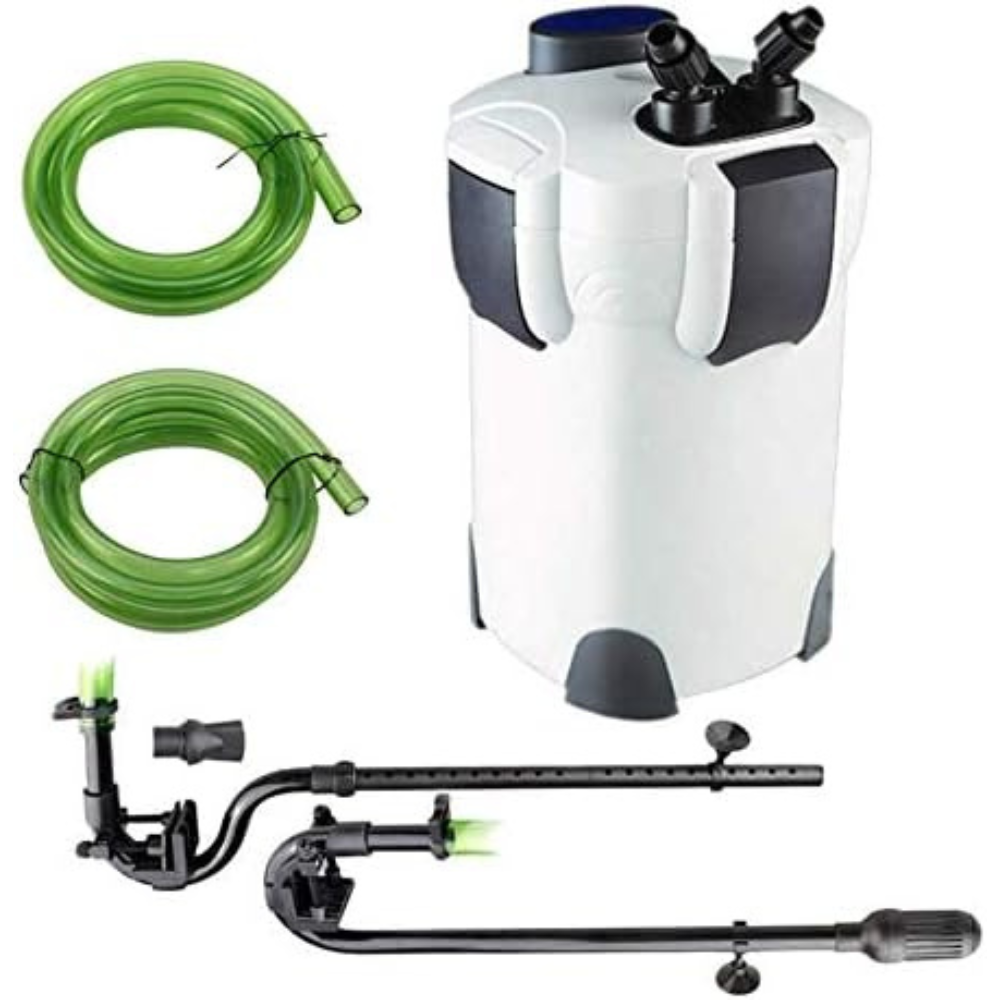 SunSun HW-303B |
|---|---|---|
| Strong choice for medium to large turtle tanks | Ideal for 125–400 gallon turtle tanks | Affordable canister option for medium-sized setups |
| Quiet and energy efficient | Massive media capacity for heavy turtle waste | High 1,400 L/h maximum pump output |
| Easy-access maintenance design | Flow rate around 925 GPH | Three-stage filtration with multiple media baskets |
| Large media capacity for its size | Self-starting smart pump | Built-in UV sterilizer on the HW-303B |
| Good balance of filtration and operating cost |
Best for large RES and multiple turtles | Best suited to budget-focused turtle keepers |
Want the full comparison?
What About HOB Filters?
Hang-on-back (HOB) filters can work well for some smaller turtle setups, particularly when you’re keeping a young turtle and the aquarium has a relatively manageable waste load.
Their biggest advantage is simplicity. A HOB filter hangs on the back of the aquarium, is relatively easy to access, and generally costs less than a large canister filter.
However, turtles produce considerably more solid waste than many beginner fish-keeping setups, so the filter’s mechanical capacity matters. As the turtle grows, a small HOB filter may become harder to keep up with, especially if the tank is heavily stocked or frequently receives uneaten food.
HOB filters are worth considering if:
- You have a smaller turtle tank
- You’re keeping a single young turtle
- You want a simpler installation
- You prefer easy access to the filter media
- The filter is appropriately sized for your actual water volume and waste load
The main limitation
The biggest limitation is usually media capacity, not simply the fact that the filter is a HOB.
A larger canister filter can generally hold more mechanical and biological media, which becomes increasingly useful as the turtle and its waste production increase.
Bottom line: A properly sized HOB can work for some smaller setups, but I would generally look toward a canister filter as the turtle and aquarium grow.
What About Internal Filters?
Internal filters are compact filtration units that sit inside the aquarium. They’re inexpensive, easy to install and can be useful for very small setups or temporary applications.
The problem is that their compact size also limits how much filter media they can hold.
For a growing aquatic turtle, that can become a significant limitation because you’re dealing with a relatively high waste load inside a relatively small volume of water.
Internal filters can make sense when:
- The aquarium is small
- The turtle is very young
- You’re looking for a temporary or supplemental filter
- Space behind the aquarium is limited
- You understand that the filter may need more frequent cleaning
Their biggest limitation
Limited media capacity.
An internal filter may move water effectively while still having relatively little room to physically capture and retain turtle waste.
That’s why I wouldn’t choose an internal filter simply because its advertised flow rate looks impressive.
Bottom line: Internal filters can have a place in small or temporary setups, but they aren’t usually my first choice for a long-term turtle habitat.
Canister vs HOB vs Internal Filter: Which Is Best?
| Filter Type | Best For | Main Advantage | Main Limitation |
|---|---|---|---|
| Canister | Medium & large turtle tanks | Large media capacity | Higher cost & more involved setup |
| HOB | Smaller turtle tanks | Simple installation & maintenance | Usually less media capacity |
| Internal | Small/temporary setups | Compact & inexpensive | Limited media capacity |
My general recommendation
Small setup with a young turtle: HOB or internal can work if properly sized.
Medium turtle tank: A good HOB or canister can work, depending on the turtle’s waste load.
Large turtle tank: I would generally choose a canister.
Large adult turtle or multiple turtles: A high-capacity canister becomes much more attractive.
Looking for the best long-term filtration: A canister is usually the direction I’d take.
If you’ve decided that a canister filter is right for your setup, See our
for our top recommendations.
How Much Filtration Does a Turtle Tank Need?
A useful starting point is to choose a filter with substantially more capacity than your aquarium’s actual water volume. Turtle tanks typically have a heavier waste load than many fish aquariums, so a filter rated exactly for your tank size may leave you with less filtration capacity than you want.
Manufacturer ratings are only a starting point, however. Actual filtration performance depends on your water volume, turtle size, feeding habits, filter media, hose configuration, head height and how much debris has accumulated in the mechanical media.
For that reason, I prefer choosing a filter with some additional capacity rather than running a filter at its practical limit.
Learn: How Strong Should a Turtle Tank Filter Be?
Why Does My Turtle Tank Get Dirty So Fast?
Even a properly sized filter can’t compensate for excessive feeding, uneaten food, an undersized aquarium or neglected maintenance.
Turtles naturally produce a substantial amount of waste, which is why filtration needs to work together with appropriate feeding and regular maintenance.
Read: Why Turtle Tanks Get Dirty So Fast
Common Filtration Mistakes
Avoid these:
- Using fish-rated filters
- Choosing exact tank size rating
- Skipping maintenance
- Overfeeding (affects water quality)
Before Choosing a Filter, Make Sure Your Tank Size Is Right
A lot of turtle tank problems that look like “filter issues” are actually caused by using a tank that’s too small. When the tank volume is low, waste builds up faster and even strong filters struggle to keep the water clean.
Before you invest in a better filter, it’s worth checking if your tank size is correct for your turtle.
Why This Changes Everything
Filters are rated based on water volume, not just turtle size. If your tank is undersized, upgrading your filter alone won’t solve the problem.
Getting the tank size right first makes it much easier to choose a filter that actually works and keeps your water clear.
Why Turtle Tanks Need Strong Filtration
Unlike fish, turtles:
- Eat messy foods
- Produce solid waste
- Disturb the substrate
This leads to:
- Cloudy water
- Bad odor
- Bacterial buildup
👉 A weak filter will fail quickly.
“For medium and large turtle setups, a properly sized canister filter is usually the strongest long-term option because of its larger media capacity and filtration flexibility.”
If you’re setting up or improving your turtle tank, these guides will help you get everything right:
- Red Eared Slider Tank Setup Guide – Learn how to set up the perfect tank step by step
- Best Canister Filters for Turtle Tanks – Detailed comparison of top-performing filters
- Best Canister Filters for 40 Gallon Turtle Tanks – Detailed comparison of top-performing filters specifically for 40 gallon tanks
- Turtle Basking Setup Guide – Proper lighting and basking area explained
- Red Eared Slider Diet Guide – What to feed and how often
- Why Your Turtle Is Not Eating – Common causes and fixes
- The Ultimate Guide to Turtle Tank Filtration — how filtration affects water quality and turtle health
Frequently Asked Questions
A useful starting point is to choose a filter with substantially more capacity than your actual tank volume, because turtle tanks typically have a heavier waste load. Manufacturer ratings are only a starting point; actual performance depends on water volume, turtle size, feeding, media capacity, hose configuration and flow restriction.
Not recommended. Turtle waste is much heavier.
Every 3–6 weeks depending on usage.
Most likely:
1. Filter is too small
2. Overfeeding
3. Not enough biological filtration