Red Eared Slider Diet Guide (What to Feed + Weekly Plan)
Feeding your red-eared slider properly is one of the most important parts of keeping it healthy.
A lot of beginner problems like poor growth, shell issues, or a turtle refusing to eat often come down to diet mistakes.
The good news is that once you understand the basics, feeding your turtle becomes simple and predictable.
If you’re still figuring things out, these guides can help depending on what you need:
Related Articles you might want to go through:
Setting up your tank properly?
👉 Red Eared Slider Tank Setup Guide
Dealing with cloudy or dirty water?
👉 Best Filter for Turtle Tank
Not sure about basking or lighting?
👉 Turtle Basking Setup Guide
Your turtle not eating?
👉 Why Your Turtle Is Not Eating
Not sure what size tank your turtle needs?
👉 Use this turtle tank size calculator to get the exact recommendation.
What Do Red Eared Sliders Eat?
Red-eared sliders are omnivores, which means they eat both animal protein and plant matter.
But their diet changes as they grow. Red-eared sliders are omnivores, which means their diet naturally includes both animal protein and plant matter.
Hatchlings (0–1 year)
- Mostly protein-based diet
- Small pellets
- Occasional insects or shrimp
👉 They need protein for growth
Juveniles (1–3 years)
- Balanced diet
- Mix of protein + vegetables
Adults (3+ years)
- Mostly plant-based
- Less protein
👉 Too much protein at this stage can cause health issues
A turtle’s diet is not fixed—it changes as they grow. Understanding this shift is key to avoiding common feeding mistakes and keeping your turtle healthy long-term.
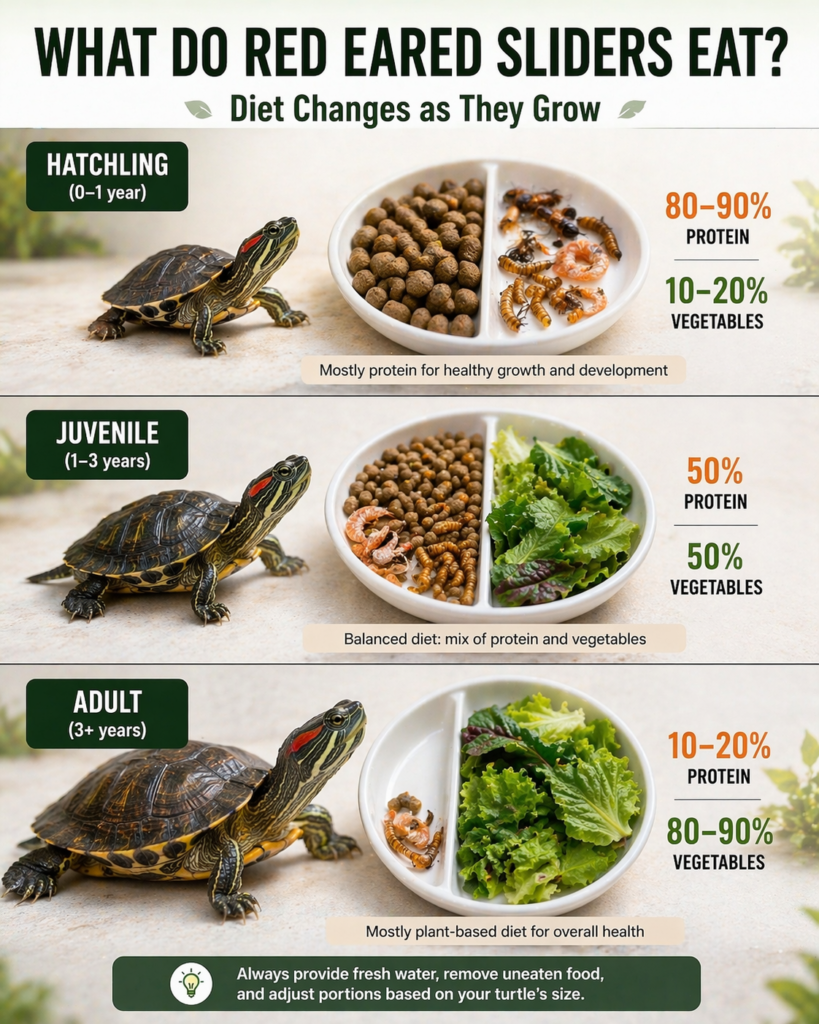
Feeding the wrong diet for your turtle’s age is one of the most common causes of poor growth and shell issues.
Best Foods for Red Eared Sliders
Let’s break this down into simple categories.
Staple Food (Must Have)
👉 High-quality turtle pellets
Why?
- Balanced nutrition
- Easy to feed
- Designed for turtles
Vegetables (Essential for Adults)
Good options:
- Romaine lettuce
- Collard greens
- Dandelion greens
Avoid:
- Iceberg lettuce (low nutrition)
Protein Sources (Occasional)
- Mealworms
- Shrimp
- Small fish
👉 Treat, not daily food (especially for adults)
Weekly Feeding Plan
A consistent feeding schedule makes it easier to maintain a balanced diet and avoid overfeeding. This is especially important as your turtle grows and its dietary needs change.
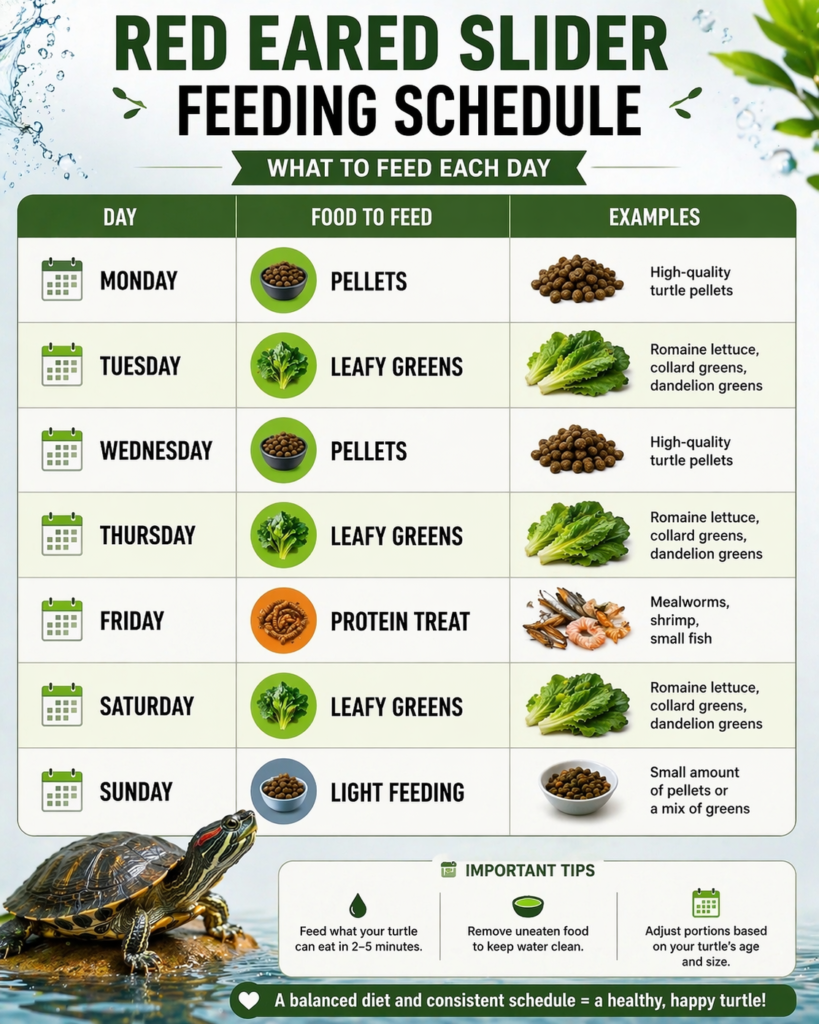
Overfeeding is one of the most common mistakes—following a structured feeding schedule helps maintain both turtle health and water quality.
👉 Adjust based on age
Common Feeding Mistakes
Knowing what not to feed is just as important as knowing what to include. Many common foods that seem harmless can actually cause long-term health problems for turtles.
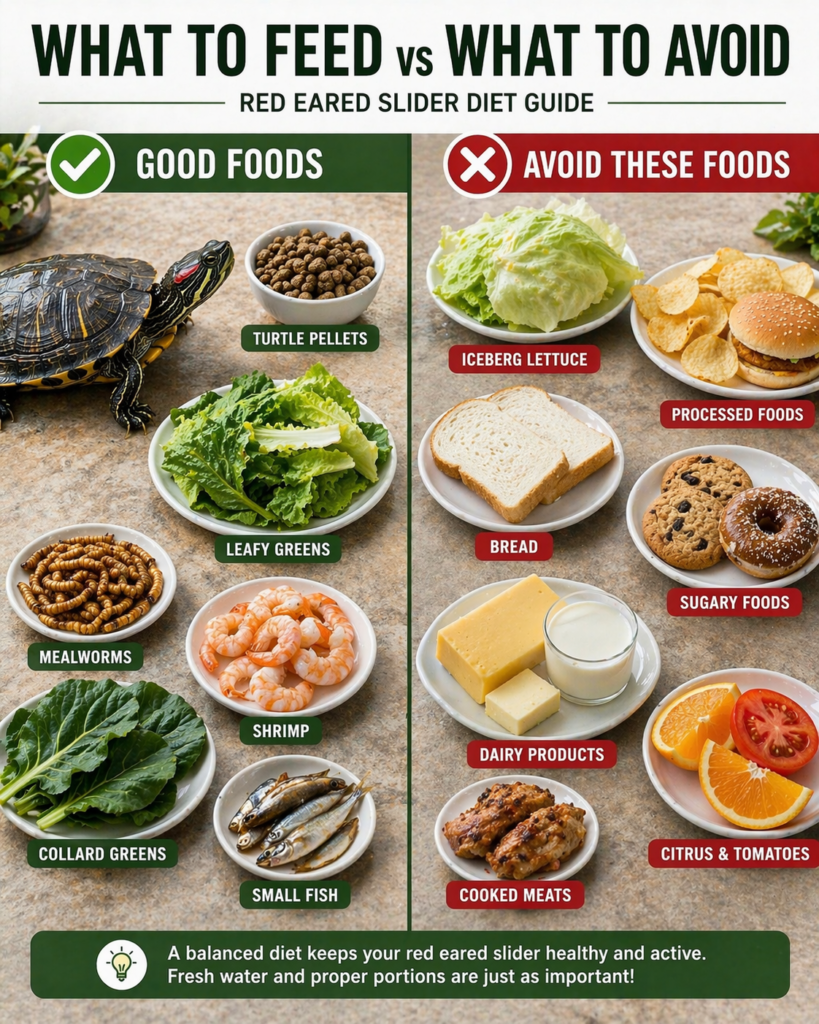
Feeding the wrong foods regularly can lead to serious health issues, even if your turtle seems to enjoy them.
This is where most people go wrong:
- Overfeeding
- Too much protein
- No vegetables
- Feeding random human food
👉 These lead to:
- Shell problems
- Obesity
- Dirty water
Feeding & Water Quality (Important Connection)
Feeding directly affects your water quality.
Overfeeding = cloudy water
👉 If you’re struggling with this, check your turtle tank filtration setup guide
Real-World Insight
In real setups, turtles will always act like they’re hungry—even when they’re not.
This leads many owners to overfeed.
A good rule:
👉 Feed what they can finish in a few minutes
Frequently Asked Questions
Daily for hatchlings, every 1–2 days for adults.
They can survive, but not thrive. Variety is important.
Stress, temperature, or diet issues.
Yes, especially for adults.
If you want to keep your turtle healthy long-term, getting the diet right early makes a huge difference.
A proper diet is one of the easiest ways to keep your red-eared slider healthy. Once you understand the balance between protein and vegetables, feeding becomes simple and stress-free.