Keeping a pet turtle healthy is about much more than feeding it regularly and cleaning its tank once in a while. Turtles are hardy animals in many ways, but they can also develop serious health problems when their living conditions are not right.
One thing I have learned from understanding turtle care is that small changes in a turtle’s behavior can tell us a lot. A turtle that suddenly refuses food, spends all day hiding, struggles to swim, or stops basking may be trying to tell us that something is wrong.
The tricky part is that turtles do not always show obvious signs of illness at the beginning. Some health problems develop slowly, and by the time the symptoms become noticeable, the condition may already need veterinary treatment.
The good news is that many common pet turtle health problems can be reduced or prevented with proper nutrition, clean water, suitable temperatures, UVB lighting, and regular observation.
In this guide, I will walk through the health problems every turtle owner should understand, the warning signs to watch for, and the practical steps that can help keep a pet turtle healthy. Whether you are a new turtle owner or have cared for turtles for years, knowing what to look for can make a real difference.
Taking care of a red-eared slider involves getting a few key things right. If you want to go deeper into each part, these guides will help:
Setting up the perfect tank
👉 Red Eared Slider Tank Setup Guide
Choosing the right filter for clean water
👉 Best Filter for Turtle Tank
Getting basking and UVB lighting right
👉 Turtle Basking Setup Guide
Feeding the right diet at each stage
👉 Red Eared Slider Diet Guide
Troubleshooting when your turtle is not eating
👉 Why Your Turtle Is Not Eating
1. How to Tell If Your Pet Turtle Is Sick
Before learning about individual diseases, I think it is important to understand what a healthy turtle normally looks and behaves like.
A healthy turtle is generally alert and responsive to its surroundings. It should move comfortably, swim normally if it is an aquatic species, and show interest in food. Its eyes should be clear, and its shell should be firm and free from unusual damage.
Of course, normal behavior varies between species. Some turtles are naturally shy, while others are more active. The most useful thing is to learn your own turtle’s usual routine.
Here are some warning signs that deserve attention:
- Sudden loss of appetite or repeated refusal to eat.
- Unusual tiredness or spending much more time hiding.
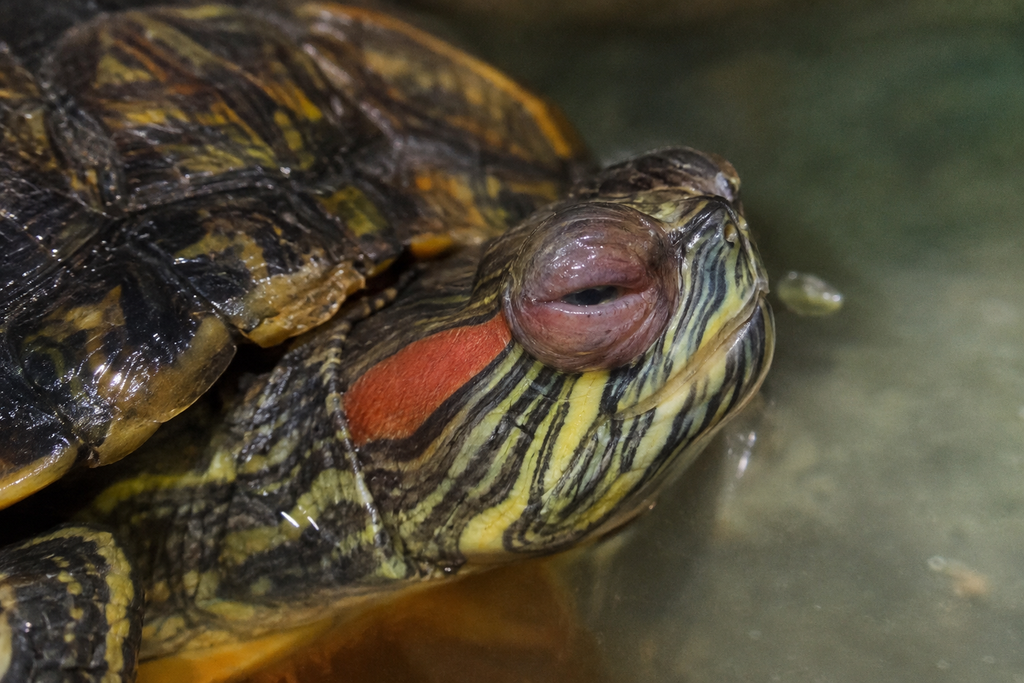
- Swollen, cloudy, or constantly closed eyes.
- Bubbles, mucus, or discharge around the nose or mouth.
- Wheezing, open-mouth breathing, or unusual breathing sounds.
- Difficulty swimming or floating unevenly.
- Soft spots, deep pits, discoloration, or a bad smell from the shell.
- Swelling, wounds, or unusual growths on the skin.
- Unexplained weight loss or changes in droppings.
One important point: a turtle becoming less active does not always mean it is sick. Temperature changes can affect activity, but you should never assume that unusual behavior is harmless. Check the habitat and seek veterinary advice if the change continues or comes with other symptoms.
2. Common Shell Problems in Pet Turtles
A turtle’s shell is part of its body, not a removable covering. It contains living bones and is connected to the animal’s nervous system. This is why shell damage should never be ignored.
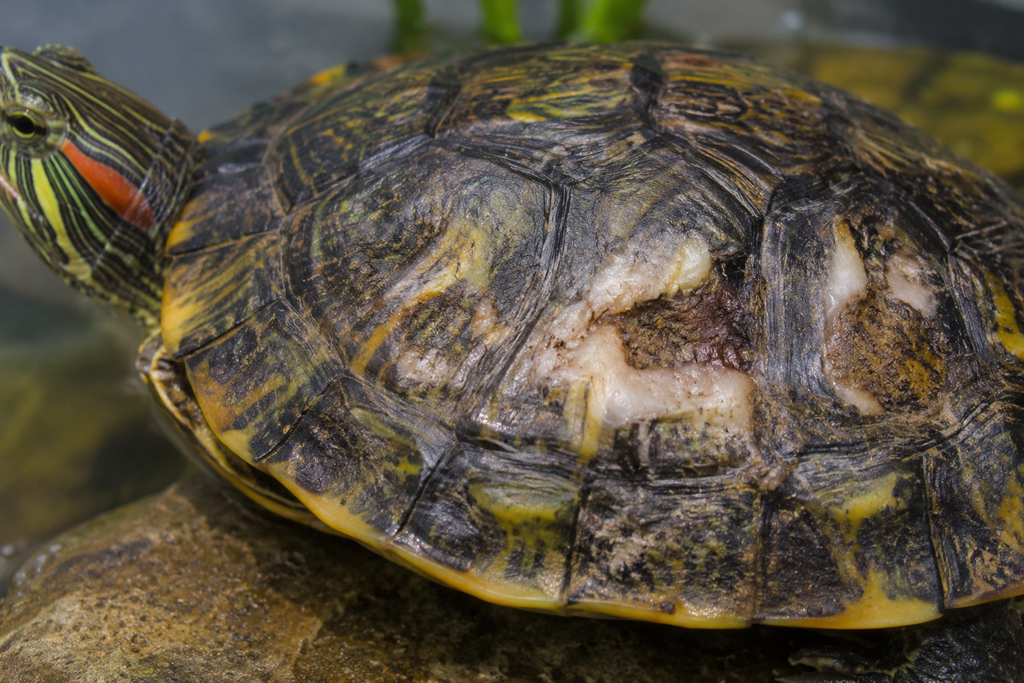
Shell rot
Shell rot is a common concern among aquatic turtle owners. It usually involves infection or damage affecting the shell, and poor water quality can increase the risk.
You may notice:
- White, grey, or discolored patches.
- Soft or damaged areas.
- Small pits or holes in the shell.
- An unpleasant smell.
- Discharge or exposed tissue in more serious cases.
Not every white patch is shell rot. Normal shedding can also make a turtle’s shell look unusual. However, soft, foul-smelling, or worsening areas need veterinary assessment.
Prevention starts with clean water, proper filtration, a suitable basking area, and prompt attention to shell injuries.
For a more detailed explanation, you can link this section to our guide on shell rot in pet turtles.
Soft shell and metabolic bone disease
A healthy turtle’s shell should be firm. If the shell becomes unusually soft, weak, or deformed, nutritional problems or metabolic bone disease may be involved.
This condition is often associated with an imbalance of calcium, vitamin D3, and phosphorus, along with inadequate UVB exposure.
UVB helps turtles produce vitamin D3, which supports calcium absorption. Without suitable UVB lighting and a balanced diet, a turtle may develop weak bones and shell abnormalities.
Possible signs include:
- A soft or flexible shell.
- Unusual shell or limb deformities.
- Weakness or difficulty moving.
- Poor growth.
- Difficulty eating in advanced cases.
This is not something I would try to fix by simply adding extra calcium to the food. The cause needs to be identified, and a reptile veterinarian can recommend the correct treatment and diet adjustments.
3. Respiratory Infections in Pet Turtles
Respiratory infections are another serious health problem. They can affect both aquatic and semi-aquatic turtles, particularly when environmental conditions are unsuitable.
Cold water, incorrect basking temperatures, poor husbandry, and other stress factors can contribute to health problems. However, respiratory infections can have several causes, so temperature alone does not explain every case.
Watch for symptoms such as:
- Bubbles or mucus around the nose.
- Wheezing or unusual breathing sounds.
- Open-mouth breathing.
- Repeated stretching of the neck to breathe.
- Reduced appetite and activity.
- Swimming with one side of the body higher than the other.
Uneven swimming can be especially concerning because respiratory disease may affect buoyancy.
If you notice breathing difficulty, nasal discharge, or unusual floating, contact a reptile-experienced veterinarian promptly. Do not try to treat a suspected infection with leftover antibiotics or random home remedies.
Prevention means maintaining the correct water temperature, providing a suitable basking area, keeping the water clean, and avoiding sudden temperature changes.
4. Eye Problems and Vitamin A Deficiency
Eye problems are easy to notice, but the reason behind them is not always obvious.
A turtle with swollen or closed eyes may have an infection, injury, irritation, or a nutritional problem. Vitamin A deficiency is one possible cause, particularly when the diet is poor or unbalanced.
Other signs of vitamin A deficiency may include:
- Swollen eyelids.
- Reduced appetite.
- Changes in the skin or lining of the mouth.
- Respiratory problems in some cases.
A common mistake is assuming that every swollen eye means the turtle needs vitamin A supplements. Giving excessive vitamin A can also be harmful.
Instead, review the turtle’s diet and have a veterinarian examine the animal to determine the cause.
A balanced, species-appropriate diet is the best starting point. Our guide to the best food for pet turtles explains the available food options in more detail.
5. Nutritional Deficiencies and Poor Diet
Feeding your turtle the same food every day may seem convenient, but an unbalanced diet can create problems over time.
Different turtle species have different nutritional needs. Some aquatic turtles eat a combination of animal-based foods and plant matter, while their dietary requirements may change as they grow.
A suitable feeding plan may include:
- Complete, species-appropriate commercial turtle pellets.
- Leafy greens and vegetables suitable for the species.
- Appropriate protein sources where required.
- Calcium from suitable dietary sources.
- Correct feeding amounts based on age and body condition.
Avoid feeding excessive amounts of dried shrimp, fatty foods, or treats while neglecting a balanced staple diet.
Overfeeding is another common problem. Extra food can contribute to unhealthy weight gain and make water quality worse.
If you are unsure what to feed your turtle, start with a species-specific feeding plan rather than following a general diet chart for every type of turtle.
6. Parasites and Digestive Problems
Pet turtles can also develop internal or external parasite problems. Some parasites may enter through contaminated food, water, or contact with infected animals.
Possible warning signs include:
- Weight loss despite eating.
- Diarrhea or unusual droppings.
- Reduced appetite.
- Weakness or unusual activity.
- Poor body condition.
However, these symptoms are not proof of parasites. They can also occur with nutritional problems, infections, and other illnesses.
If you suspect parasites, a veterinarian may recommend a fecal examination. This helps identify whether parasites are present and which treatment is appropriate.
I would avoid giving a turtle deworming medicine without a diagnosis. Different parasites require different treatments, and incorrect medication or dosing can be dangerous.
Good hygiene, clean water, safe food, and quarantining new turtles can help reduce the risk.
7. How to Prevent Common Pet Turtle Health Problems
Prevention is much easier than dealing with an advanced illness. I always think of turtle health as a combination of several basic care habits rather than one special product or treatment.
Maintain clean water
For aquatic turtles, water quality is extremely important. Turtles produce a considerable amount of waste, so a suitable filter is essential. Find out the best canister filters that can help you solve this problem.
Regularly remove leftover food and waste, clean the filter according to its instructions, and perform partial water changes as needed.
A tank that looks clear is not necessarily clean. Harmful waste products can build up even when the water appears normal.
Provide proper UVB lighting
Choose a reptile UVB lamp appropriate for your turtle species. Follow the manufacturer’s instructions for distance and replacement, and avoid placing glass between the lamp and the basking area.
Remember that a normal household bulb cannot replace UVB lighting. Find the best UVB lights for your turtles in this guide.
Keep temperatures stable
Use a reliable thermometer to check water temperature and another suitable method to measure the basking surface.
The correct temperatures depend on the species and age of your turtle. Avoid sudden changes and make sure your turtle can move between suitable areas of the enclosure.
Feed a balanced diet
Use a species-appropriate diet and avoid relying on one food item. Adjust feeding amounts according to your turtle’s age, growth, and body condition. We have a complete diet guide for the best balance food habit for your turtles, you can have a look at it here.
Avoid overcrowding
Too many turtles in one enclosure can increase stress, competition, and the risk of injuries. If you keep multiple turtles, monitor their behavior carefully and provide enough space and resources. Separate them if aggression or persistent bullying occurs.
Keep the habitat safe
Remove sharp decorations, unstable objects, and anything that could trap or injure your turtle. Make sure the basking platform is secure and easy to access.
Quarantine new turtles
Do not immediately place a newly purchased turtle in an established enclosure. Keep it separate and arrange an appropriate health assessment. Ask a reptile veterinarian about quarantine duration and parasite screening.
8. When Should You Take Your Turtle to a Vet?
This is one of the most important things I want every turtle owner to understand: not every health problem can be solved by changing the tank setup.
Some symptoms need prompt veterinary attention.
Arrange a veterinary examination if your turtle has:
- Repeatedly stopped eating.
- Swollen or persistently closed eyes.
- Unusual shell softness or damage.
- Unexplained weight loss.
- Diarrhea or abnormal droppings.
- Persistent weakness or unusual inactivity.
Seek urgent veterinary care if your turtle has open-mouth breathing, severe breathing difficulty, bleeding, deep shell injuries, seizures, or an inability to swim or move normally.
Whenever possible, choose a veterinarian experienced in reptiles or exotic pets. Bring information about the turtle’s species, diet, tank temperatures, UVB setup, and recent behavior. These details can help the veterinarian understand what may be happening.
Final Thoughts: Keeping Your Pet Turtle Healthy
Keeping a turtle healthy does not require complicated routines, but it does require consistency. Clean water, suitable temperatures, proper UVB lighting, balanced nutrition, and a safe enclosure all work together to support your turtle’s health.
The most important habit is learning what is normal for your own turtle. Pay attention to its appetite, swimming, basking routine, shell condition, and general behavior. When something changes, do not ignore it or wait for the symptoms to become severe.
Most importantly, remember that early veterinary care can make a big difference. A healthy-looking turtle still needs proper husbandry and regular observation, and a turtle showing signs of illness deserves attention rather than guesswork.
Disclaimer
This article is intended for educational purposes only. It does not replace diagnosis, treatment, or advice from a qualified veterinarian. If your turtle shows signs of illness, consult a reptile-experienced veterinarian.